

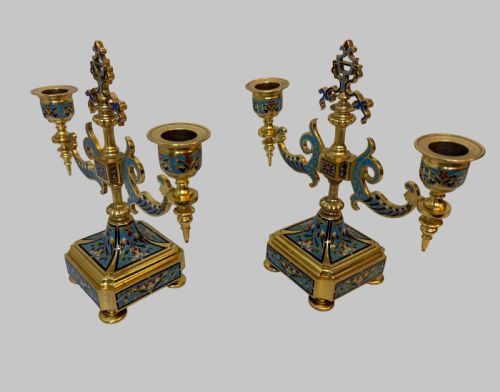


Vintage Gilt Candle Stands
These vintage gilt candle stands bring together bronze, brass, and giltwood to hold light high in any room.
Vintage Gilt Candle Stands
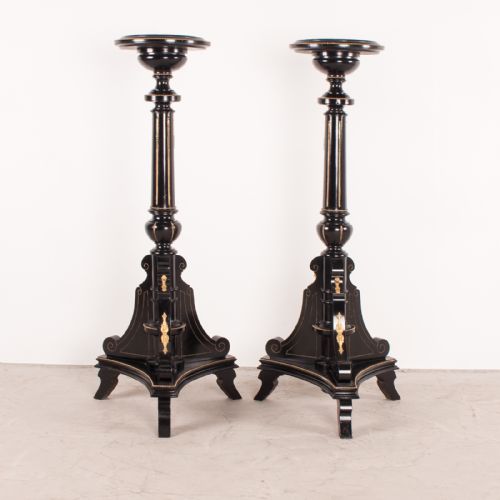
Vintage gilt candle stands cover a broad range of nineteenth-century lighting and display pieces, including tall torcheres, standard lamps, and table candelabra. When you search for vintage gilt candle stands, you encounter ornate standard lamps, towering torchaires, and heavy table pieces designed to reflect candlelight.
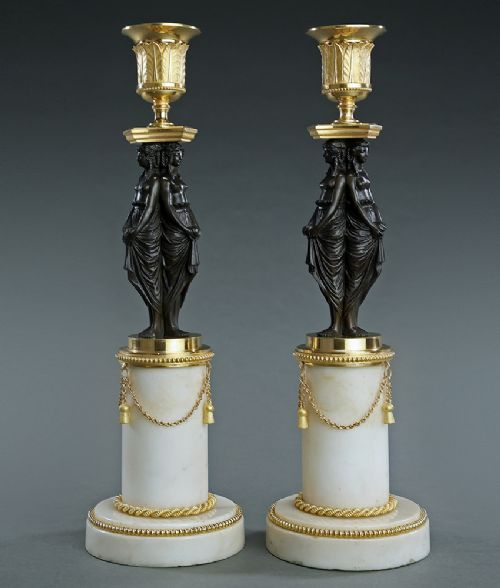
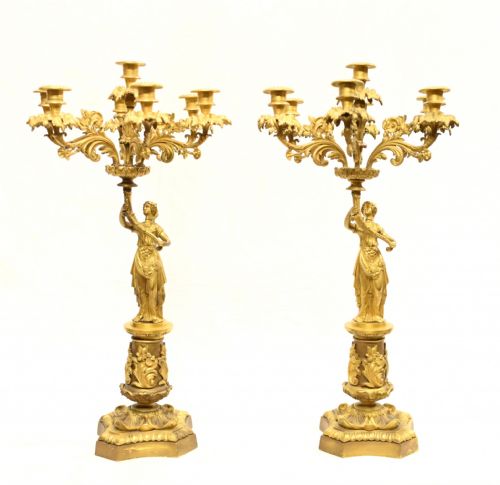
The objects span periods from the Regency era through the Victorian years and into the early twentieth century, showing strong French and Italian influences. Forms range from simple pricket sticks to multi-armed candelabra decorated with caryatids, cherubs, and classical columns.
Pairs dominate the selection, often standing alongside single standard lamps and tall pedestals intended to elevate light sources within a reception room. These pieces combine functional illumination with decorative display, utilising varied heights and sculptural forms.
How they were made
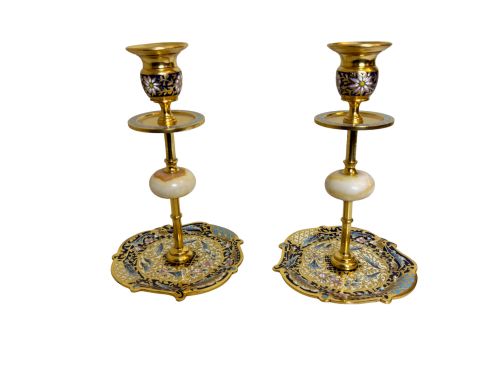
Maker's hands shaped these stands from cast bronze, ormolu, brass, and carved wood, applying layers of surface gilding or gesso to create a rich metallic sheen. Many pieces incorporate secondary materials such as marble, onyx, and champleve enamel to add colour and weight to the base or stem.
Foundry casting produced the detailed figures and ornate mounts seen on French and English ormolu pieces, while woodworkers carved intricate patterns into giltwood torchaires and standard lamps. Artisans combined these cast metal components with turned wood or natural stone to build stable, decorative stands.
Object forms span candlesticks, candelabra, standard lamps, and torchaires across the Regency, Victorian, and Art Nouveau periods.
What varies in quality
The preservation of the original gilding and surface finish dictates much of the visual appeal, as worn or stripped metal alters the way the stand catches the light. Artisans who achieved finer chasing on ormolu or more delicate gesso work on wooden torchaires produced pieces that retain their decorative presence over time.
Abel Landry
The Vintage Gilt Candle Stands Glossary
- Ormolu
- Gilded bronze, often mercury-gilded, used extensively on decorative mounts and French candle stands from the eighteenth and nineteenth centuries.
- Torchaire
- A tall ornamental stand or candlestick designed to hold a light source or decorative object above floor level.
- Champleve
- An enamelling technique where troughs are dug into a metal surface and filled with vitreous enamel before firing.
- Pricket stick
- A candlestick featuring a sharp metal spike at the top to secure a candle, rather than a socket.
- Caryatid
- A sculpted female figure serving as an architectural support taking the place of a column or pillar.
Vintage Gilt Candle Stands: Frequently Asked Questions
How do I tell Regency stands from later Victorian pieces?
Regency stands often display clean classical lines, influenced by ancient Greek and Roman design, frequently incorporating patinated bronze alongside gilt details. Look for restrained neoclassical motifs, strict symmetry, and architectural forms.
Victorian pieces tend toward heavier, more exuberant ornamentation, drawing on Rococo revival styles and French influences. They frequently mix varied materials like marble, onyx, and champleve enamel within a single stand.
Were these standard lamps originally wired for electricity?
Most tall stands and standard lamps from the nineteenth century began life holding candles or oil lamps before later conversion to electricity. Surviving pieces often show adaptations made during the twentieth century to accommodate modern wiring.
Pricket sticks and standard lamps alike frequently retain traces of their original oil or wax usage alongside later electrical fittings. Examine the top socket or column for evidence of these structural changes.
How do I care for gilt bronze and ormolu surfaces?
Gilt bronze and ormolu require gentle dusting with a soft, dry cloth to prevent the accumulation of dirt in recessed chasing. Avoid abrasive cleaners, polishes, and chemical solvents that can strip away the delicate gold layer.
If the surface requires deeper cleaning, use a damp cloth with mild soap, followed immediately by drying with a soft towel. Keeping these stands away from direct moisture and heat sources preserves the metal finish.