
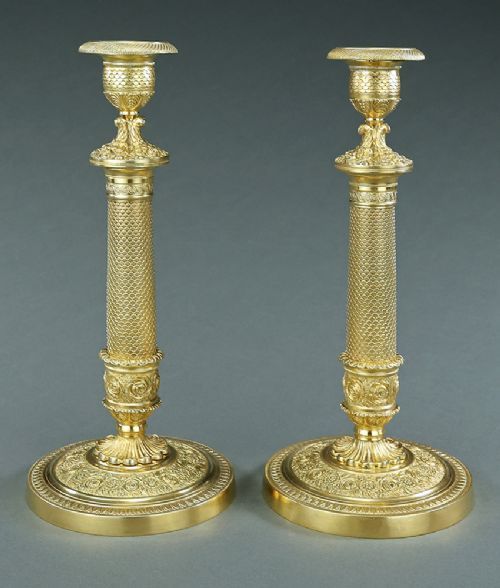
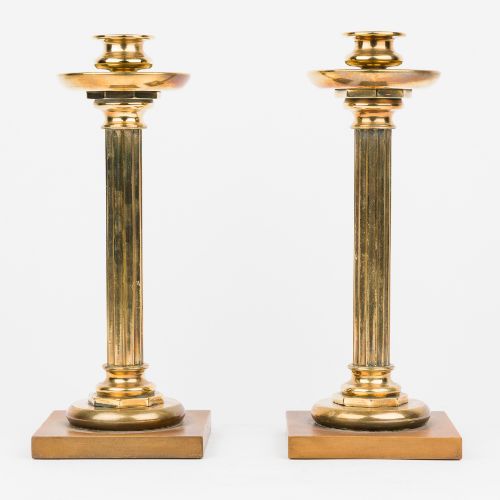
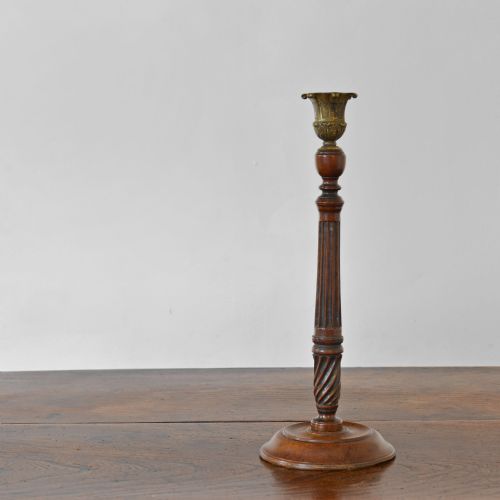
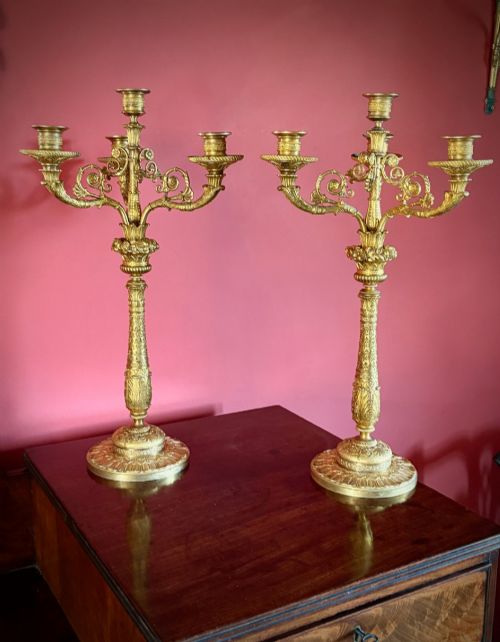
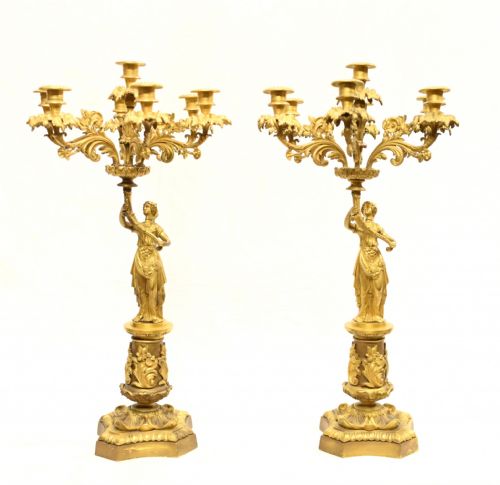


Brass Mantelpiece Candlesticks
Brass mantelpiece candlesticks bring architectural weight and bright metalwork to a shelf or hearth.
Brass Mantelpiece Candlesticks
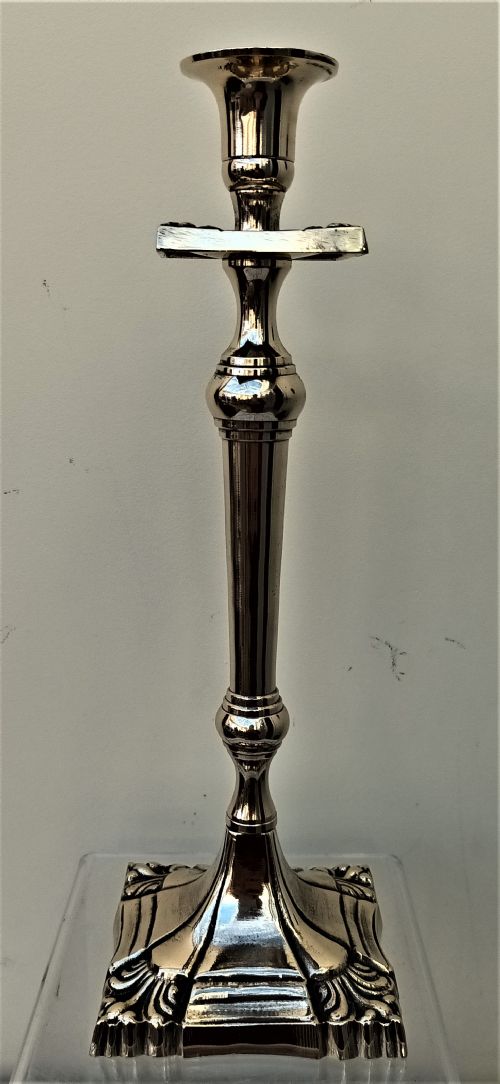
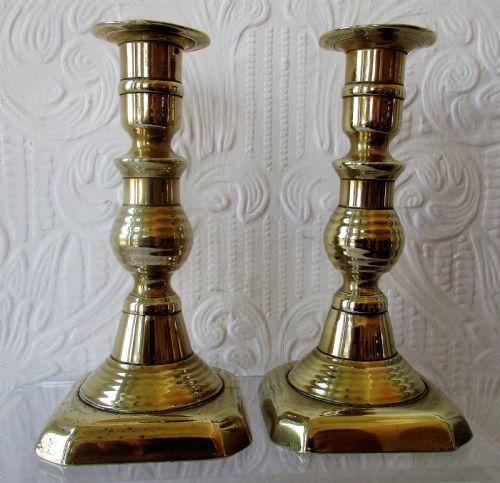
Brass mantelpiece candlesticks combine functional lighting with decorative presence, appearing mainly in pairs from the Victorian, Regency, and Georgian periods. These items take the form of column candlesticks, multi-branched candelabra, and figural designs that sit comfortably upon a fireplace shelf.
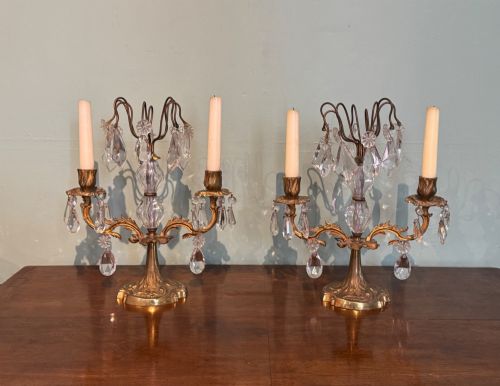
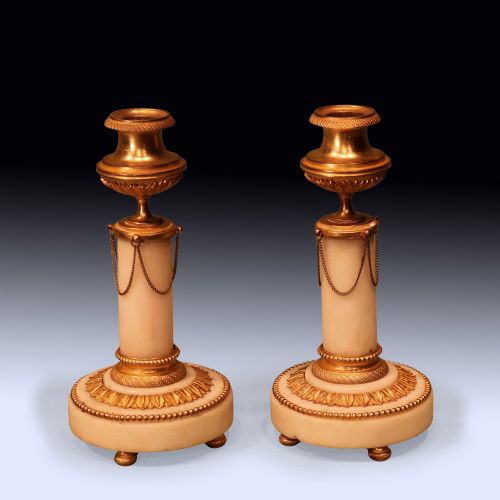
The selection here encompasses French Empire, Charles X, and Renaissance Revival styles alongside English brass work. Buyers encounter cast brass, gilt bronze, and ormolu often paired with white or green marble bases and cut crystal details.
Materials and construction
Foundry work relied on casting brass, bronze, and ormolu into intricate shapes, allowing makers to produce column shafts, cherubs, and acanthus scrollwork. Chasing and gilding finished the metal surfaces, creating contrasting matte and polished highlights.
Many examples incorporate secondary materials such as mahogany, white marble, green marble, and cut crystal to add weight and visual texture to the metal framework.
Listings feature 19th Century, Regency, and Victorian periods alongside materials like gilt bronze, marble, and mahogany.
Judging quality in metalwork
The crispness of the casting defines the upper tier of these pieces, where finely chased details remain sharp and distinct across every leaf and figure. Softer, blurred ornamentation points to worn moulds and hurried production.
Weight and construction integrity also separate standard examples from superior ones. Heavier cast components, secure joins between marble and metal, and original mercury gilding indicate meticulous workshop standards.
The Brass Mantelpiece Candlesticks Glossary
- Ormolu
- Gilded bronze produced through a mercury amalgamation process. This technique yields a deep, warm golden finish characteristic of French decorative arts.
- Candelabra
- A branched candlestick holding multiple lights. These larger items often feature removable arms for varied display configurations.
- Gilt Bronze
- Bronze metal treated with a thin layer of gold. It provides durability and a bright reflective surface on Neoclassical and Revival pieces.
- Column Candlestick
- A candlestick styled as a classical column with a base, shaft, and capital. They draw directly from architectural orders.
- Clock Garniture
- A matching set consisting of a mantel clock flanked by matching candelabras or urns. These displays anchor the centre of a fireplace.
- Table Lustre
- A candelabra or candlestick hung with cut crystal glass prisms. The pendants refract candlelight across the room.
Brass Mantelpiece Candlesticks: Frequently Asked Questions
How do I clean antique brass?
Dust gently with a soft dry cloth to preserve the aged surface and original patination. Avoid harsh metal polishes that strip away historic finishes.
Leaving the accumulated warmth of age intact maintains the visual character of the metal.
Were these made for candles or electricity?
These pieces were originally produced exclusively for wax candles or oil before modern wiring was introduced. Many retain their original sockets and drip pans.
Some examples have been adapted for electric lamps while keeping their historic bodies intact.
How do I spot French Empire style?
French Empire pieces display strict symmetry, military motifs, classical foliage, and heavy gilt bronze casting. The designs reflect the neoclassical tastes popular during the early nineteenth century.
Marble bases frequently accompany these heavy metal mounts.
Why are some candlesticks mounted on marble?
Marble bases added substantial weight to support tall candelabra and provided a contrasting cool stone texture against warm brass and ormolu. White and green marble varieties appear frequently on Regency and Victorian examples.
This combination elevated the decorative status of the lighting.
What is a figural candlestick?
A figural candlestick incorporates human forms, animals, or mythological subjects such as cherubs or medievalist characters into the support structure. These sculptural elements emerge strongly in French Rococo and Renaissance Revival works.
They transform simple lighting into miniature bronzed sculpture.