


Louis XVI Candlesticks
Louis xvi candlesticks bring neoclassical balance to a room, cast in bronze and marble with classical ornament.
Louis XVI Candlesticks
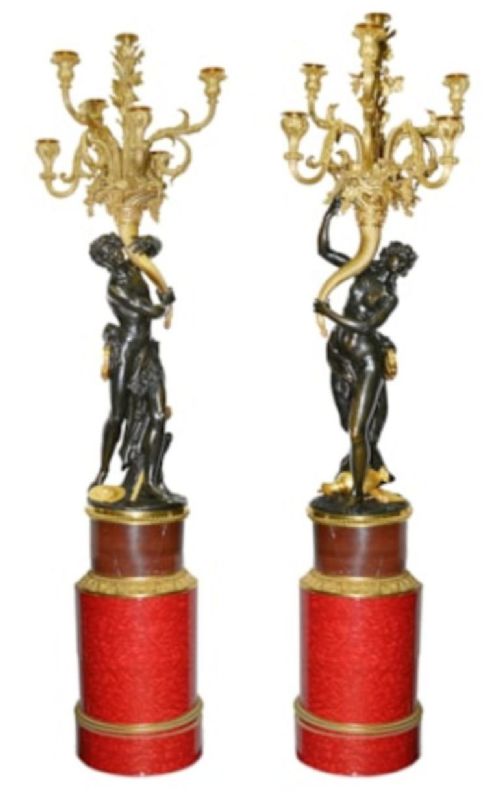
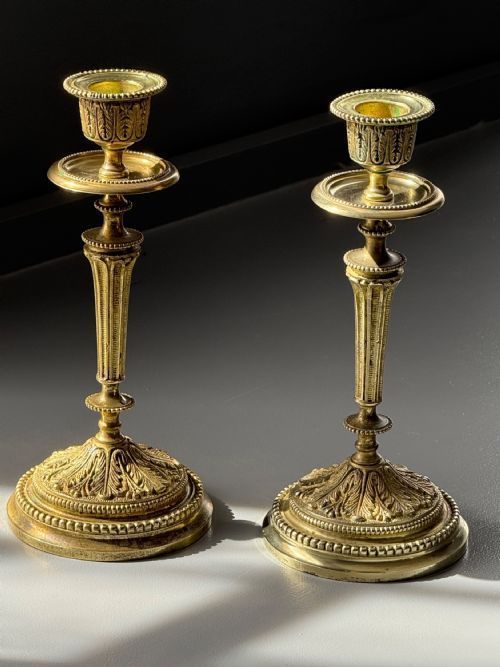
Louis xvi candlesticks take many forms across the inventory, ranging from single candle holders to two-arm candelabra and converted table lamps. Most examples found here date from the nineteenth century, capturing the revival of eighteenth-century neoclassical taste.
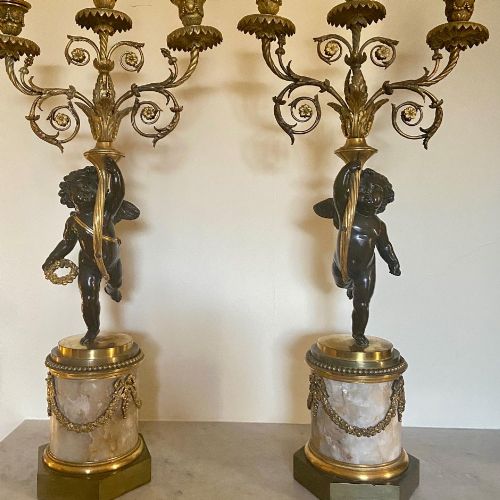
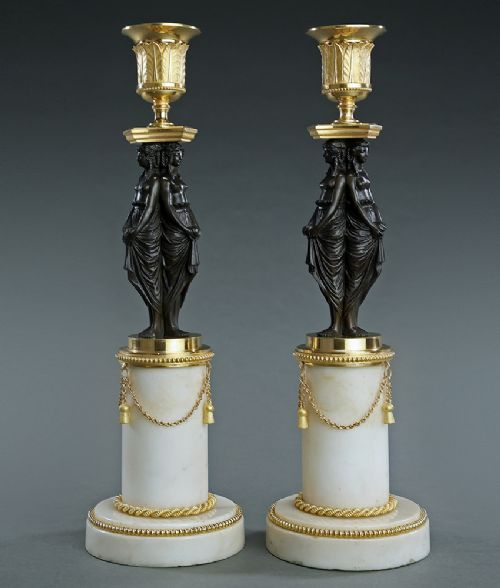
The objects frequently incorporate figures such as putti, cherubs, and caryatids alongside classical architectural motifs. Materials combine metals with stone bases, creating substantial decorative pieces for a mantelpiece or side table.
Makers and designers of the period, including François Redmond, Jean-Démosthène Dugourc, and Claude Clodion, provided models that later nineteenth-century workshops followed. Buyers will encounter both period eighteenth-century items and later nineteenth-century interpretations sharing the same design vocabulary.
How they were made
White marble and occasionally fluorspar provide contrasting bases and column sections, anchored by the heavy metal mounts. Selected nineteenth-century variants also incorporate mahogany woodwork or fabric elements within lamp adaptations.
Tiny winged cherubs frequently shoulder the weight of heavy bronze branches, pretending to work hard while holding up the candles.
What varies in quality
The quality of gilding and the density of the underlying bronze or marble dictate the visual weight and longevity of the piece. Superior items balance the warmth of ormolu with well-finished stone bases that sit level and true.
Francois Redmond·Jean-Démosthène Dugourc·Claude Clodion
The Louis XVI Candlesticks Glossary
- Ormolu
- Gilt bronze produced by applying a finely ground gold-mercury amalgam to a bronze base and heating it. This technique creates a rich golden surface found on many neoclassical lighting pieces.
- Caryatid
- A sculpted female figure serving as an architectural support instead of a column. They frequently appear on the stem of these candlesticks.
- Cassolette
- A decorative vessel or container featuring a reversible lid that can function as a burner or a solid cover. Some variations double as candle holders.
- Fluorspar
- A colourful mineral occasionally used for decorative bases or columns. It brings natural crystalline patterns to the stone elements.
- Neoclassical
- A style spanning the eighteenth and nineteenth centuries that draws inspiration from classical antiquity. It relies on symmetry, straight lines, and classical motifs.
Louis XVI Candlesticks: Frequently Asked Questions
Are these lighting pieces wired for electricity?
Several examples function as table lamps through later adaptations, while others remain strictly for traditional wax candles. Listings note whether electrical fittings have been added.
Buyers intending to use them for modern lighting should check the wiring status in the specific description before purchase.
How do I distinguish eighteenth-century pieces from nineteenth-century copies?
Period eighteenth-century items show specific casting techniques and wear patterns consistent with early production. Nineteenth-century pieces often reflect revival interpretations.
Examining the construction joints and the quality of the ormolu finish helps clarify the exact manufacturing era.
How should I clean gilt bronze mounts?
Dusting gently with a soft dry cloth maintains the surface of ormolu without removing the historic gilding. Avoid chemical cleaners and abrasive cloths entirely.
Professional restoration is recommended if deeper cleaning is required for tarnish or accumulated grime.