



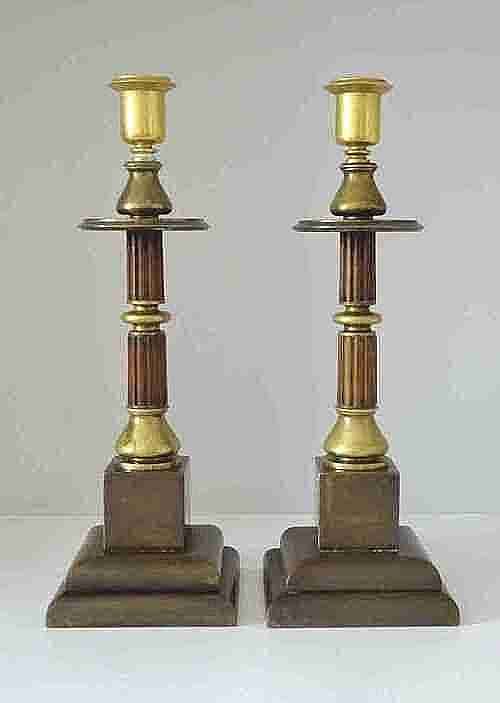
Fluted Bronze Candlesticks
These fluted bronze candlesticks bring tactile weight and classical line to a room, offering both quiet utility and sculptural presence.
Fluted Bronze Candlesticks
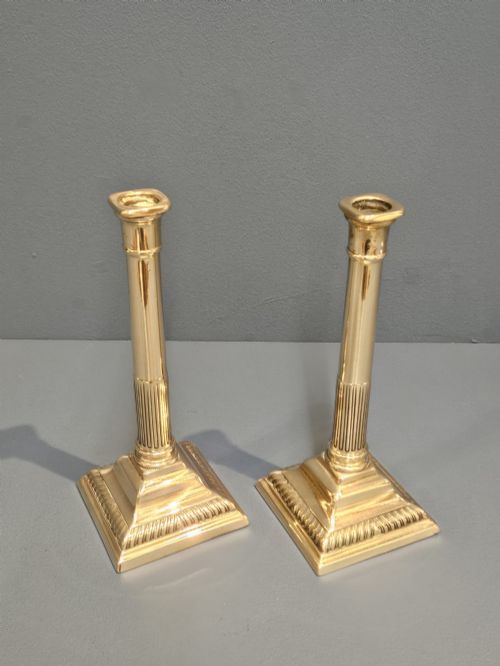
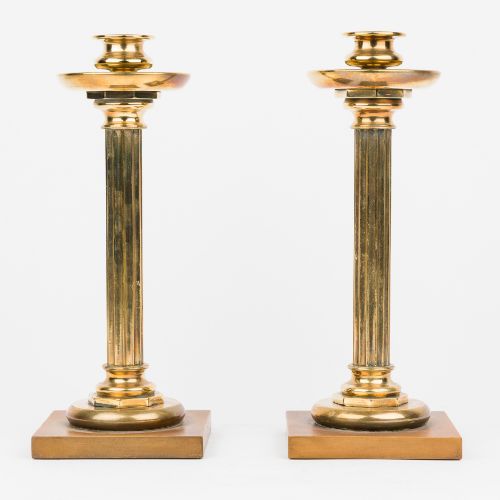
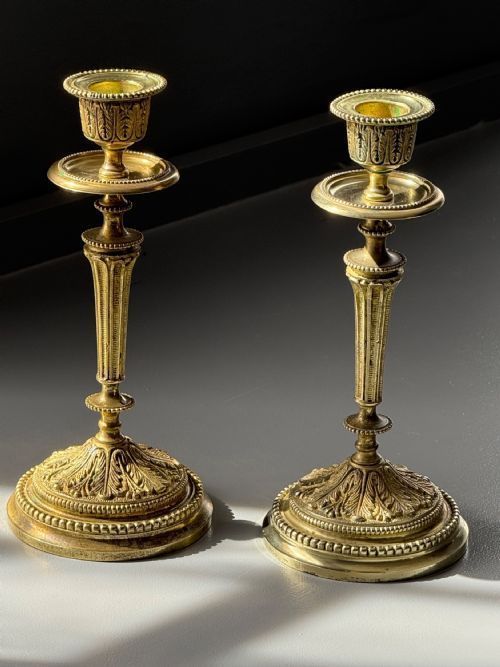
When you search for fluted bronze candlesticks, you are looking at cast metal light holders defined by vertical channelings running down the shaft. The selection on this page centres on pairs produced across the eighteenth and nineteenth centuries, alongside pieces adapted later into table lamps.
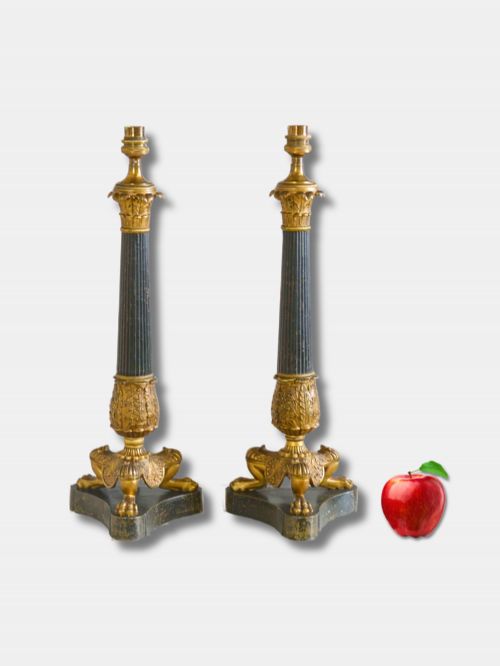
You will encounter distinct design vocabularies ranging from French Empire and Louis XVI styles to Regency and Art Deco iterations. Many examples incorporate classical architectural motifs like columns and pedestals, sometimes paired with marble or brass elements.
How they were made
The primary construction relies on casting in bronze, brass, bell metal, or ormolu, utilising metal alloys poured into moulds to achieve crisp architectural detailing and fluting. Artisans then finished the surfaces through patination, gilding, or polishing to create contrasting highlights and deep shadows along the fluted channels.
Several examples incorporate secondary materials such as marble bases or applied patinated bronze, while later adaptations integrate fabric components for electric table lamps.
Fluted Bronze Candlesticks Retail Price Guide 2026
Typical asking prices for fluted bronze candlesticks among the pieces listed under this phrase on Sellingantiques today, from the lower quarter to the upper quarter. They describe what is for sale here now, not the wider market.
Listings span the eighteenth century through the Art Deco era, featuring materials such as bronze, ormolu, marble, bell metal, and fabric.
What varies in quality
Quality rests upon the crispness of the casting and the depth of the chasing along the fluted columns. Superior examples display sharp, clean lines in the metalwork and careful hand-finishing that preserves intricate details without softening the edges.
The richness of the gilding or the stability of the patinated surface further distinguishes finer pieces. Weight, balance, and the integration of secondary materials like marble or ormolu mounts also dictate the overall standard of the construction.
The Fluted Bronze Candlesticks Glossary
- Fluting
- Vertical grooves cut or cast into the column of a candlestick. This classical architectural detail draws the eye upward and catches the light.
- Ormolu
- Finely ground high-carat gold applied to a bronze base using a mercury amalgamation process. It yields a rich, warm metallic finish seen on French neoclassical pieces.
- Bell metal
- An alloy of copper and tin traditionally used for casting bells. It produces a dense, resonant metal with a distinct dark lustre when used for candlesticks.
- Patinated bronze
- Bronze that has been treated chemically or naturally aged to darken its surface. This process emphasises the form and subdues bright metallic glare.
Fluted Bronze Candlesticks: Frequently Asked Questions
Are these candlesticks wired for electricity?
Some examples on this page have been converted into table lamps with fabric shades, while others remain strictly for traditional wax taper use. Check the individual titles to distinguish between the original candlestick form and the later lamp adaptations.
Conversion usually involves running a cord through the centre, meaning the fundamental bronze structure often remains unaltered beneath the wiring.
How do I date an Empire style candlestick?
Dating relies on examining the weight of the metal, the precision of the casting, and the specific style markers like lions paw feet or classical column designs. Eighteenth and early nineteenth-century pieces tend to show hand-finished chasing that differs from later nineteenth-century or twentieth-century revivals.
Material composition also offers clues, as bell metal and heavy patinated bronze point towards earlier periods of manufacture.
What is the difference between bronze and brass?
Bronze is primarily an alloy of copper and tin, whereas brass is an alloy of copper and zinc. Bronze generally yields a deeper, heavier feel and takes a darker patina more readily than standard brass.
Both materials were widely utilised across the periods represented here, sometimes appearing together on the same piece.