
Vintage French Salon Chairs
These vintage french salon chairs bring distinct European elegance to a room, offering comfortable seating shaped by centuries of stylistic revival.
Vintage French Salon Chairs
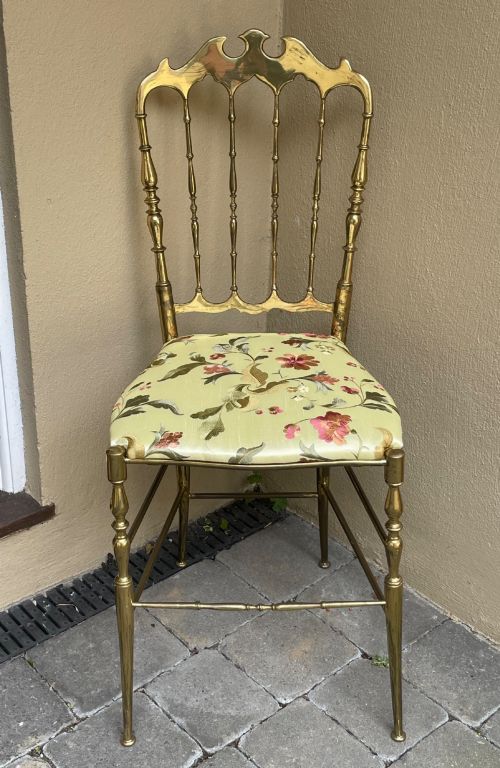
When you search for vintage french salon chairs, you encounter seating designed for formal reception rooms, ranging from compact side chairs to open armchairs and complete suites. The pieces span periods from the eighteenth century through the nineteenth and into the early twentieth century, reflecting enduring classic tastes.
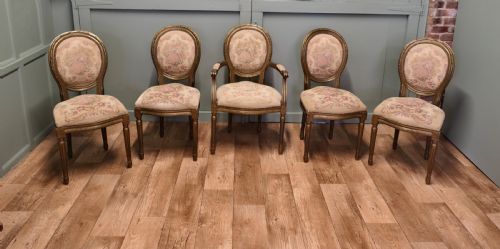
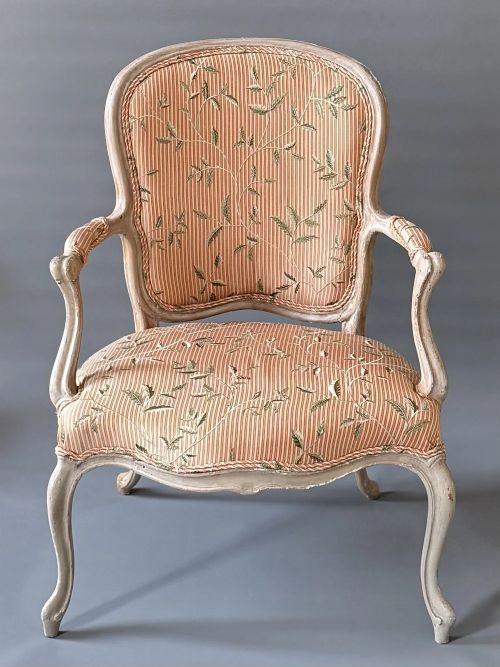
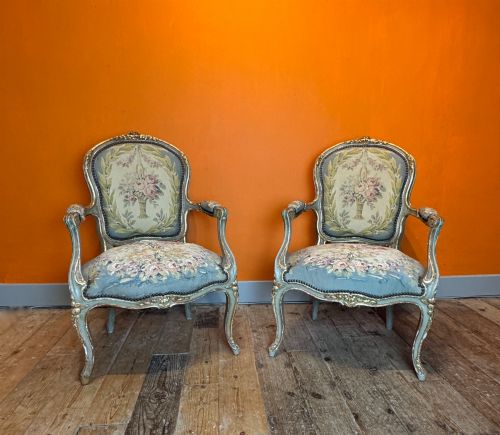
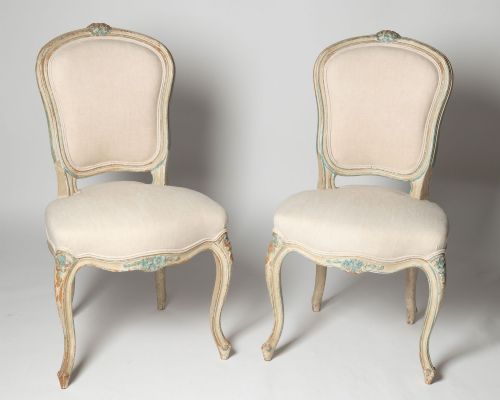
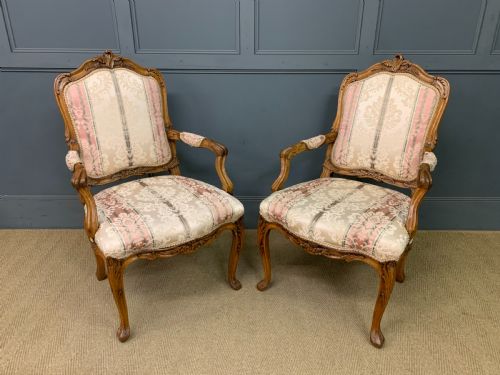
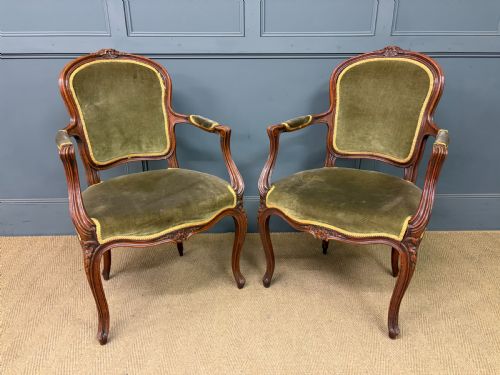
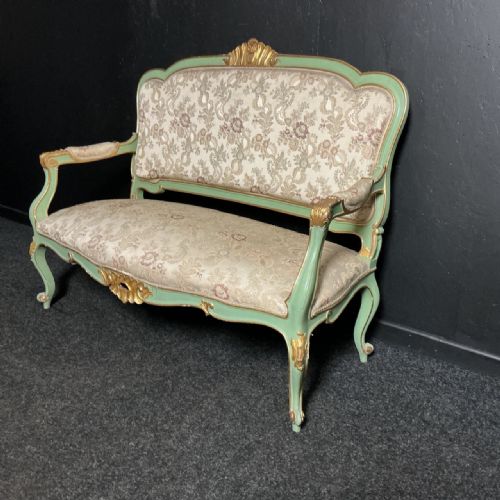
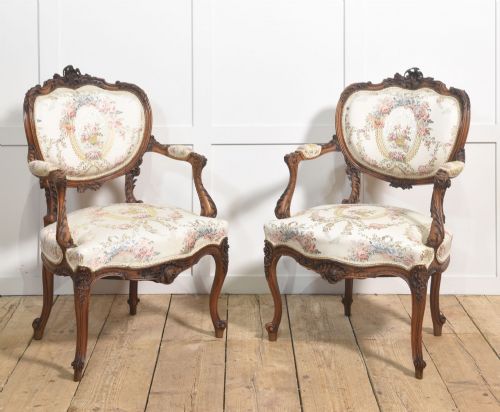
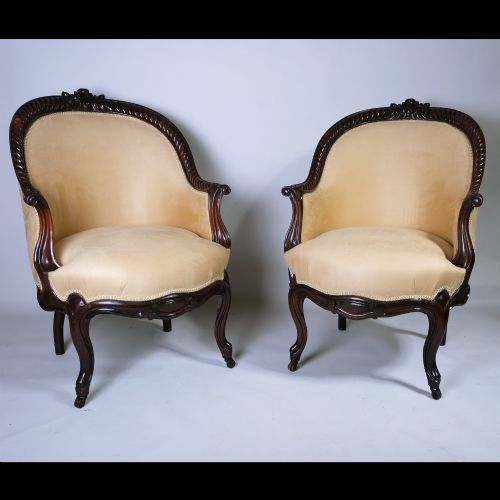
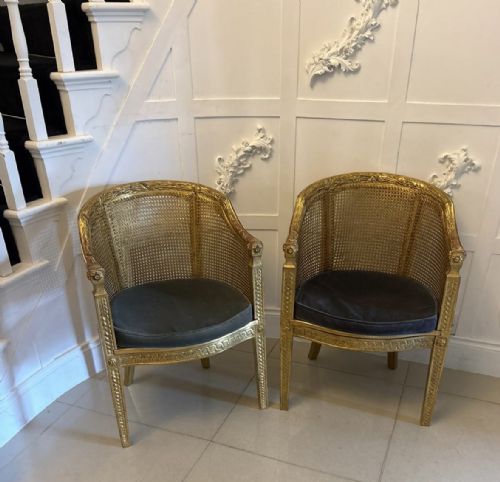
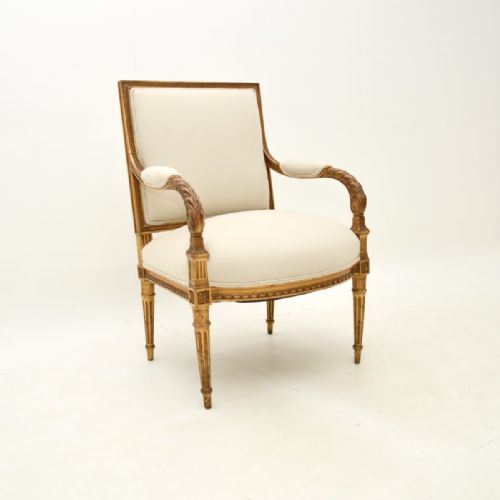
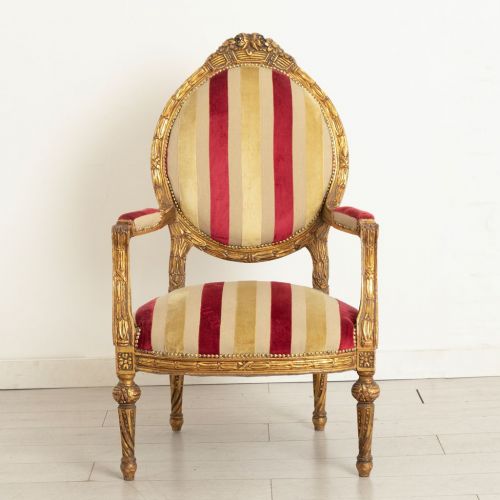
You frequently meet open armchairs known as fauteuils alongside enclosed bergères, side chairs, and occasional settees. The forms draw heavily on historical design vocabularies like Louis XV, Louis XVI, and Rococo Revival, often created in pairs or larger matching sets.
Originating primarily from French workshops and chateaus, these chairs combine decorative woodwork with upholstered seats and backs. They serve as functional seating that simultaneously functions as decorative furniture within traditional and eclectic interiors.
How they were made
Frames are constructed from timbers such as walnut, oak, mahogany, beech, and kingwood, selected for their grain and structural strength. Carvers shaped these woods by hand into flowing cabriole legs, fluted columns, and intricate floral motifs characteristic of French provincial and chateau styles.
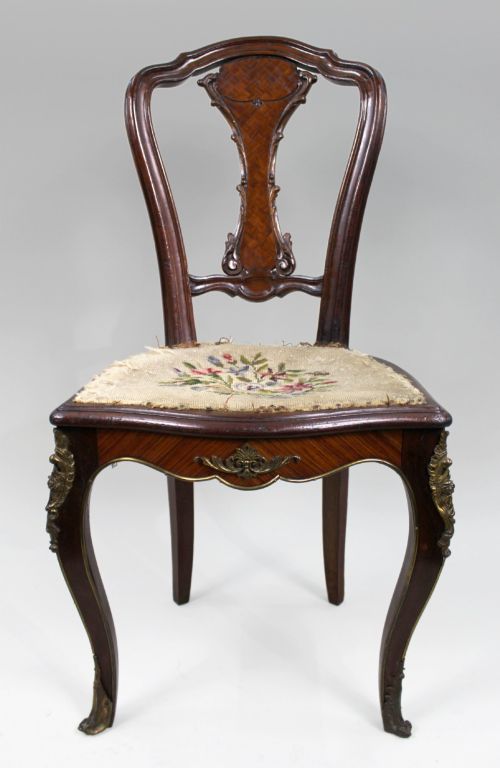
Surface decoration frequently involves giltwood, painted finishes with parcel gilt details, or parquetry work utilising contrasting veneers. Metal embellishments like ormolu mounts and brass accents are secured to enhance key structural junctures.
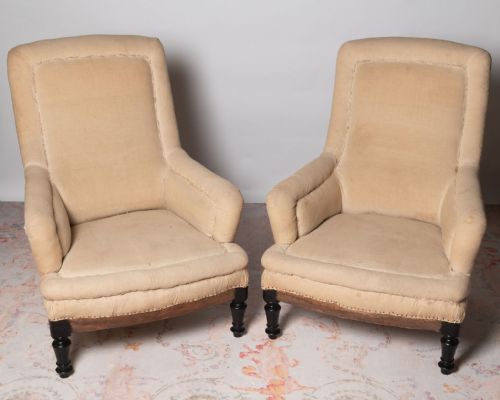
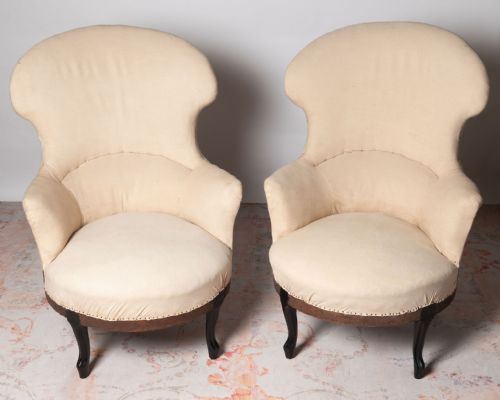
Upholstery techniques incorporate traditional springs, webbing, and stuffing covered in textiles such as silk, velvet, tapestry, needlepoint, and patterned fabric. Panels are often secured with decorative nailing or gimp trim to finish the edges neatly.
Listings feature walnut, oak, mahogany, and beech frames, frequently upholstered in needlepoint, tapestry, velvet, and silk.
What varies in quality
The precision of the wood carving dictates much of the visual distinction, with crisp, deeply undercut foliage and balanced symmetry marking superior craftsmanship. Firmer joinery and heavier timber frames provide structural integrity that lighter or mass-produced alternatives lack.
The authenticity and execution of surface treatments create clear gradations in merit, distinguishing hand-applied gilding or original painted patination from later refinishing. Textile selection also plays a role, where hand-stitched needlepoint or woven tapestry panels elevate the overall execution above standard printed fabrics.
The Vintage French Salon Chairs Glossary
- Fauteuil
- An open-arm armchair with upholstered back and seat, typically featuring exposed wooden arms and legs. This form originated in France during the seventeenth century for formal reception rooms.
- Bergère
- An enclosed armchair featuring upholstered sides integrated with the back and seat, usually containing a loose loose seat cushion. These chairs offer a deeper and more enclosed sit than standard open armchairs.
- Giltwood
- Timber that has been coated with a thin layer of gold leaf or gilt powder over a prepared gesso ground. This finish provides a bright metallic sheen characteristic of formal period seating.
- Ormolu
- Cast bronze that has been mercury-gilded and finished to a bright gold appearance, applied as decorative mounts on furniture. It accents key architectural points on high-status pieces.
- Parquetry
- Geometric wood inlay work arranged in patterns such as herringbone or cubes across flat surfaces. It demonstrates advanced cabinet-making skill on panels and frames.
Vintage French Salon Chairs: Frequently Asked Questions
What is a fauteuil?
A fauteuil is an open-arm armchair with upholstered elements and exposed wooden framework, designed for formal sitting rooms.
These chairs typically feature carved arms and legs that reflect the stylistic preferences of periods like Louis XV or Louis XVI.
How do I use them at home?
These chairs function well as accent seating in living rooms, bedrooms, or hallways, adding historical contrast to modern interiors.
Pairs can be placed flanking a fireplace or console table to create a balanced focal point within a room.
What is the difference between Louis XV and Louis XVI styles?
Louis XV style emphasises asymmetrical curves, scrollwork, and cabriole legs characteristic of Rococo design.
Louis XVI style shifts toward neoclassical straight lines, fluted legs, and geometric ovals or rectangular backs.
Are these chairs comfortable for daily use?
Many salon chairs feature supportive upholstered seats and angled backs designed for relaxed conversation.
Comfort levels depend on the original stuffing materials and whether the interior webbing has been restored.