


French Period Armchair Pair
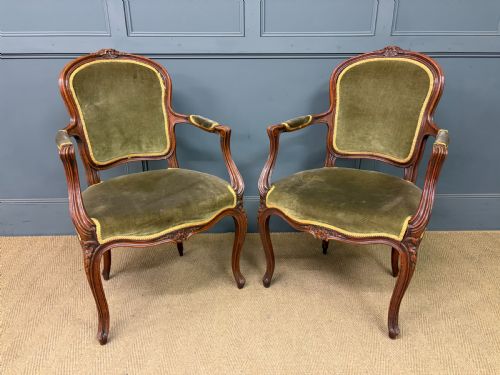
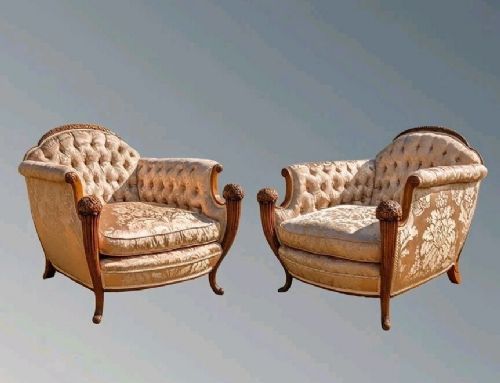
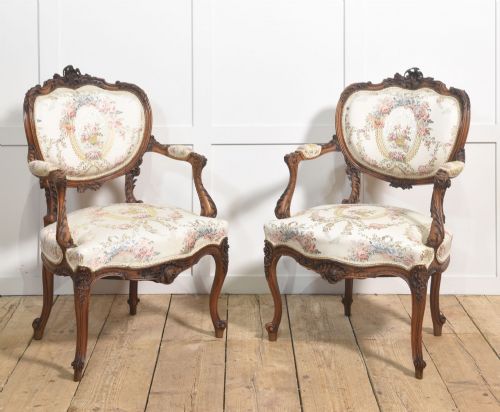
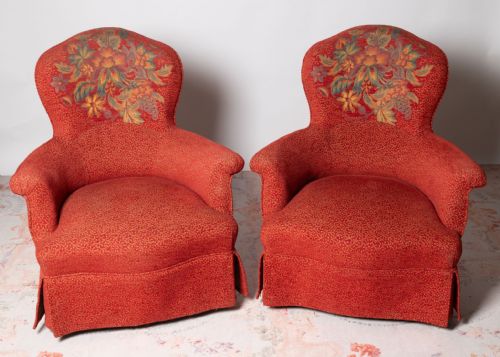
A french period armchair pair brings formal seating and historical carving together, offering symmetry for a drawing room or salon.
French Period Armchair Pair
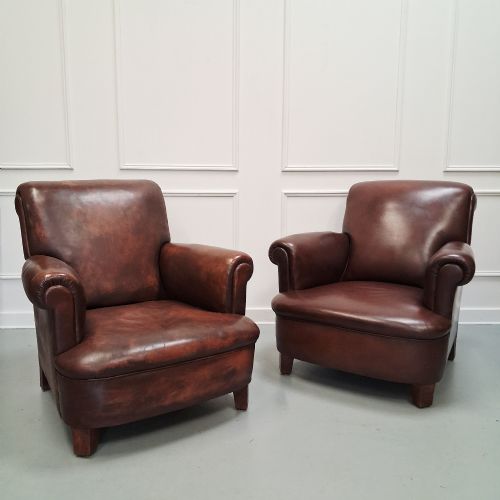
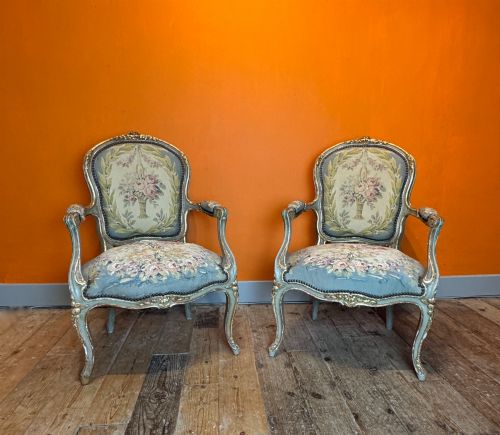
A french period armchair pair comprises matched seating originating from historical European workshops and designed for formal interiors. Buyers searching for a french period armchair pair encounter items spanning the eighteenth, nineteenth, and early twentieth centuries, reflecting diverse historic design movements.
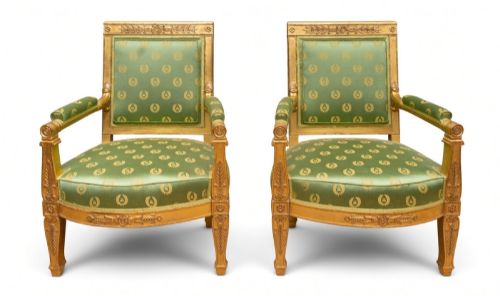
The selections on this page demonstrate distinct regional variations, including painted finishes, exposed wood frames, and dedicated upholstery. Pieces range from grand giltwood creations suited to formal salons to walnut and mahogany frames intended for private chambers.
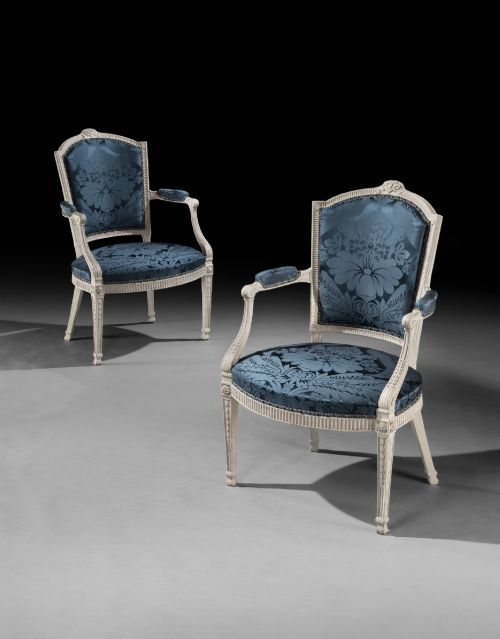
Makers and designers drew upon established classical motifs, producing profiles that align with Louis styles, Art Deco sensibilities, and provincial traditions. Each pair maintains a dialogue between structural woodwork and the textile coverings applied to the seat and back.
Distinguishing quality in period seating
Quality rests upon the crispness of the hand-carved wood elements and the integrity of the underlying frame construction. Superior examples retain their original gilding or period paint finishes rather than undergoing modern stripping or heavy refinishing.
The choice and execution of the covering material elevate a pair, particularly when historical needlepoint, silk, or patinated leather remains intact. Proportion, symmetry between the two chairs, and the retention of maker attribution further separate standard examples from exceptional ones.
Some nineteenth-century armchairs retain remnants of royal palace inventories tucked beneath their burlap webbing.
Jacob Desmalter
The French Period Armchair Pair Glossary
- Fauteuil
- An open-armed upholstered armchair with an exposed wooden frame originating in France. These seats typically feature padded armrests and carved rails.
- Giltwood
- Timber coated with a thin layer of gold leaf or gold paint for decorative effect. This finish appears frequently on formal nineteenth-century salon seating.
- Needlepoint
- Hand-stitched canvas embroidery utilising wool or silk yarn. Period examples often display floral or figural scenes executed in this technique.
- Bergere
- An enclosed upholstered armchair featuring solid sides filled with cane or upholstery. The style provides a deep, comfortable seat popular in historic interiors.
French Period Armchair Pair: Frequently Asked Questions
How do I care for antique leather club chairs?
Historic leather requires gentle cleaning using specialised saddle soap or mild conditioners to prevent cracking over time. Avoid placing these seats in direct sunlight or near strong heat sources to preserve the original hide.
Regular dusting with a soft, dry cloth maintains the surface. Professional conservation is recommended for deep restoration work.
Are these chairs suitable for daily seating?
Period frames constructed from solid walnut, mahogany, or beech remain structurally robust for regular use when properly maintained. Much depends on the stability of the joints and the condition of the internal webbing.
Upholstery can be updated or reinforced to support everyday sitting while retaining the historic exterior appearance. Consulting a specialist ensures the internal structure remains protected.
What defines a Louis XVI style armchair?
Louis XVI seating is characterised by straight, fluted legs, geometric lines, and neoclassical ornamental motifs. The backrests often adopt a rectangular or oval medallion shape rather than the curving lines of earlier reigns.
Carvings frequently incorporate ribbons, acanthus leaves, and classical urns. This aesthetic emphasises symmetry and architectural restraint.
How can I tell if the gilding is original?
Original giltwood displays subtle signs of wear, fine craquelure, and a warm bolus layer showing beneath thin gold leaf. Modern repaint applications often appear uniform, thick, and lack the historical patina accumulated over centuries.
Magnification helps reveal the microscopic layering of gesso and size beneath the gold leaf. Comparing the finish across sheltered and exposed areas provides further insight into its age.