


Floral Tapestry Fauteuil
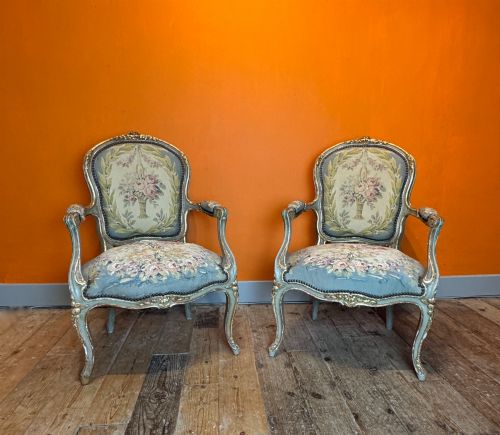
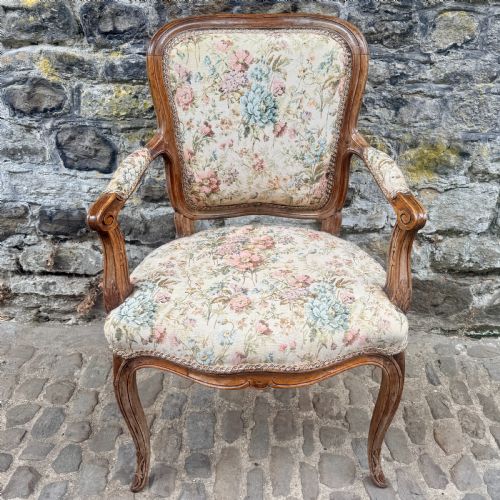
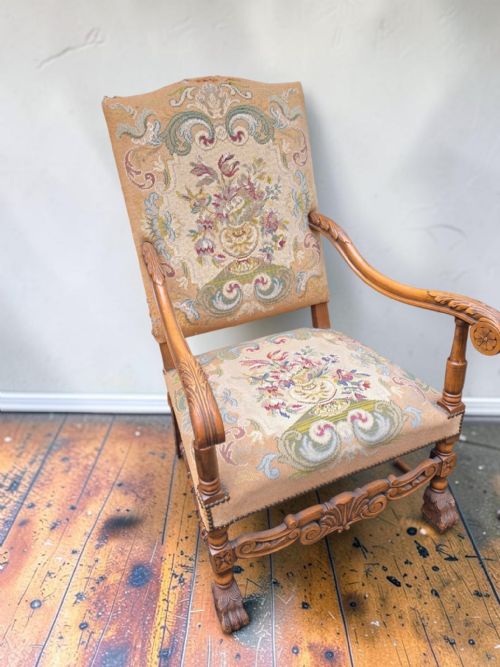
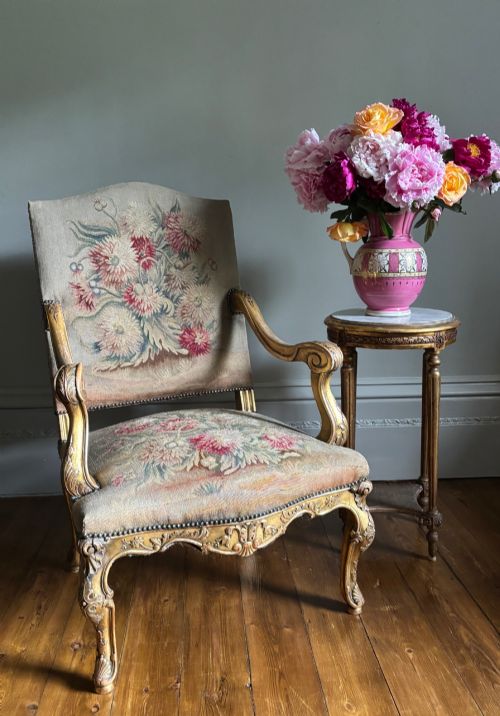
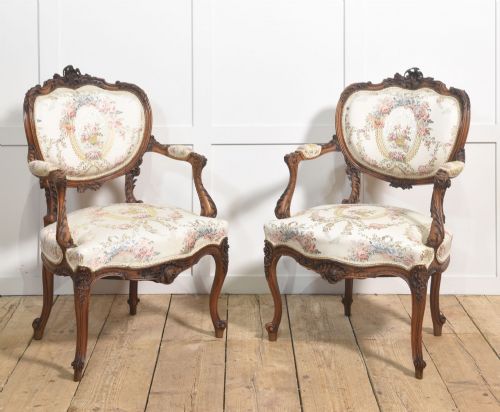
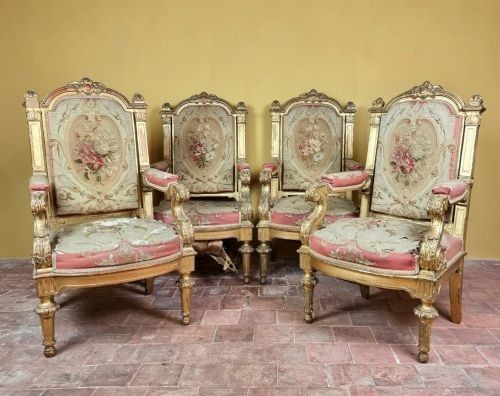
These floral tapestry fauteuil armchairs bring historical French and Victorian seating into a room with rich textile upholstery.
Floral Tapestry Fauteuil
When you search for a floral tapestry fauteuil, you are looking at open-arm seating upholstered with needlepoint or tapestry panels depicting floral designs. These pieces span periods from the 18th century to the late 19th century, drawing heavily on French styles like Louis XV, Regence, and Rococo Revival, alongside Victorian interpretations.
How They Were Made
Frames are constructed from hardwoods such as walnut, rosewood, and beech, then shaped through carving and joinery. Gilding, paint, and parcel-gilt finishes decorate the wooden structures of the chairs.
Upholstery relies on heavy tapestry fabric and needlepoint panels worked by hand or machine. Brass tacks frequently secure the textile covers to the wooden frames of the armchairs.
Several chairs feature floral needlepoint panels stitched so densely that generations of elbows have polished the wool threads to a soft shine.
What Varies in Quality
The standard of carving on the wooden frames separates standard production from finer work. Crisp detailing in the scrollwork and foliage indicates skilled cabinet-making.
The tightness and complexity of the tapestry or needlepoint weave also distinguish the pieces. Denser stitching and finer pictorial detail in the floral panels elevate the overall execution.
Holland and Sons
The Floral Tapestry Fauteuil Glossary
- Fauteuil
- An open-arm armchair with upholstered back and armrests, originating in France. These chairs typically feature exposed wooden frames around the upholstered sections.
- Giltwood
- Wood that has been coated with a thin layer of gold leaf. This finish appears frequently on revival armchairs designed for formal interiors.
- Needlepoint
- Embroidery stitched onto a stiff open-weave canvas foundation. It is the primary textile technique found on the upholstered panels of these chairs.
- Rococo Revival
- A 19th-century design movement resurrecting 18th-century asymmetric scrolls and organic curves. This style heavily influences Victorian and continental seating.
Floral Tapestry Fauteuil: Frequently Asked Questions
How do I clean the tapestry upholstery?
Surface dust can be removed gently using a soft brush or a low-suction vacuum attachment.
Avoid liquid cleaners or water on older needlework, as moisture damages delicate fibres and backing materials.
Are these chairs comfortable for daily use?
These pieces were originally designed for formal reception rooms rather than lounging. Their upright open-arm structure supports an upright posture.
Internal padding relies on period stuffing techniques which feel firmer than modern foam seating.
How do I identify a Louis XV style chair?
Look for characteristic cabriole legs and asymmetrical carved floral motifs. The frames avoid straight lines in favour of flowing curves.
Armrests are typically set back to accommodate wide garments popular during the period.
Can I mix these armchairs with modern furniture?
The rich wood tones and textured floral textiles integrate well with contemporary neutral interiors. Placing a single fauteuil in a modern room creates a striking focal point.
Pairs work effectively alongside simple sofas or modern seating arrangements.