


Classical Carved Wood Seating
Classical carved wood seating brings enduring architectural form and refined craftsmanship into a room.
Classical Carved Wood Seating
Classical carved wood seating encompasses chairs, armchairs, benches, and stools drawn from periods such as the Regency, Edwardian era, and the nineteenth century. These pieces display distinct historical influences, ranging from French Louis XVI and Neoclassical designs to Chippendale style and Swedish Biedermeier.
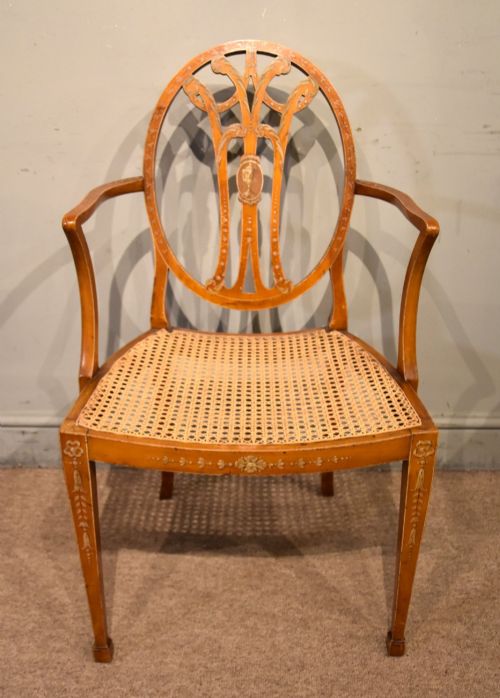
Buyers seeking classical carved wood seating encounter diverse forms including armchairs, dining chairs, hall chairs, and footstools. Materials span mahogany, limewood, and birch, alongside painted wood and giltwood surfaces.
The selections available here reflect traditional craftsmanship executed across various European workshops. Each item demonstrates the lasting appeal of classical motifs applied to functional domestic furniture.
How these pieces were made
Construction relies heavily on traditional timber selection, utilising dense hardwoods like mahogany alongside birch and limewood for detailed carving. Artisans shaped these materials using hand tools to achieve precise structural joints and flowing anatomical or geometric contours.
Surface decoration frequently involves gesso application, gilding, and hand-painted details. Upholstered elements incorporate traditional stuffing and supportive textiles such as fabric and hessian.
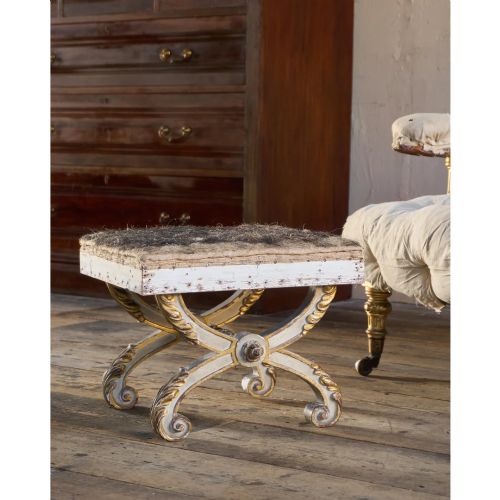
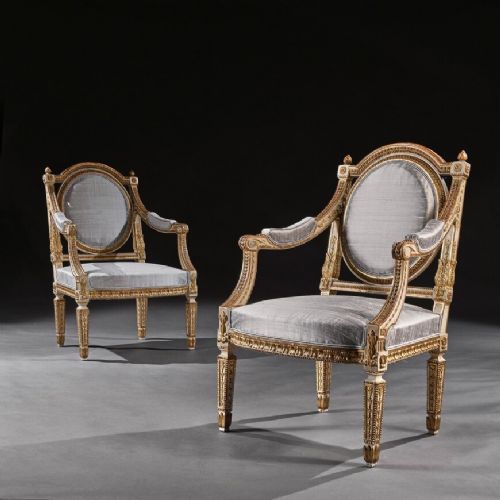
Carving techniques range from low relief applied to pelta backs on hall chairs to deeply undercut figurative sculptures and gilded curule frames. Finishers layered paint and gold leaf over prepared wood bases to create rich, light-reflecting surfaces.
Listings feature mahogany, birch, and limewood timbers alongside painted and giltwood finishes across the nineteenth and early twentieth centuries.
What varies in quality
Quality in these items rests upon the crispness of the hand carving and the structural integrity of the timber frame. Superior examples display sharp definition in classical details like acanthus leaves and fluting, without the softening often found in later or hurried production.
The grade of materials chosen by the maker dictates much of the lasting character, from finely figured mahogany grains to meticulously applied parcel gilt and gesso layers. Well-preserved original surfaces and harmonious proportions distinguish finer examples from standard utilitarian output.
Miles & Edwards·Hans Müller
The Classical Carved Wood Seating Glossary
- Curule stool
- An ancient Roman magistrate's seat design featuring crossed concave legs. This X-frame shape reappeared in nineteenth-century neoclassical revival furniture.
- Giltwood
- Timber coated with gold leaf over a prepared base layer. It provides a brilliant metallic finish common in grand decorative seating.
- Pelta back
- A chair back shape resembling an ancient Greek shield with a curved bottom and inward-curving corners. It appears frequently on nineteenth-century hall chairs.
- Parcel gilt
- A finishing technique where only specific carved details or raised ornaments are highlighted with gold leaf. This contrasts selectively with painted or exposed wood grounds.
- Gesso
- A plaster-like mixture applied to wood surfaces as a smooth base for gilding or painting. It allows intricate relief work to be modelled before the final finish is applied.
Classical Carved Wood Seating: Frequently Asked Questions
What defines classical carved wood seating?
These pieces incorporate historical architectural motifs such as columns, swags, and scrollwork into functional chair and stool designs. They draw directly upon Greek, Roman, and eighteenth-century European aesthetic traditions.
Craftsmen utilised solid hardwoods and applied meticulous hand carving to create furniture intended for formal reception rooms and hallways.
Where were hall chairs used?
Hall chairs were traditionally placed in the grand entranceways of large houses rather than used for long periods of sitting. They served to impress visitors upon arrival and often featured rigid wooden seats and prominent armorial carvings.
Their sturdy construction was designed to withstand cool, high-traffic corridors while displaying the homeowner's refined taste.
How do I care for giltwood and painted finishes?
Giltwood and painted surfaces require protection from direct sunlight and excessive moisture to prevent flaking or fading. Dusting should be performed gently with a soft, dry brush rather than a coarse cloth.
Avoiding harsh chemical cleaning products ensures the original layered patinas and delicate gesso details remain intact for years to come.
How do I distinguish nineteenth-century pieces from later revivals?
Examining the construction methods, tool marks, and wood ageing provides clear indicators of a piece's original period. Nineteenth-century items often display hand-cut joinery and period-specific secondary timbers beneath the upholstery or framing.
Comparing decorative motifs against documented neoclassical and Regency design books also helps confirm the manufacturing era.