
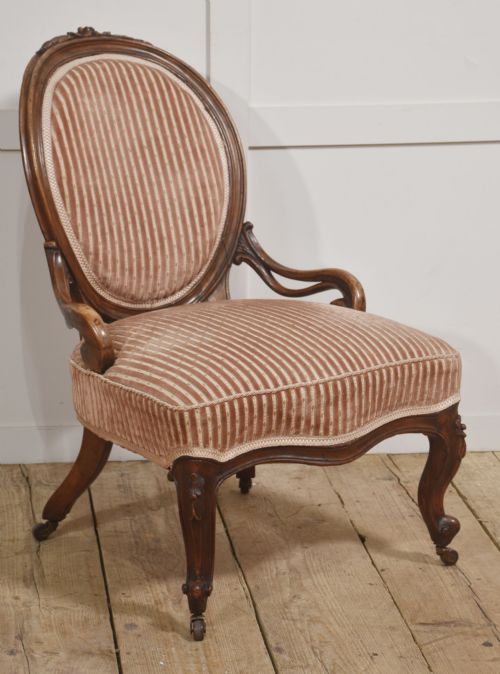


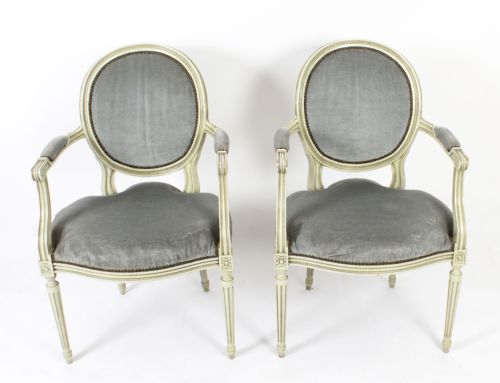

Medallion Back Armchairs
Medallion back armchairs bring neoclassical elegance to a room with their distinctive circular upholstered frames.
Medallion Back Armchairs
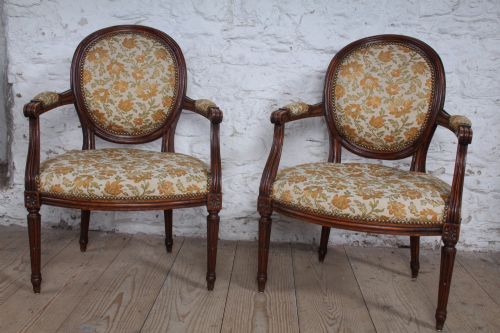
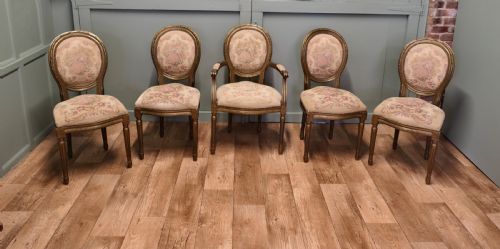
Medallion back armchairs are seating options defined by their rounded, often oval or circular backrests, drawing heavily from French design traditions. When exploring medallion back armchairs, buyers frequently encounter pieces styled after the Louis XVI period, alongside Victorian interpretations and Edwardian pieces.
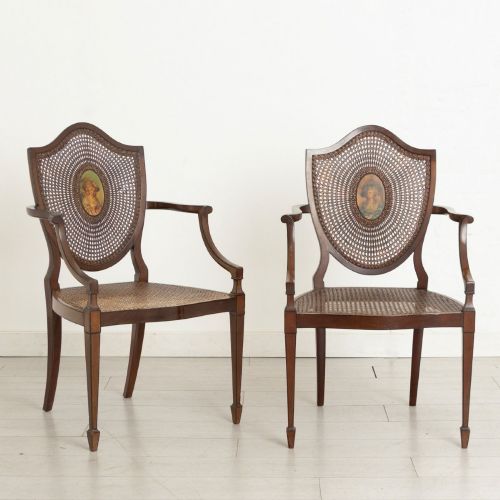
The listings show these chairs appearing across centuries, from eighteenth-century examples to twentieth-century revivals. Formats range from individual salon chairs to substantial dining suites and bedroom chairs, often constructed as matched pairs.
Originating largely from French aesthetics or later British revivals, these chairs serve both as functional seating and focal points in formal rooms. The dominant styles embrace neoclassical restraint, featuring carved woodwork and exposed frames that frame the upholstered panel.
How they were made
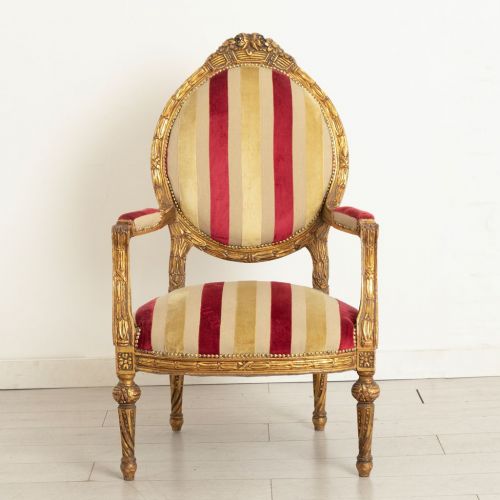
Makers utilised timber, painted wood, and giltwood to construct the rigid frames of medallion back armchairs, applying detailed carving to the crests and rails. Giltwood finishes provided a bright, luxurious surface, while painted wood offered a more understated decorative effect.
Upholstery formed a central part of the construction, utilising materials such as fabric, velvet, and silk damask to pad the round backrests and seats. Brass elements sometimes appeared in the detailing, securing or accentuating the upholstered components.
Listings span from the eighteenth century through the Edwardian era to the 1930s, featuring timber, giltwood, and painted wood.
What varies in quality
The sophistication of the wood carving determines much of the visual distinction between examples, with crisp, deeply defined ornamentation marking superior craftsmanship. Smoother, flatter detailing indicates a more utilitarian approach to production.
The choice of covering material and the precision of the upholstery work shift the character of each piece. Original or high-grade textiles like silk damask elevate the presentation compared to standard fabric replacements.
The Medallion Back Armchairs Glossary
- Giltwood
- Wood that has been coated with a thin layer of gold leaf or gilt. This finish creates a reflective, brilliant surface often found on formal neoclassical seating.
- Fauteuil
- An open-arm armchair with upholstered back and armrests, originating in France. The wooden frame remains largely exposed around the padded sections.
- Louis XVI Style
- A neoclassical design movement characterised by straight lines, symmetry, and classical motifs. This aesthetic heavily influences the circular forms seen in these chairs.
- Silk Damask
- A reversible figured fabric traditionally woven from silk, featuring patterns created by contrasting warp and weft threads. It provides a dense, patterned texture suitable for formal upholstery.
- Neoclassical
- A style reviving classical Roman and Greek art forms, emphasising proportion, restraint, and classical ornamentation. It forms the primary design basis for medallion back furniture.
Medallion Back Armchairs: Frequently Asked Questions
Where should I place these chairs?
These armchairs suit drawing rooms, bedrooms, or formal dining spaces where their decorative wooden frames can remain visible.
They work well as standalone accent pieces or paired alongside matching sofas and salon suites.
Are these chairs comfortable for daily use?
Most examples feature padded seats and supportive backrests designed for formal sitting rather than lounging.
The open arm design allows for straightforward movement while seated upright.
How do I identify the period?
Original eighteenth-century pieces display distinct hand-carving techniques and timber ageing beneath the finish.
Revival pieces from the nineteenth and twentieth centuries often adopt cleaner machine-assisted cuts while imitating earlier French motifs.
What is the difference between giltwood and painted wood?
Giltwood applies a metallic gold leaf surface to the timber frame to catch the light in formal interiors.
Painted wood utilises solid pigments, offering a softer, matte finish typical of provincial or bedroom furniture.