



Traditional French Accent Chairs
Traditional french accent chairs bring decorative elegance and distinct seating comfort to a room.
Traditional French Accent Chairs
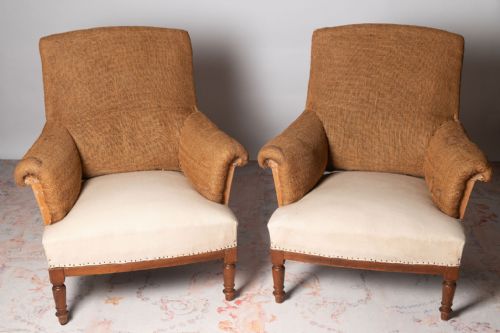
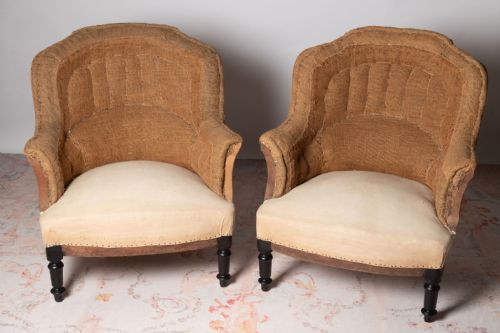
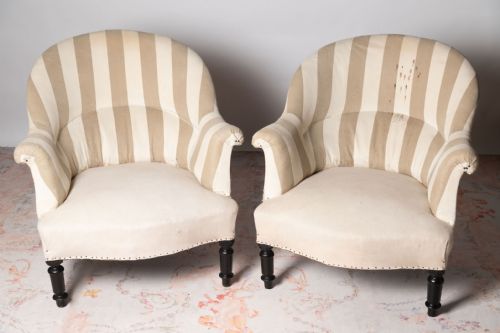
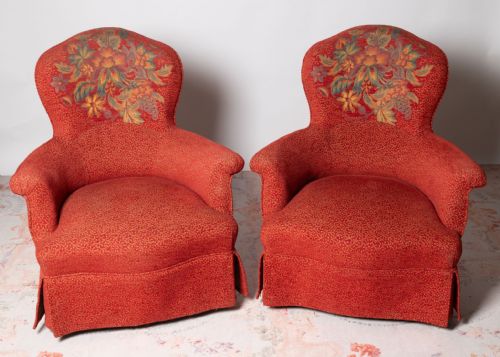
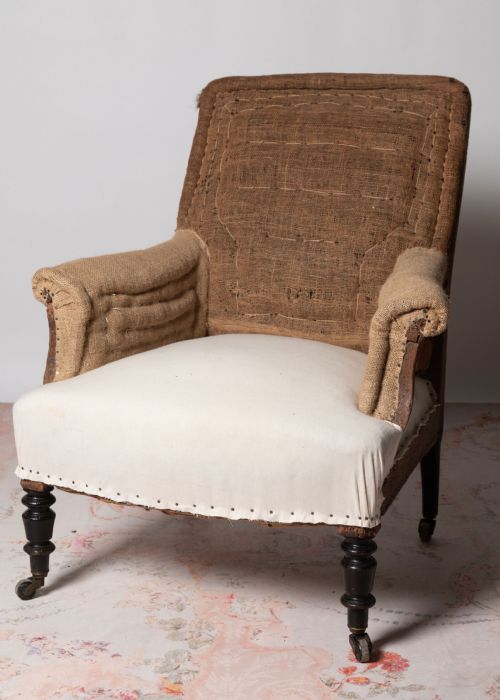
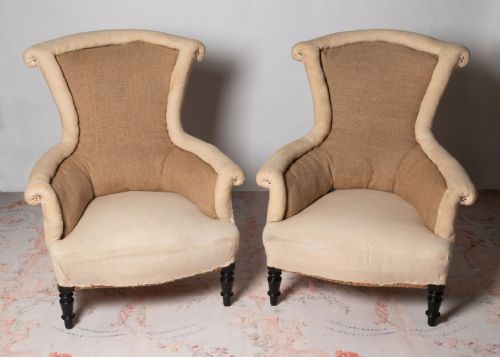
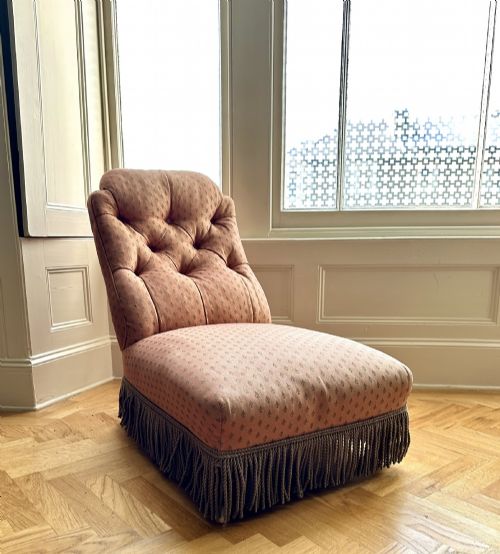
Traditional french accent chairs encompass a variety of seating forms designed for salons, libraries and living spaces, drawing on historical styles like Napoleon III and various revival periods. Buyers searching for traditional french accent chairs encounter distinct seating types including armchairs, side chairs and slipper chairs, often shaped with open arms or fully upholstered frames.
The pieces appearing on this page span several decades, incorporating nineteenth-century examples alongside early twentieth-century interpretations. Walnut and mahogany feature frequently as primary frame woods, while upholstered variants incorporate leather, fabric, calico, hessian and needlework to define their seating surfaces.
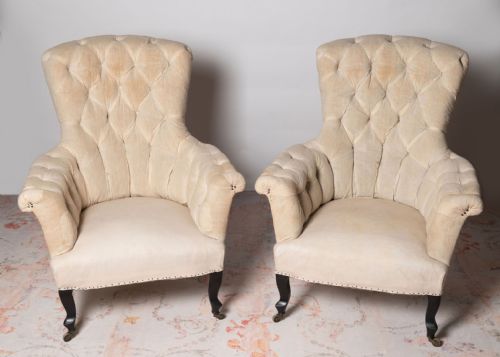
Many examples arrive styled in specific regional or historical revivals, ranging from French chateau aesthetics to ornate giltwood and ebonised designs. Buyers often select these chairs to introduce decorative seating options that function as standalone visual focal points within a room.
Materials and construction methods
Frames rely heavily on hardwoods such as walnut, mahogany, rosewood and giltwood, shaped through traditional woodworking joinery to support padded or caned seating areas. Walnut frames often display carved details, whilst mahogany and rosewood components provide sturdy structural integrity for open armchairs and salon seating.
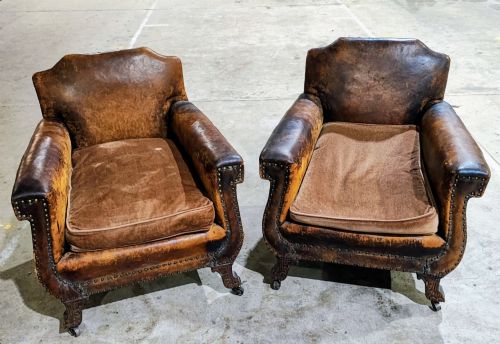
Upholstery techniques utilise supportive internal webbing, springs and stuffing covered in durable materials including leather, sheep's hide, textile, calico and hessian. Brass accents and decorative fringes frequently finish the edges of upholstered panels, complementing exposed wooden legs and carved frames.
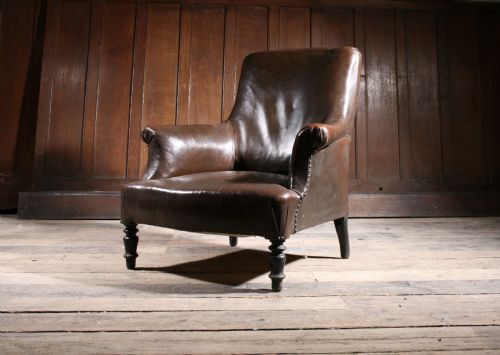
Sheep's hide leather club chairs offer tactile comfort.
Markers of distinction and craftsmanship
Quality separates through the intricacy of the timber carving and the structural rigidity of the underlying wood frame. Finer examples exhibit carefully joined hardwood structures, crisp hand-carved ornamentation on walnut or rosewood, and well-executed ebonised or giltwood finishes.
The standard of upholstery and the retention of original materials also mark differences across the range. Chairs maintaining period leather, detailed needlework, or authentic split cane work demonstrate higher levels of preserved craftsmanship compared to later re-covered pieces.
The Traditional French Accent Chairs Glossary
- Bergere
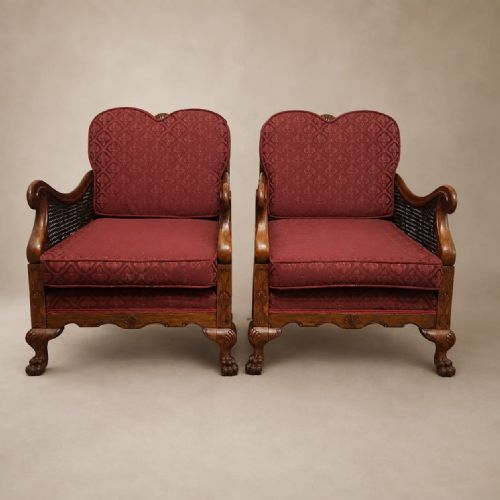
- An enclosed upholstered armchair with wooden framing and typically a cane back and sides. This form originated in France and offers a wide seat base.
- Fauteuil
- An open-armed upholstered armchair with an exposed wooden frame. The arms usually feature padded elbow rests.
- Giltwood
- Timber that has been coated with a thin layer of gold leaf or gilt finish. This treatment appears frequently on decorative nineteenth-century salon chairs.
- Ebonised
- Wood treated with a dark stain or finish to imitate ebony. This technique creates a dark, uniform appearance on chair legs and frames.
- Caning
- Woven rattan or split cane material utilised for chair backs and seats. It provides a lightweight yet durable supporting surface.
Traditional French Accent Chairs: Frequently Asked Questions
What defines a traditional french accent chair?
These chairs combine historical design influences, such as Napoleon III or chateau styles, with exposed wooden frames and varied upholstery.
They serve as decorative and functional seating options within domestic interiors, utilising woods like walnut, mahogany and rosewood.
How do I identify the period of a chair?
Dating relies on observing construction techniques, wood types, and stylistic indicators associated with nineteenth-century or early twentieth-century manufacturing.
Specific revival styles and material choices such as original leather, calico or split cane provide further clues regarding age.
Where should I place an accent chair in my home?
These chairs suit living rooms, bedrooms, or libraries where they function as standalone decorative pieces or reading seats.
Their varied forms, from slipper chairs to large library armchairs, allow them to fit into corners or act as companion seating.
How do I care for antique leather upholstery?
Antique leather requires gentle cleaning and conditioning to maintain its flexibility and prevent drying over time.
Avoiding direct sunlight and excessive heat helps preserve the original hide and finish of the chair.