



Fluted Leg Salon Chairs
Fluted leg salon chairs are refined seating options bringing French Neoclassical elegance to formal rooms through carved channel details and graceful proportions.
Fluted Leg Salon Chairs
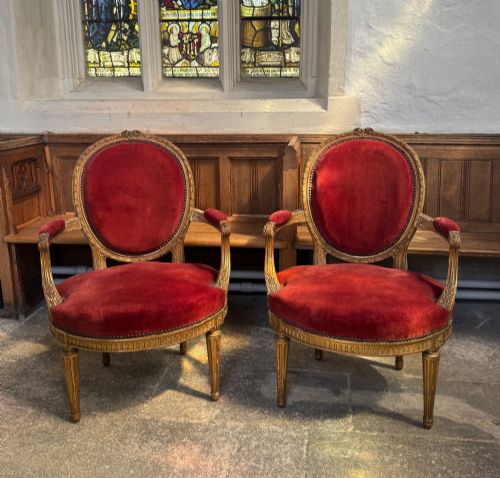
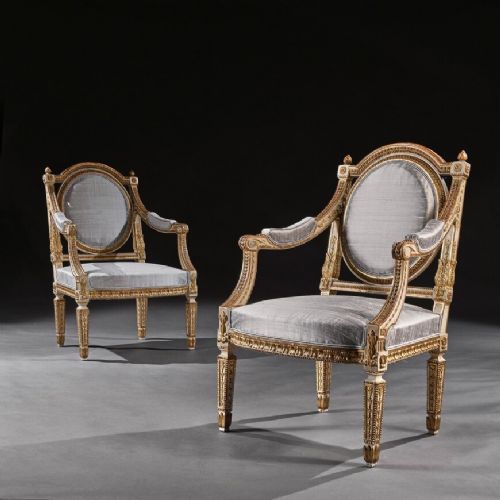
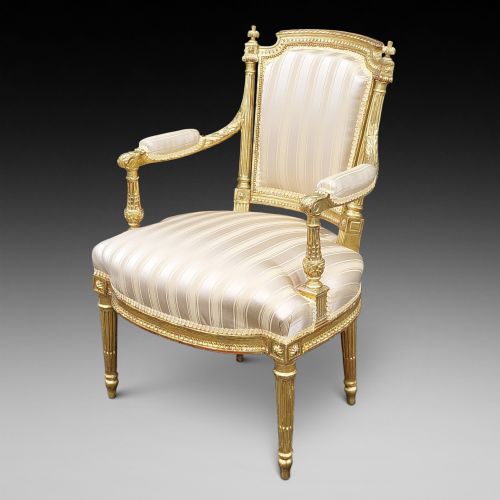
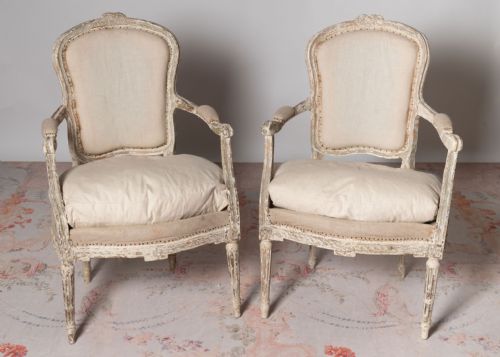
Fluted leg salon chairs combine formal seating design with classical architectural carving, predominantly emerging in French Louis XVI and revival styles. These pieces appear frequently as armchairs, fauteuils, bergeries, and occasionally as side chairs or matched salon suites.
The material evidence spans pieces from the eighteenth, nineteenth, and early twentieth centuries, drawing heavily on French and continental traditions alongside English interpretations. Buyers encounter giltwood frames, painted wood finishes, and carved mahogany supports upholstered in damask or plain fabrics.
The selection here encompasses eighteenth-century examples up to Edwardian and early twentieth-century revivals. Giltwood and painted finishes dominate the aesthetic, anchored structurally by beech, walnut, and mahogany.
Materials and construction methods
Frames rely on hardwoods such as beech, mahogany, and walnut, which provide the structural integrity required for slender carved components. Joinery techniques unite seat rails and backrests with pegged mortise and tenon joints.
Surfaces receive intricate hand-carved fluting along the legs, mirroring classical stone columns, followed by applications of gold leaf or paint. Upholstery utilises traditional stuffing methods secured over webbing, finished with damask or woven fabrics.
Listings feature periods spanning from the eighteenth century through the Edwardian era, predominantly utilising giltwood, painted wood, and mahogany.
Distinguishing quality across examples
Quality rests in the crispness of the hand-carving along the channelled legs and the proportional harmony of the frame. Superior examples demonstrate deep relief work in the wood and refined gilding or paint layering.
The integrity of the underlying hardwood frame and the fidelity of the Neoclassical revival styling separate standard decorative seating from finer artisan pieces. Original surface treatments and period upholstery textiles further elevate an item's standing.
John Linnell
The Fluted Leg Salon Chairs Glossary
- Fluting
- A series of shallow, parallel concave grooves carved vertically into a column or furniture leg. This decorative technique derives from classical architecture.
- Fauteuil
- An open-armed upholstered armchair with exposed wooden arm supports and frame. The style originates from seventeenth and eighteenth-century France.
- Bergère
- An enclosed upholstered armchair featuring padded sides and a loose seat cushion. These comfortable seats became popular during the Louis XV and Louis XVI periods.
- Giltwood
- Timber coated with a thin layer of gold leaf applied over a prepared gesso base. This opulent finish defines formal European seating.
- Damask
- A reversible figured fabric woven on a jacquard loom with patterns formed by contrasting warps and wefts. It frequently upholsters formal nineteenth-century salon chairs.
Fluted Leg Salon Chairs: Frequently Asked Questions
What defines a fluted leg salon chair?
These seats feature vertical concave channels carved directly into the wooden legs, recalling ancient classical columns. They typically align with French Louis XVI or Neoclassical aesthetic traditions.
Craftsmen applied this detailing to armchairs, side chairs, and larger matching suites intended for formal reception rooms.
How do I identify Louis XVI style pieces?
Louis XVI pieces reject curved baroque lines in favour of straight tapered legs, geometric symmetry, and classical motifs like acanthus leaves and fluting. The frames often display crisp architectural angles.
Giltwood and painted finishes are common characteristics found on these formal European seats.
Were these chairs used in formal rooms?
Nineteenth and early twentieth-century households utilised these elegant chairs primarily in receiving parlours and formal drawing rooms. They served both as decorative accents and functional seating for guests.
Pairs and complete salon suites allowed homeowners to create balanced, symmetrical seating arrangements.
How should I integrate them into a modern interior?
Pair a single giltwood armchair with contemporary upholstery to create a striking focal point in a minimalist living space. Alternatively, use a matched pair of side chairs in a bedroom or hallway.
Ensure the room's lighting highlights the carved wooden channels and painted or gilded surfaces of the frame.