


Vintage French Earthenware
Vintage French earthenware brings rustic character and hand-painted artistry into a room, offering tactile appeal through centuries of provincial and studio forms.
Vintage French Earthenware
Vintage French earthenware encompasses a broad spectrum of domestic and decorative pottery originating from French provincial workshops and major ceramic centres. When searching for vintage French earthenware, buyers encounter everything from utilitarian storage vessels to highly decorative tablewares.
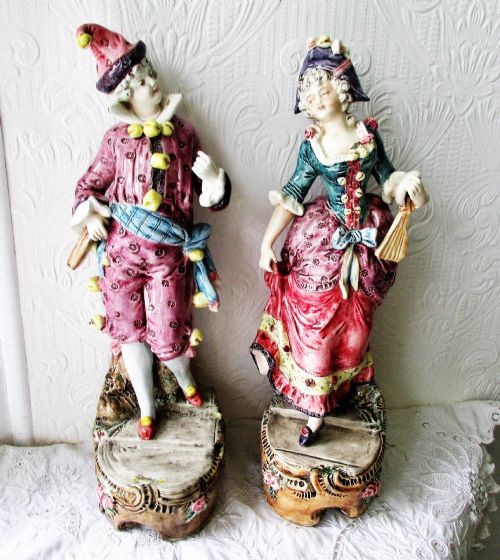
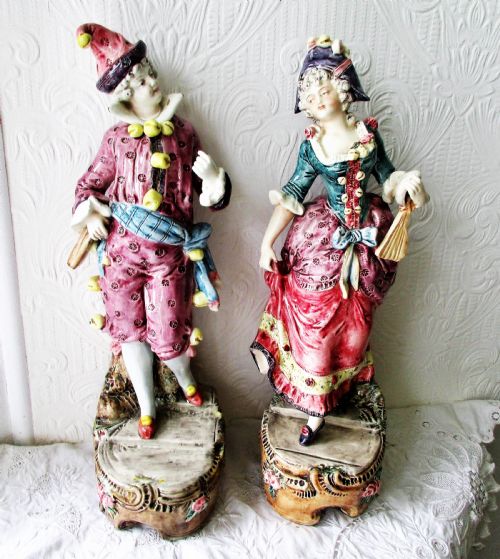
The selections span distinct periods, stretching from the eighteenth century through the nineteenth century and into twentieth-century Art Deco creations. Common forms include confit pots, olive jars, confit jars, sauceboats, salt cellars, vases, and faience dishes.
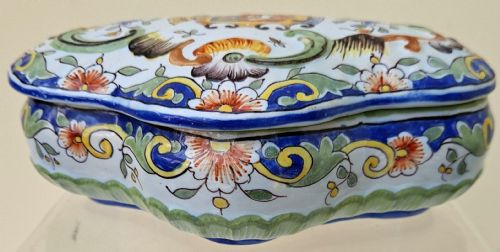
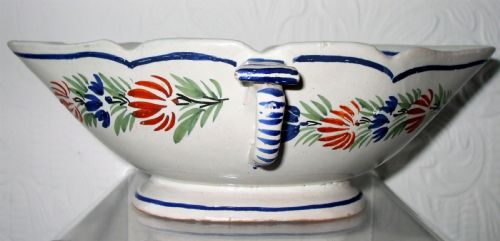
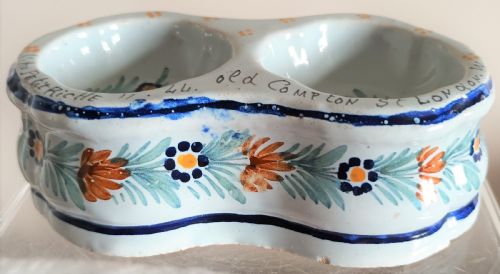
Regional variations feature strongly, with Quimper, Desvres, Rouen, and Gien providing characteristic styles. Pieces range from unpretentious green-glazed terracotta to tin-glazed faience painted in manganese, yellow, blue, and white.
Materials and Craftsmanship
Makers utilised local terracotta and earthenware bodies, shaping vessels by hand or on the wheel before applying glazes. Tin glaze provided a smooth white background suitable for intricate hand-painted decoration in the faience tradition.
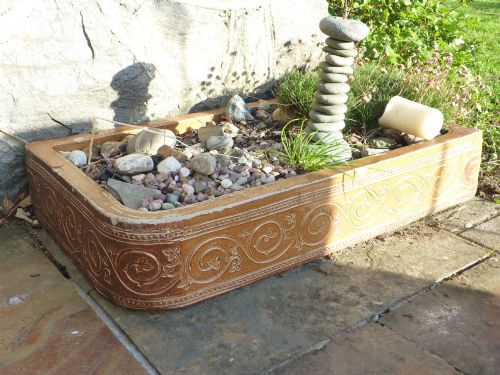
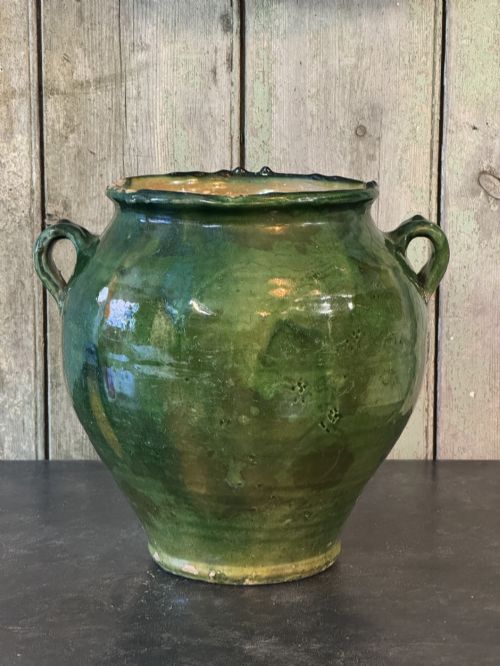
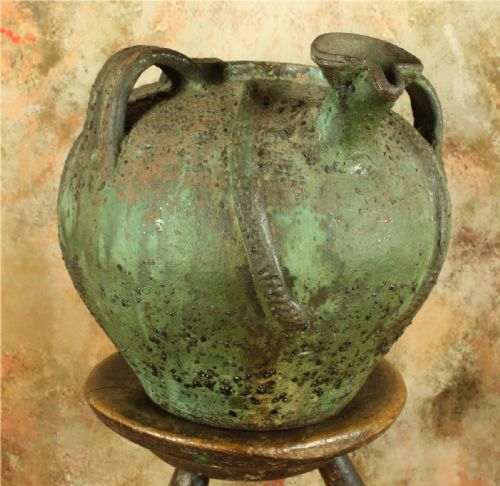
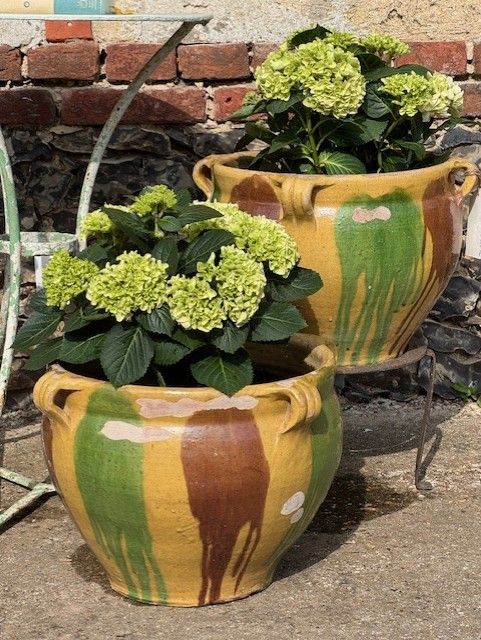
Functional items such as confit pots and olive jars received rich lead or green glazes to ensure impermeability for storing oils and preserves. Dribble glazes and slip techniques added surface texture to utilitarian planters and agricultural vessels.
Normandy pottery traditions included delightfully rotund ceramic pig sculptures, capturing farmyard inhabitants in glazed earthenware.
Judging Quality and Execution
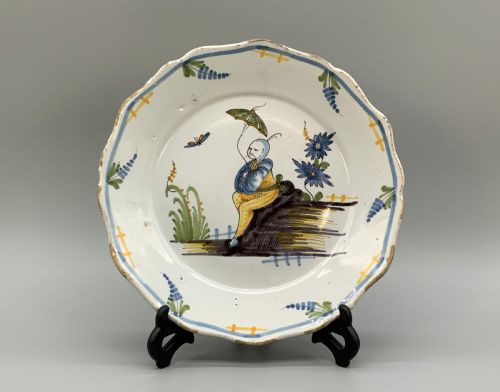
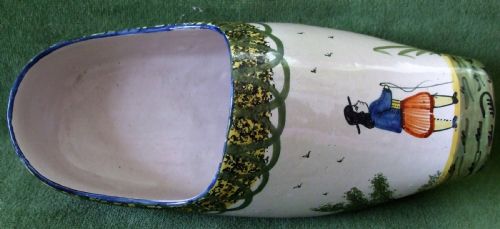
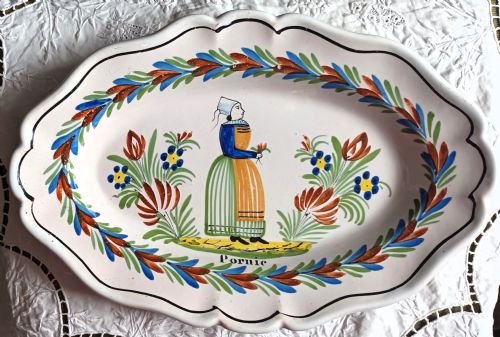
Quality rests upon the crispness of the hand-painted brushwork on faience chargers, plaques, and dishes. Finer examples display confident pigments and balanced compositions, particularly in traditional Chinoiserie or regional costume motifs.
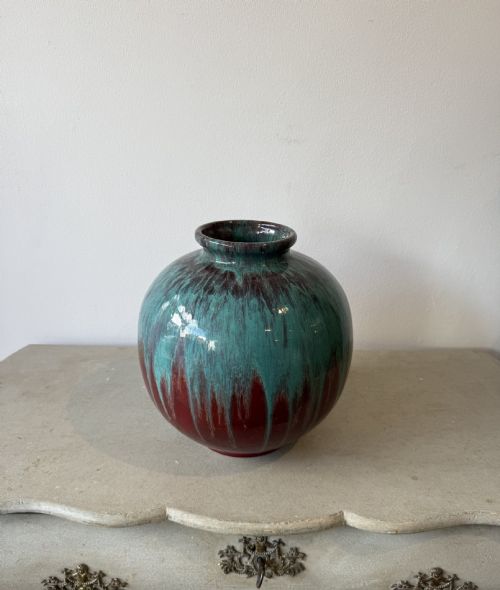
The depth and consistency of the glaze also separate standard utility wares from superior artistic productions. Rich drip effects, even coverage on large olive jars, and well-preserved surface details elevate certain pieces above routine kitchenware.
Guichard Carriès·Quimper·Desvres·Rouen·Gien·Longwy·Lille·Castelnaudary·Bavent
The Vintage French Earthenware Glossary
- Faience
- Tin-glazed earthenware produced in France, typically featuring painted decoration over an opaque white enamel. It encompasses both regional kitchen wares and fine decorative plates.
- Confit pot
- A utilitarian French earthenware jar featuring handles, traditionally used for preserving meats. These vessels commonly carry a rich green or honey-coloured glaze.
- Tin glaze
- An opaque white glaze containing tin oxide that creates a smooth surface for painting. This technique formed the basis of traditional European majolica and faience.
- Quimper
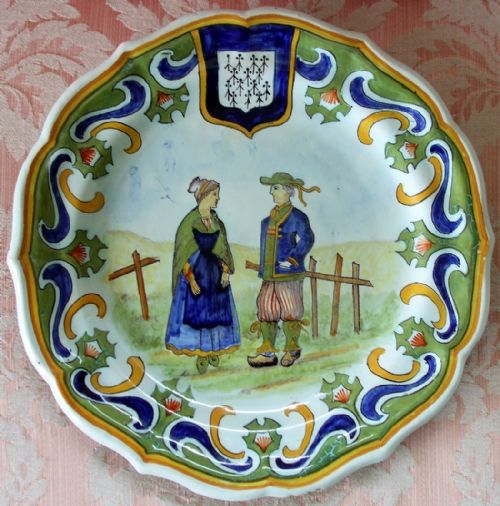
- Pottery produced in the French town of Quimper, famous for hand-painted peasant figures and floral motifs in blue, yellow, and green. Pieces often bear specific workshop initials.
- Terracotta
- Fired but unglazed or transparently glazed clay of a brownish-red colour. It appears frequently in French garden pots, olive jars, and sculptural busts.
Vintage French Earthenware: Frequently Asked Questions
What are French confit pots used for?
Confit pots served as practical storage vessels in French farmhouses for preserving meats such as duck or pork under fat. Their heavy earthenware walls and interior glazes kept provisions secure over long periods.
Today, these jars function as decorative interior objects, suitable for holding dried botanicals or standing empty on tables and shelves to display their rich glazes.
How do I identify Quimper pottery?
Quimper pottery is recognised by its distinctive hand-painted decoration, often featuring Breton peasants in traditional regional costume surrounded by floral borders. The palette relies heavily on blue, yellow, green, and red.
Most authentic pieces carry factory marks or initials on the base, such as HB, indicating the specific workshop of origin in northwestern France.
What is the difference between faience and terracotta?
Terracotta consists of fired clay that remains porous unless treated with a specific glaze, appearing in natural reddish-brown tones for garden pots and olive jars. It emphasises the raw material and simple forms.
Faience uses an earthenware body coated in an opaque white tin glaze, which provides a clean surface for colourful hand-painted designs, ornamentation, and pictorial scenes.
How should I clean antique earthenware?
Antique earthenware requires gentle care, using only warm water and a soft cloth to remove dust from the porous surface or older glazes. Harsh chemical detergents and abrasive scrubbers can damage historic glazes and exposed clay.
Items intended for plants should have a plastic liner placed inside rather than filling the historic vessel directly with wet soil and water.