

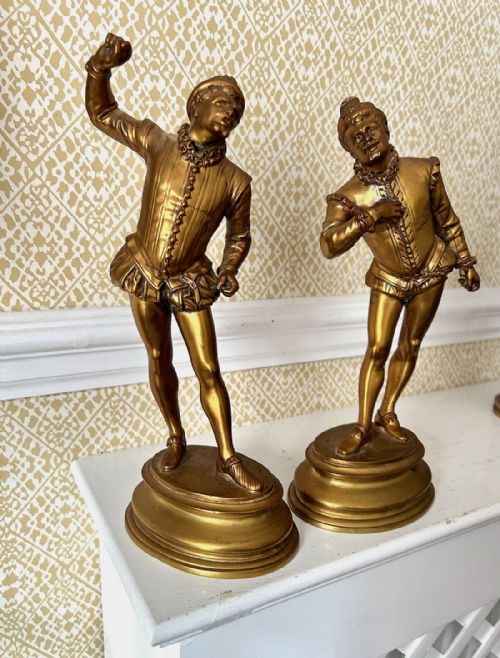


Pair French Ornaments
Pair french ornaments bring symmetry and continental character to a room, spanning decorative bronzes, painted porcelain figures, and marble cassolettes from the nineteenth and early twentieth centuries.
Pair French Ornaments
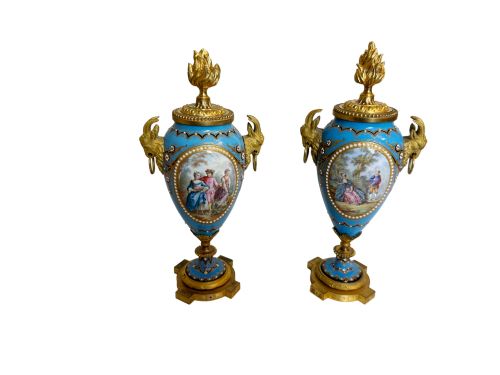
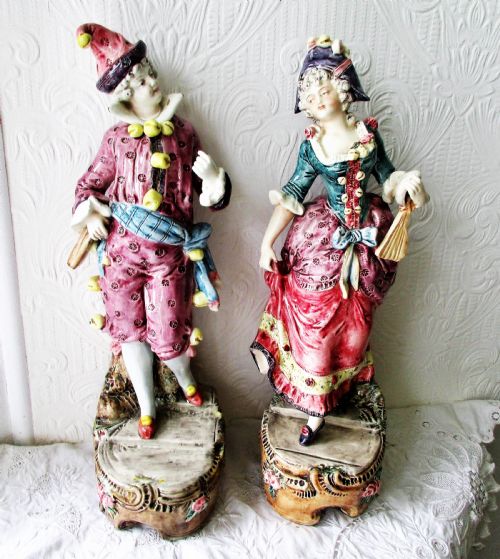
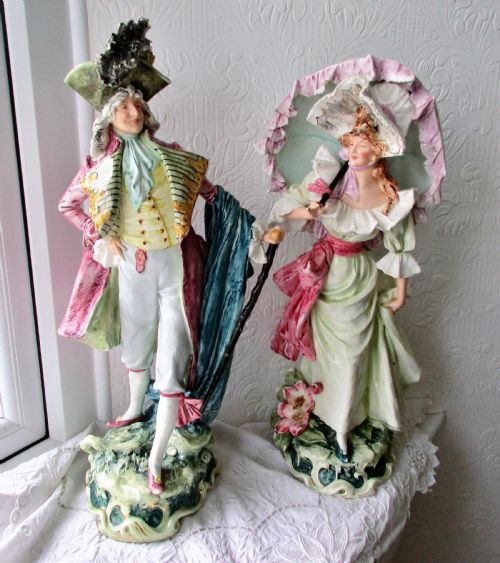
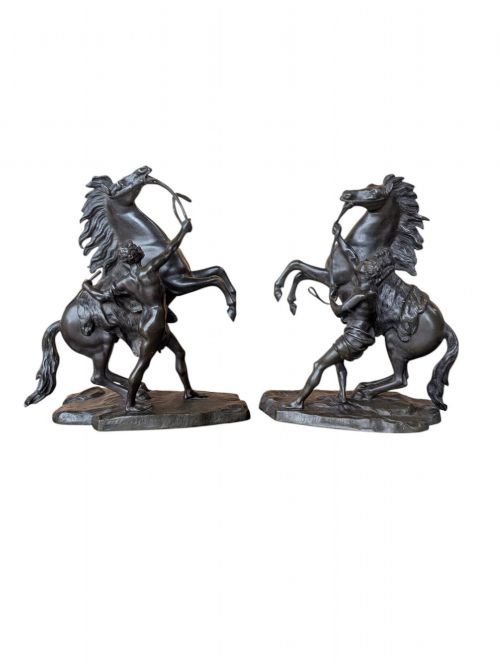
When you search for pair french ornaments, you encounter a diverse collection of matched decorative objects intended for symmetrical placement on mantelpieces, sideboards, or console tables. These pieces encompass cast bronze figures, porcelain figurines, marble cassolettes, and earthenware items originating from the nineteenth century up to the 1930s.
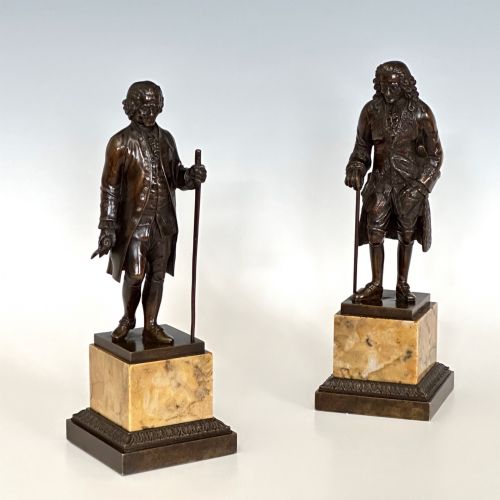
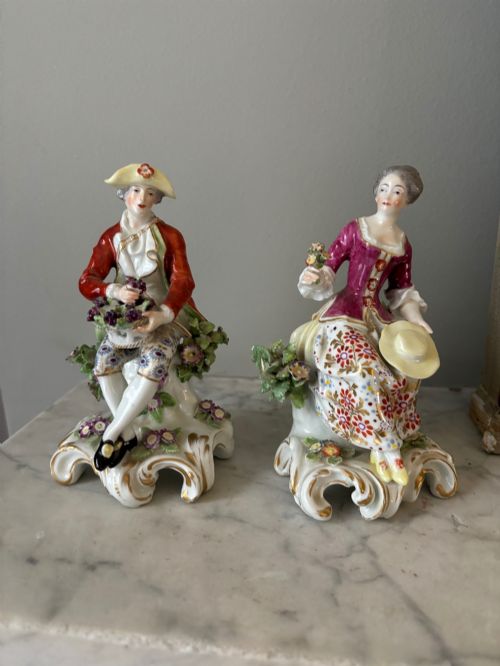
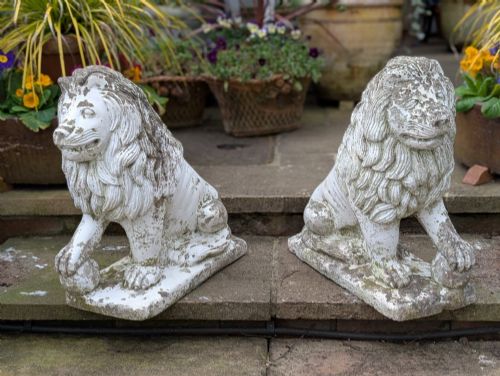
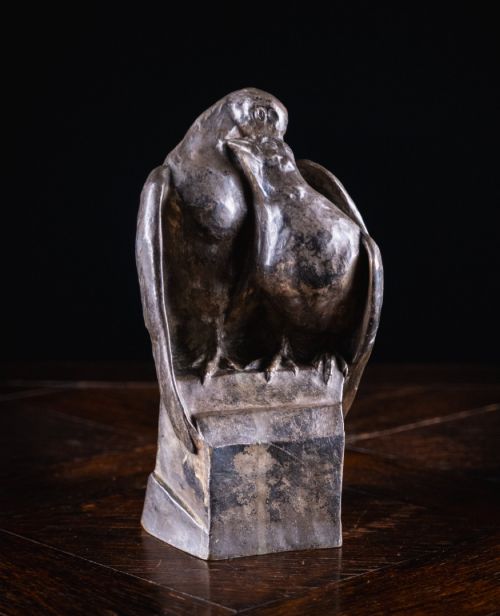
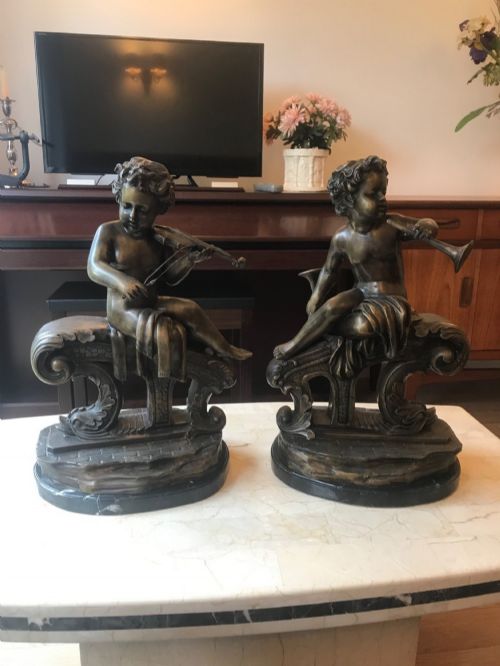
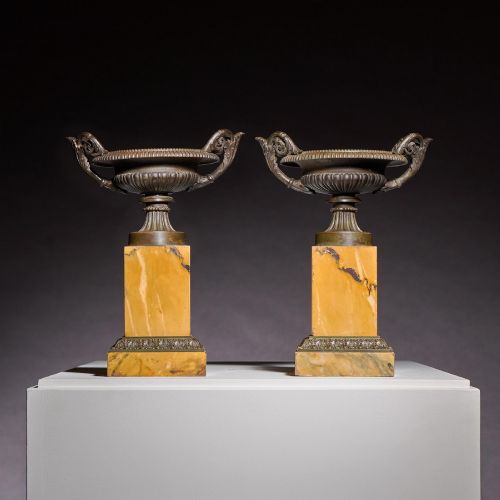
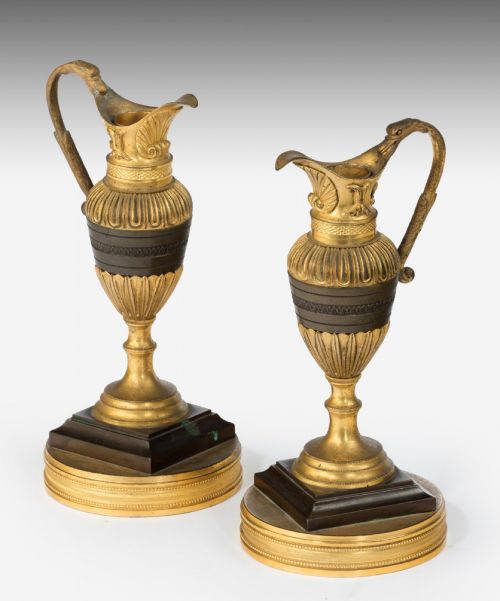
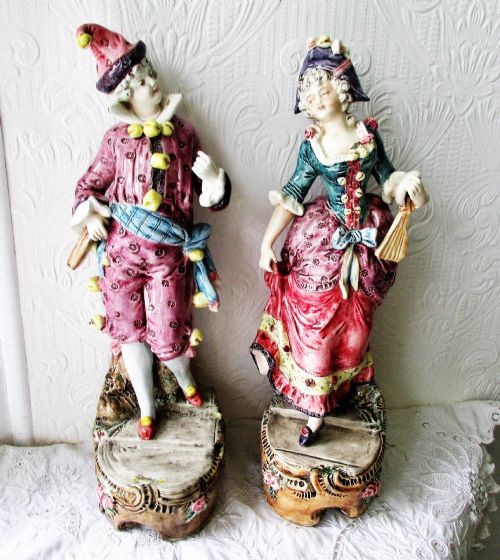
The versions most frequently met on this page include nineteenth-century bronze cherubs, mythological figures, and animals mounted on marble bases, alongside porcelain figures produced by factories such as Samson of Paris. Neoclassical tazzas, campana urns, and Empire amphora vases also appear regularly in pairs.
Makers and workshops referenced in the evidence include Edme Samson, Vion and Baury, Letu and Mauger, and the La Coutille factory, reflecting both original French production and nineteenth-century revival pieces modelled after earlier styles like Louis XVI and Rococo.
How they were made
The metal ornaments rely on bronze, gilt bronze, ormolu, and spelter, often shaped through traditional casting methods and finished with chasing, gold leaf, or patination. Many of these metal sculptures are mounted onto bases of Siena marble, white marble, or Egyptian onyx.
Ceramic pieces utilise porcelain, biscuit porcelain, earthenware, and faience, frequently decorated with hand-painted glazes and enamel details. Several figures incorporate marked bases or anchor marks pointing to specific nineteenth-century French and revival workshops.
Listings feature 19th-century and early 20th-century periods, utilising bronze, marble, porcelain, and earthenware.
What varies in quality
Quality rests upon the crispness of the casting in metal pieces and the precision of the modelling and hand-painting in porcelain and earthenware. Finer bronzes show sharp detail in facial expressions, drapery, and featherwork without excessive post-casting smoothing.
The integrity of the paired pieces determines their desirability, noting whether both objects share matching patination, identical dimensions, and corresponding bases. The choice of mounting materials, such as solid marble versus lesser stones, shifts the standing of the work.
Edme Samson·Vion And Baury·Letu And Mauger·La Coutille Factory·Louis Riche·Emile-Coriolan Guillemin·Frederique Cederlund-Ozanne
The Pair French Ornaments Glossary
- Ormolu
- A technique of applying finely ground high-carat gold to a bronze object using a mercury amalgamation process. This finish provides a warm, golden gleam characteristic of French decorative arts.
- Cassolette
- A decorative vessel designed with a reversible lid that functions either as an incense burner or an urn. They are frequently carved from marble or cast in metal.
- Biscuit porcelain
- Unglazed porcelain fired to produce a matte, tactile surface resembling fine marble. It was widely utilised in nineteenth-century French figures.
- Campana urn
- A classical bell-shaped vessel with a flared rim and footed base. They appear in bronze, spelter, and porcelain across the nineteenth century.
- Faience
- Tin-glazed earthenware decorated with opaque coloured glazes. It provides a distinct matte appearance found on continental revival figurines.
Pair French Ornaments: Frequently Asked Questions
What rooms suit pair french ornaments?
These ornaments suit mantelpieces, entrance hallways, and living rooms where symmetrical placement creates a balanced visual anchor.
Placed on console tables or sideboards, matched pairs provide a formal decorative arrangement derived from nineteenth-century interior design.
How do I care for bronze ornaments?
Bronze figures require gentle dusting with a soft, dry cloth to prevent the accumulation of grit within recessed chased details.
Avoid using liquid metal cleaners or harsh abrasives on patinated or gilt surfaces, as these can strip the original finish.
Are porcelain figures glazed?
Porcelain figures on this page include both glazed enamel finishes and unglazed biscuit porcelain items that present a matte surface.
Hand-painted details on these ceramics demand careful handling to preserve the integrity of the pigments.
How can I identify the period?
Periods are identified through stylistic cues such as Neoclassical symmetry, Rococo Revival asymmetry, and Art Deco geometric simplification.
Maker marks, factory stamps, and the type of underlying stone bases also assist in dating the manufacture.