
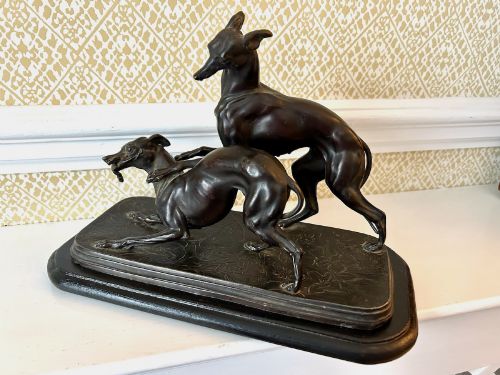
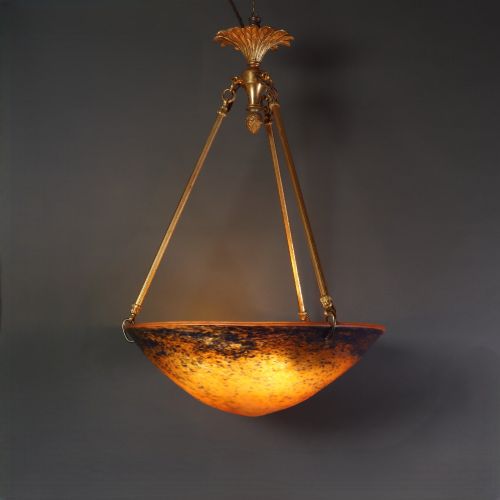


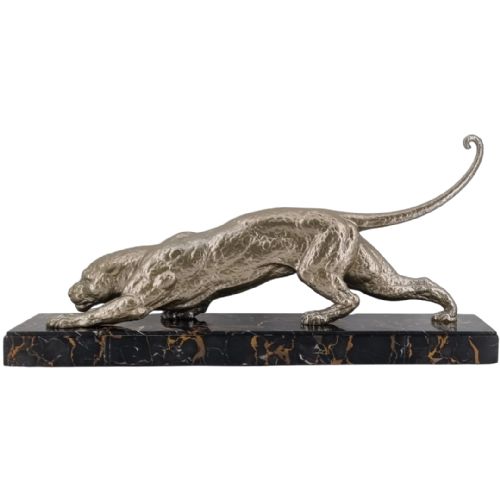
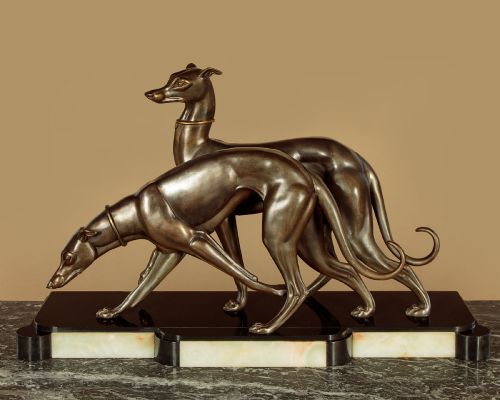




Vintage French Art Bronze
Vintage french art bronze pieces bring the elegance of early twentieth-century design into domestic spaces through enduring metalwork.
Vintage French Art Bronze
Vintage french art bronze pieces encompass decorative sculptures, functional lighting, and architectural elements created during the late nineteenth and early twentieth centuries. These objects capture distinct aesthetic shifts from organic floral motifs to streamlined geometric forms.
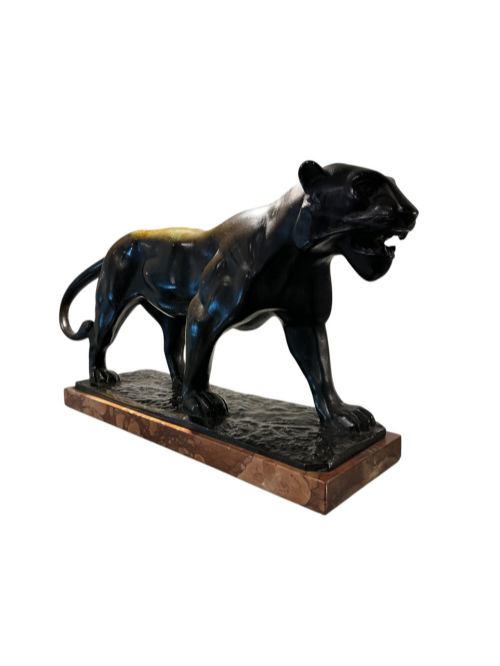
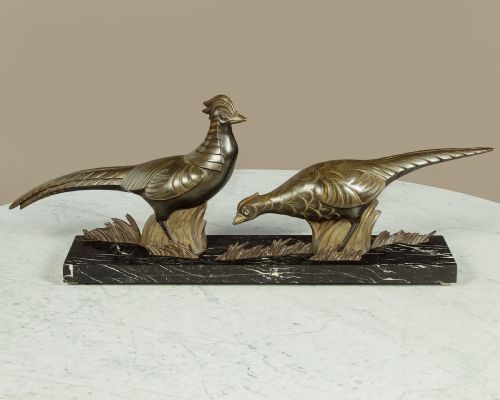
Buyers encountering this selection will frequently find Art Deco figural groups, animal studies, and lighting fixtures alongside earlier Art Nouveau items. Common material combinations pair metal with marble or onyx plinths to provide structural stability and visual contrast.
The objects originate from French workshops and studios operating during periods of significant artistic experimentation. Makers utilised traditional casting methods to produce both limited edition artistic bronzes and more commercial decorative wares.
Materials and Construction Techniques
Foundry workers employed the lost-wax casting technique, known as cire perdue, to reproduce intricate details in bronze sculptures and figural groups. Molten metal filled moulds created from original sculpted models, capturing fine textures in hair, drapery, and feathers.
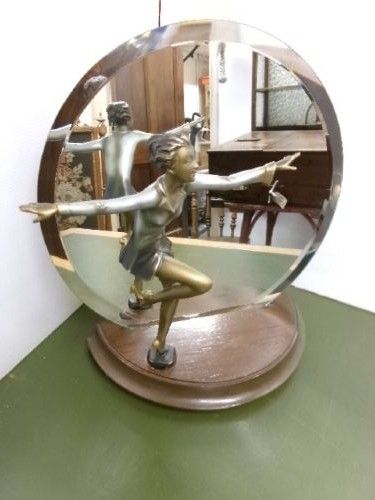
Many domestic items substituted solid bronze with spelter, a zinc alloy, which was subsequently painted or patinated to imitate true bronze finishes. These metal components were frequently mounted onto heavy bases carved from marble, onyx, or alabaster.
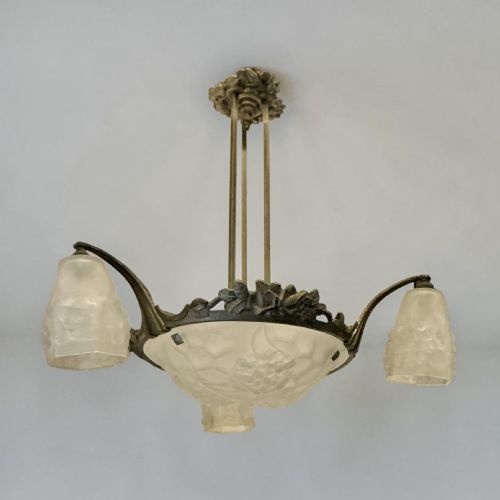
Lighting fixtures and decorative vessels incorporated additional materials such as pressed glass, crystal, and brass. Gilt bronze details and cold-painted surfaces added colour and varied tonal depth to ornamental objects and clocks.
Listings feature lighting, sculptures, and architectural salvage in bronze, spelter, and marble across Art Nouveau and Art Deco styles.
Factors Defining Quality
The crispness of the casting and the precision of the post-casting chase work separate standard commercial items from superior artistic commissions. Skilled artisans spent hours refining the raw metal surface with chisels and files to sharpen fine details.
Surface patination plays a significant role in distinguishing fine examples, with hand-applied patinas offering subtle tonal variations compared to uniform factory finishes. The integration between the metal figure and its stone or marble base demonstrates the maker's structural consideration.
Pieces bearing distinct artist signatures or foundry marks carry greater documentary weight than unsigned commercial productions. The weight and density of the metal alloy and the quality of the supporting materials dictate the overall durability and physical presence of the object.
Pierre le Faguays·Raymond Subes·Alexandre Ouline·Aurore Onu·G.E.C·Sega·C J R Colinet·Charmereine·Jean Antoine Houdon·Zoldan Kovats·Georges-Charles Coudray·Sibylle May·Auguste Moreau·Georges Leleu·Demetre Chiparus·Irénée Rochard
The Vintage French Art Bronze Glossary
- Spelter
- A zinc alloy commonly used as an economical alternative to bronze in decorative figures and lamps during the early twentieth century. It takes patination well but is softer and lighter than true bronze.
- Patina
- The surface coloration and sheen developed naturally over time or applied chemically by artisans during manufacture. It protects the metal and accentuates the sculptural contours.
- Lost-wax casting
- A traditional method of metal casting where a wax model is melted out of a mould and replaced with molten bronze. This technique allows for exceptional detail and undercuts in the final sculpture.
- Cold-painted
- A method of decorating bronze or spelter objects with non-fired paint applied after the casting and patination processes. This technique was frequently utilised on animal and human figures to add realistic or decorative colours.
- Onyx
- A banded variety of chalcedony frequently used for sculptural bases and lamp plinths during the Art Deco period. Its translucent quality and natural striping offered a luxurious contrast to patinated metal.
Vintage French Art Bronze: Frequently Asked Questions
What is the difference between bronze and spelter?
Bronze is a durable copper alloy that takes fine detail and deep patination, making it the preferred material for high-end sculptures.
Spelter is a softer, lighter zinc-based metal that manufacturers utilised for more accessible decorative items and novelty lamps.
How do I identify an Art Deco piece?
Art Deco works rely on clean geometric lines, stylised human or animal forms, and symmetrical compositions. Makers frequently paired patinated metal with contrasting geometric marble bases.
These designs reflect the aesthetic priorities of the interwar period, favouring mechanical precision and streamlined modernity.
Were these items used for lighting?
Many figural sculptures and decorative metal objects doubled as functional table lamps, wall sconces, or chandeliers. Artisans integrated bulb sockets and glass shades into the sculptural composition.
This allowed domestic interiors to combine art with interior illumination.
How should I clean vintage metalwork?
Dust metal surfaces gently with a soft dry cloth to prevent the accumulation of grime in recessed areas. Avoid chemical polishes that can strip away the original patination.
Stone and marble bases require mild soap and water, ensuring the moisture does not reach the metal joins.