




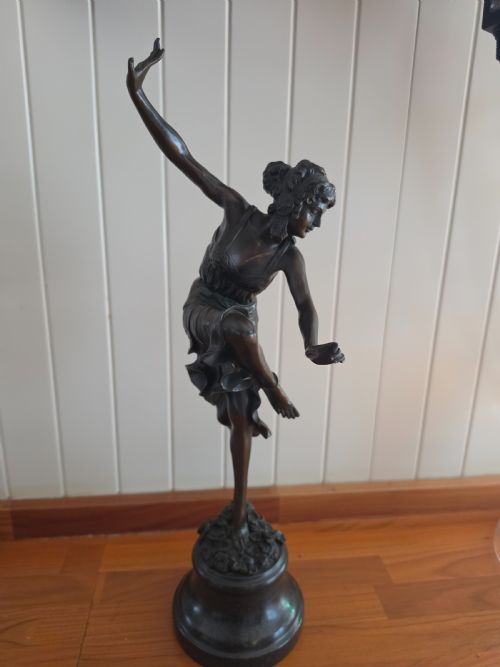
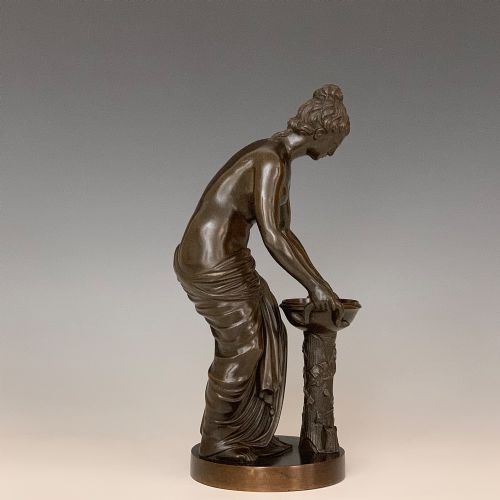


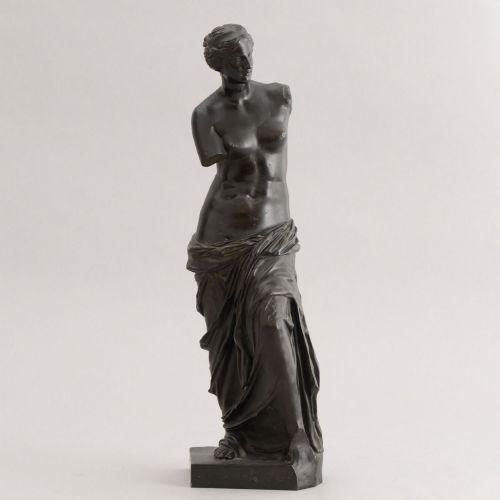


Classical Female Bronze Statue
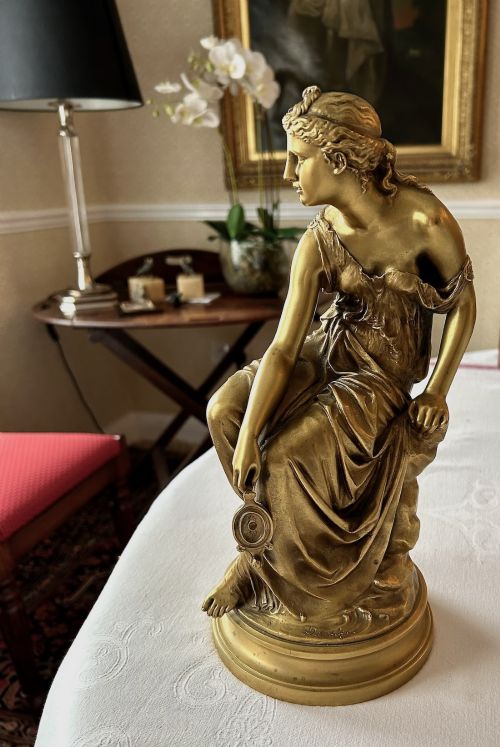
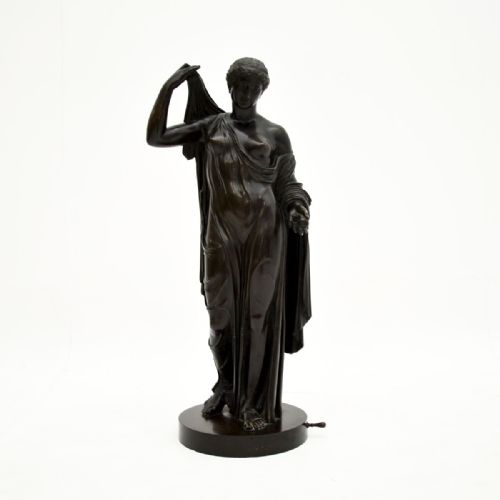
A classical female bronze statue brings mythological figures and robed maidens into interiors through enduring nineteenth and early twentieth century French foundry work.
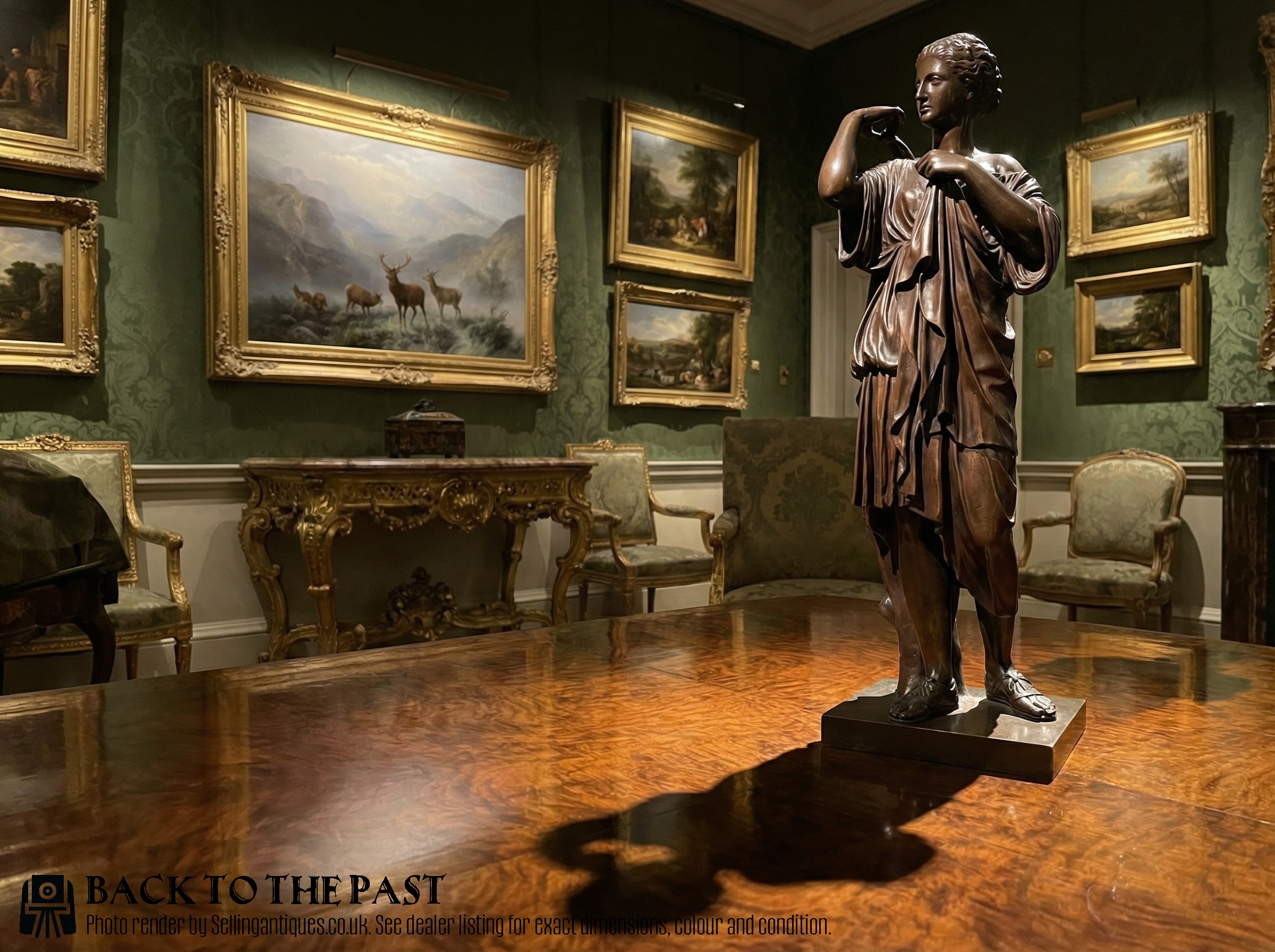
Classical Female Bronze Statue
A classical female bronze statue portrays figures from mythology, history, and allegory, including Venus, dancers, and robed maidens. These sculptures appear as standing figures, seated studies, and busts mounted on stone or marble bases.
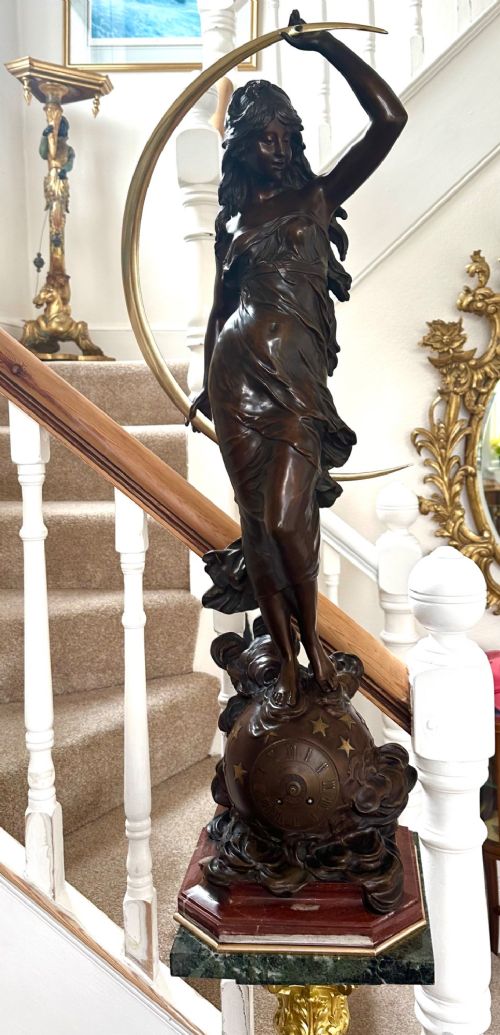
Most examples originate from French workshops spanning the nineteenth century through the art deco period. Makers cast figures ranging from cabinet-sized figurines to large scale bronzes and torcheres.
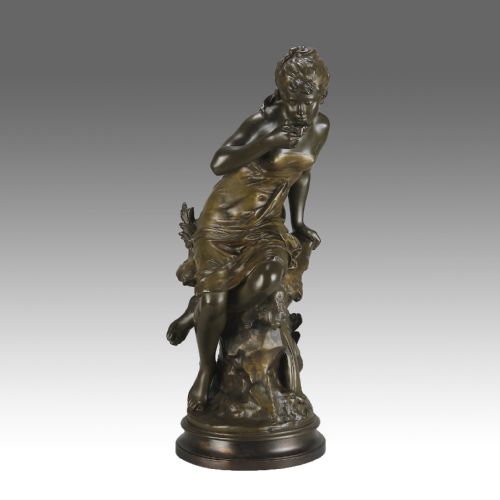
Subjects stretch from grand tour reductions of ancient antiquities to art nouveau nymphs and twentieth century dancers. The grouping also includes occasional marble, terracotta, and plaster figures sharing classical subject matter.
How they were made
Patination involved applying chemical solutions to heated metal to achieve brown, green, or dark tones, sometimes supplemented by cold painted polychrome details. Many figures were mounted onto turned marble plinths or integrated into lamp bases and clock sets.
Classical Female Bronze Statue Retail Price Guide 2026
Typical asking prices for classical female bronze statue among the pieces listed under this phrase on Sellingantiques today, from the lower quarter to the upper quarter. They describe what is for sale here now, not the wider market.
Several ladies hold harps, harpoons, and tambourines while standing nonchalantly on marble columns.
What varies in quality
Quality rests in the crispness of the metal chasing and the sensitivity of the modelling in hands, drapery, and expression. Weaker castings lose fine detail in hair and ornamentation, appearing blurred or smoothed out.
The sophistication of the patination and the quality of the marble base contribute significantly to the overall presence of the sculpture. Signed foundry editions or casts bearing named artist signatures command greater recognition than anonymous workshop output.
Etienne-Henri Dumaige·Ferdinand Barbedienne·Pierre le Faguays·August Moreau·Mathurin Moreau·E.Villanis·Edouard Drouot·Carrier-Belleuse·Georges-Charles Coudray·Humphrey Hopper·Hans Müller·Ernst Barrias
The Classical Female Bronze Statue Glossary
- Patina
- The surface coloration and finish achieved through chemical treatment or natural oxidation on bronze. It protects the metal and defines the visual depth of the sculpture.
- Grand Tour
- Souvenir objects acquired by travellers on European cultural journeys during the nineteenth century. These reductions reproduced famous classical sculptures found in Italian and French museums.
- Cold Painted
- A technique where paint is applied to cold metal without subsequent firing. This finish appears frequently on twentieth century figurines and decorative lamps.
- Torchere
- A tall ornamental stand or floor lamp designed to hold lights. Several examples integrate classical female figures holding illumination sources.
- Neoclassical
- A style reviving classical Greek and Roman aesthetic principles, focusing on proportion, drapery, and mythological subject matter.
Classical Female Bronze Statue: Frequently Asked Questions
What periods do these bronzes come from?
The pieces span the nineteenth century, the Victorian era, and the early twentieth century including art nouveau and art deco movements. French foundries dominated production across these decades.
Dates often reflect the active period of the sculptor or the operational window of the foundry that cast the edition.
How do I care for a bronze statue?
Dust the surface regularly with a soft dry cloth to prevent particulate accumulation. Avoid using chemical polishes or water which can damage the patinated finish.
Maintain stable indoor humidity away from direct heat sources to preserve both the metal and any attached marble components.
What is the difference between cast bronze and terracotta?
Bronze involves molten metal poured into a mould, offering high tensile strength and sharp detail. Terracotta consists of fired clay, providing a ceramic body with a matte, earthy texture.
Both materials were employed by classical sculptors, though bronze allowed for greater extension in limbs and drapery.