

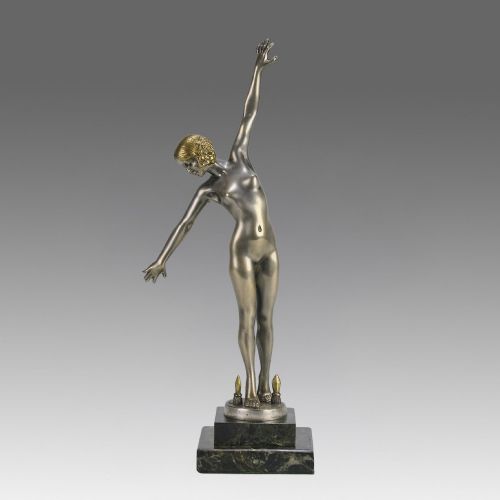
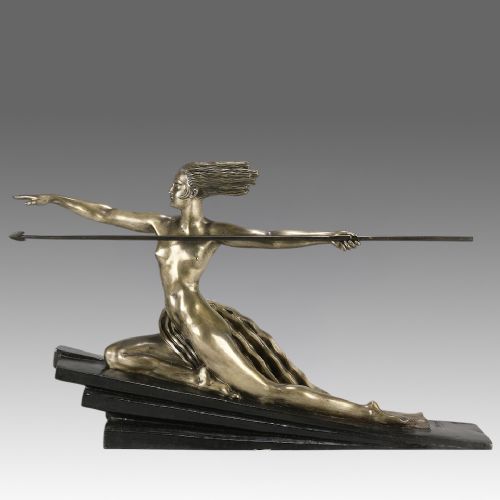
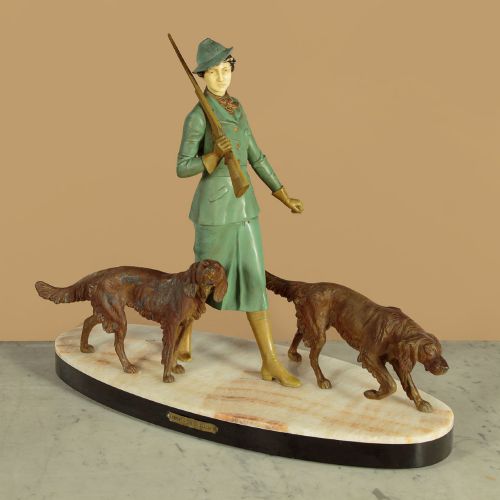

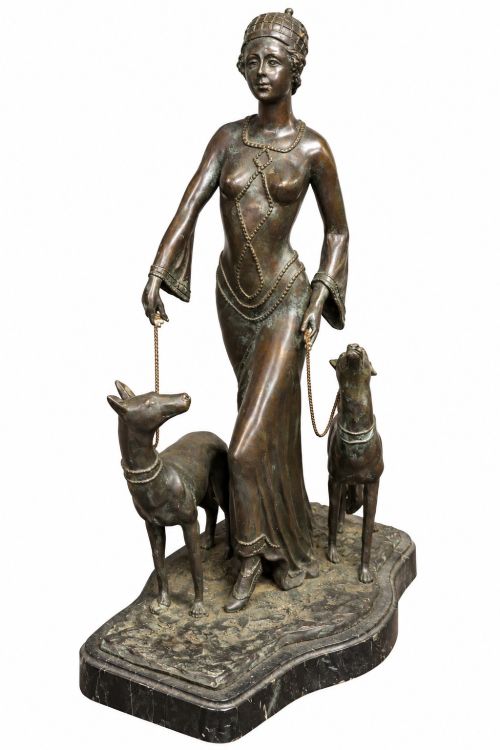

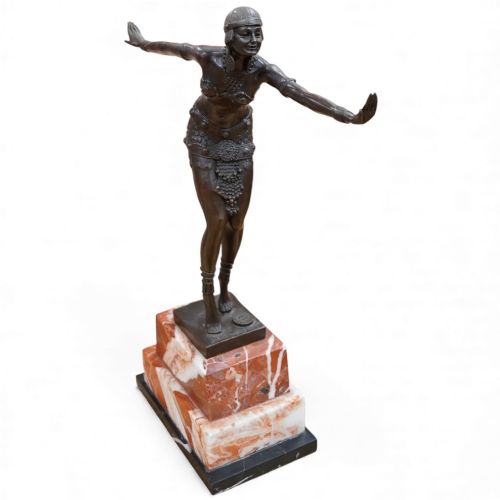
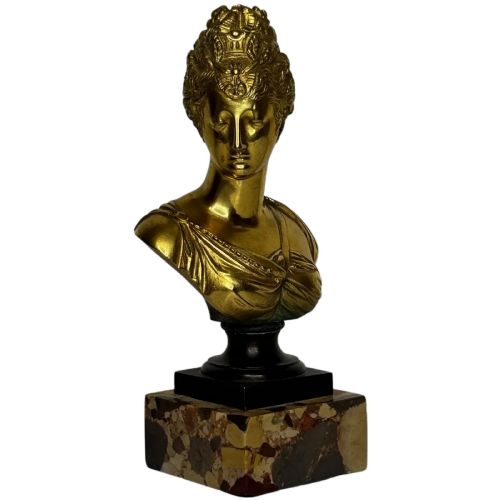
Bronze Sculpture on Marble Base
A bronze sculpture on marble base combines cast metalwork with stone plinths to create substantial display pieces for interiors.
Bronze Sculpture on Marble Base
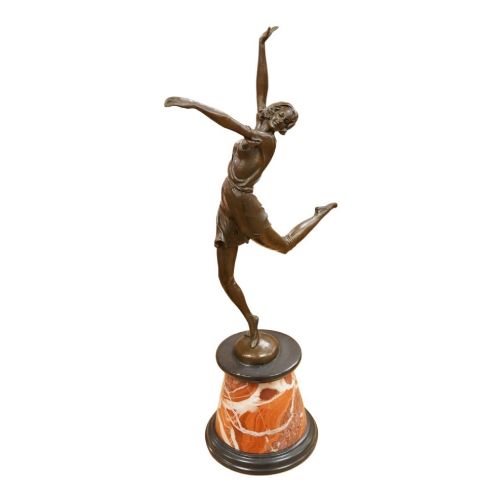
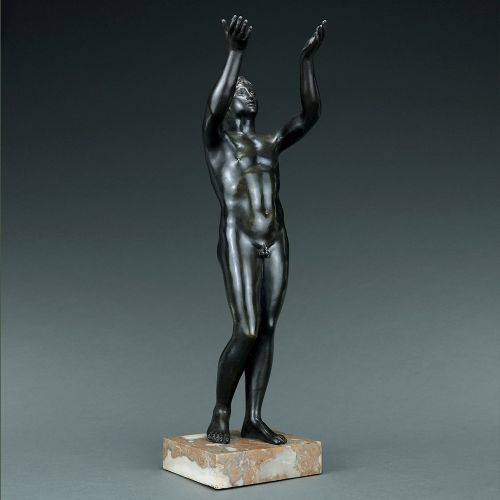
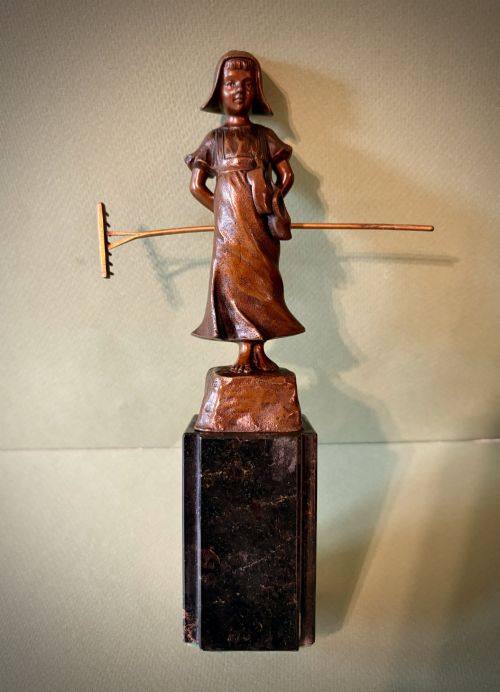
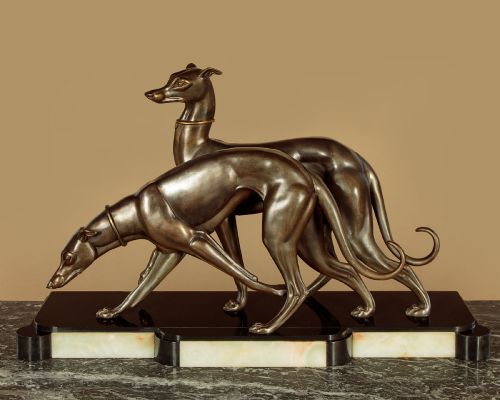
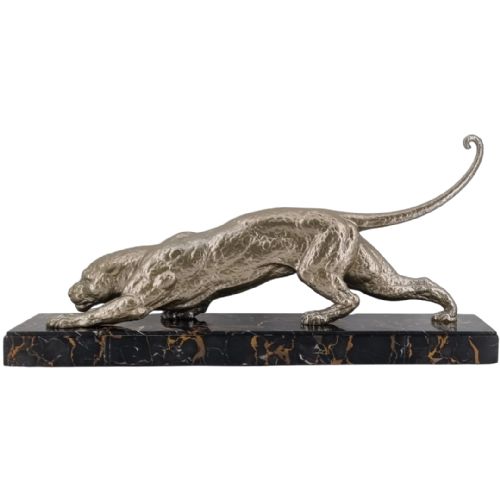
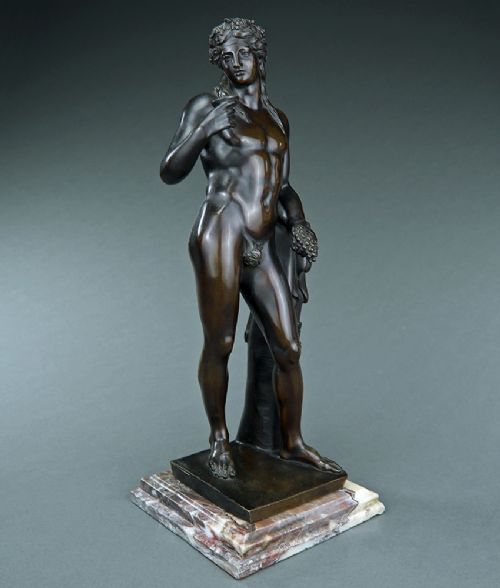
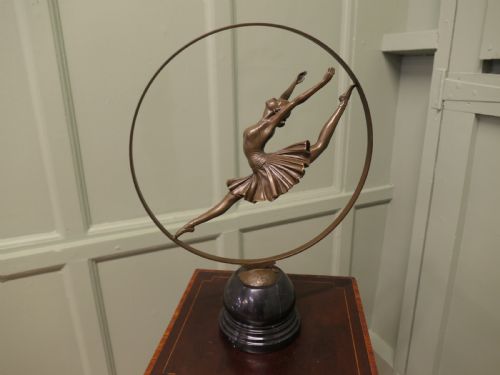
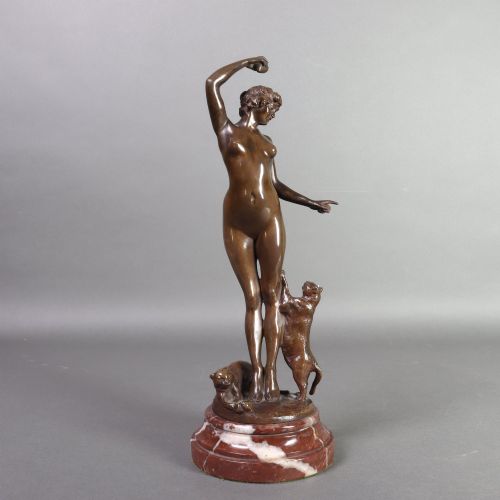
A bronze sculpture on marble base brings together cast metal figures and weighted stone plinths, encompassing works from the nineteenth century through the Art Deco era. Buyers encounter classical Grand Tour subjects alongside animalier studies and stylised dancers from the early twentieth century.
The selection ranges from small paperweights and bookends to large mantel clocks and sculptural groups. Figures of mythological subjects, animals, and human subjects appear mounted on standard square or stepped stone foundations.
Nineteenth century pieces often reflect classical or neoclassical influences, while later twentieth century examples adopt the sleek geometries of Art Deco. These objects function as decorative table centrepieces, functional bookends, and standalone display sculptures.
Materials and Technique
Foundries produced the metal elements using traditional casting methods, applying patination, cold painting, or silvering to achieve specific surface finishes. Bronze combined with gilt highlights or patinated metal creates varied tonal effects across the figures.
Mountings utilise standard marble, black marble, fossil marble, and porphyry to anchor the metal work securely. Bases are shaped and polished to provide a stable, contrasting foundation that frames the sculptural subject above.
Bronze Sculpture on Marble Base Retail Price Guide 2026
Typical asking prices for bronze sculpture on marble base among the pieces listed under this phrase on Sellingantiques today, from the lower quarter to the upper quarter. They describe what is for sale here now, not the wider market.
Listings feature works spanning from eighteen hundred through the nineteen forties, encompassing both classical Grand Tour subjects and Art Deco figures.
Judging Quality
Quality rests in the crispness of the metal chasing and the depth of the casting detail. Superior examples retain fine facial expressions, feather or fur textures, and clean separation between the metal figure and the stone mount.
The selection of the marble base also distinguishes tiers of production, with dense veined stones and porphyry indicating more ambitious manufacture. Heavier, well-fitted mounts provide better structural harmony with the bronze above.
Georges Gori·Gustave Dussart·Louis Garnier·D. H. Chiparus·Jean de Roncourt·Maurice Giraud-Rivière·Bruno Zach·Pierre Collinet·Carl Kauba·Barbedienne·Hans Müller·August Moreau·R Varnier·Emile Carlier
The Bronze Sculpture on Marble Base Glossary
- Animalier
- Art depicting animals, particularly popular in nineteenth century sculpture. Works capture creatures in naturalistic poses or dynamic motion.
- Grand Tour
- Souvenirs collected by travellers during cultural tours of Europe. These typically replicate classical antiquities in bronze on marble bases.
- Patination
- The chemical treatment or natural ageing of a metal surface. This process creates colour variations ranging from deep browns to green tones.
- Porphyry
- An igneous rock with large crystals, valued for its purple or red colour. It appears frequently in high end nineteenth century bases.
- Cold Painted
- Paint applied to unheated bronze or metal after casting. This technique adds colour to figures without subjecting pigments to kiln temperatures.
Bronze Sculpture on Marble Base: Frequently Asked Questions
Can these sculptures be displayed outside?
These pieces are designed exclusively for interior display. Changes in temperature and moisture can damage both the metal patina and the stone mount.
Keep them away from direct sunlight and damp environments to preserve the original finishes.
How do I identify an Art Deco piece?
Art Deco sculptures often feature streamlined figures, dancers, or sleek animals. Look for stepped geometric marble bases and silvered or patinated bronze surfaces.
Clothing and hair styles from these objects typically reflect the aesthetic of the nineteen twenties and thirties.
What is a Grand Tour bronze?
Grand Tour bronzes are nineteenth century replicas of classical statues created for European travellers. They frequently depict figures from mythology or ancient history.
These pieces usually feature distinct patination and are mounted on heavy marble or porphyry plinths.