


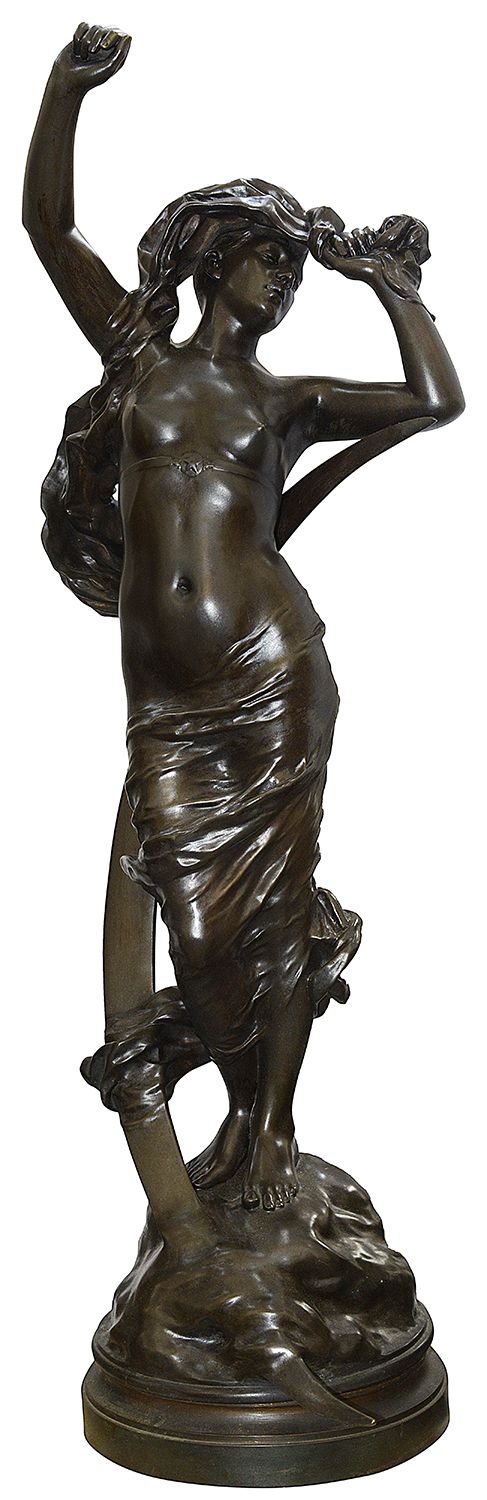


Bronze Nymph Sculpture
These bronze nymph sculpture pieces bring classical mythology and fluid movement into domestic spaces through enduring cast metal.
Bronze Nymph Sculpture
A bronze nymph sculpture depicts mythological female figures associated with nature, water, and woods, rendered in three dimensions. Buyers seeking this phrase encounter figurative works primarily originating from nineteenth-century French studios and later Art Deco and Art Nouveau movements.
The forms extend beyond standalone figures into functional and decorative objects. Pieces on this page include figural vases, table lamps, and sculptural groups featuring maidens, dancers, and classical nymphs.
Origins heavily lean towards French ateliers and named sculptors working from the nineteenth century into the early twentieth century. Most examples combine cast bronze with marble bases, patinated surfaces, or gilt highlights.
How they were made
Foundries utilised traditional metal casting techniques to capture intricate drapery, hair, and anatomical detail in bronze. Completed casts received surface treatments such as chemical patination, silvering, or gilding to create tonal variation.
Many figures integrate multi-material construction by mounting the cast metal directly onto carved marble plinths. Functional variants incorporate electrical components into lamp bases while retaining the central figural bronze.
Some nymphs prefer solitude at their bath, while others share space with electrical components or pipes.
What varies in quality
Quality rests in the crispness of the chase work and the sensitivity of the metal finish after casting. Superior examples retain sharp facial expressions, delicate hand details, and subtle patination rather than softened contours.
The relationship between the bronze casting and its mount dictates overall refinement. Heavy marble integration, precise signature placement, and complex multi-figure grouping distinguish the finest workshops from standard commercial production.
Zoldan Kovats·Auguste Moreau·S. Kinsburger·Clodion·Charles Korschann·Eugène Désiré Piron·Houdebine·Carrier·P.Sega·Antoine Coysevox·Barbedienne
The Bronze Nymph Sculpture Glossary
- Patinated bronze
- Bronze that has been treated with chemical solutions to produce a specific surface colour, ranging from deep brown to verdigris. This finish protects the metal and enhances the sculptural contours.
- Gilded bronze
- Bronze coated with a thin layer of gold or gold leaf, historically applied through mercury amalgamation or modern electroplating. It produces a bright, reflective surface often seen on decorative French objects.
- Art Nouveau
- A decorative art style prevalent around nineteen hundred characterised by fluid, organic lines and floral motifs. Figures from this period often blend human form with natural plant elements.
- Art Deco
- A twentieth-century design style favouring streamlined geometry and stylised forms, prominent in pieces dated around nineteen thirty. It brought a more angular, modern aesthetic to figural casting.
- Foundry mark
- A stamp or signature cast into the metal indicating the workshop responsible for pouring and finishing the piece. These marks help verify the production origin of nineteenth-century bronzes.
Bronze Nymph Sculpture: Frequently Asked Questions
How do I clean a bronze sculpture?
Dust the surface gently with a soft, dry microfibre cloth to prevent the accumulation of airborne grit. Avoid using water, soap, or abrasive metal polishes which can strip the historic patination.
Applying a very light coat of microcrystalline wax periodically helps protect the metal from atmospheric moisture. Buff the wax off thoroughly with a clean cloth to leave a stable, protective barrier.
What periods do these sculptures come from?
The pieces span from the nineteenth century through the Art Nouveau and Art Deco eras up to around nineteen thirty. Nineteenth-century works frequently reflect classical French revival styles and mythological themes.
Later pieces shift towards stylised modern forms, including functional table lamps and vessels. Dates generally correspond to the original design period or the active years of the casting foundry.
Are these sculptures solid bronze?
Most figural sculptures are produced using the lost-wax casting method, which creates a hollow metal shell with a specific wall thickness. This technique saves weight and metal while maintaining structural integrity.
Heavier components often rely on solid cast elements combined with dense materials like marble for stability. The base materials frequently include patinated metal, silvered bronze, or gilt brass alongside the primary bronze.
How do I identify a foundry mark?
Foundry stamps, maker signatures, and cachets are typically located near the base of the bronze figure. Look closely around the lower edge of the drapery or upon the top of the marble plinth.
These inscriptions can be cast directly into the metal during pouring or cold-chiselled by hand afterward. They provide vital clues regarding the origin and production period of the piece.