


Vintage Equine Sculpture
A vintage equine sculpture captures the power and grace of the horse in bronze, wood, leather, or brass.
Vintage Equine Sculpture
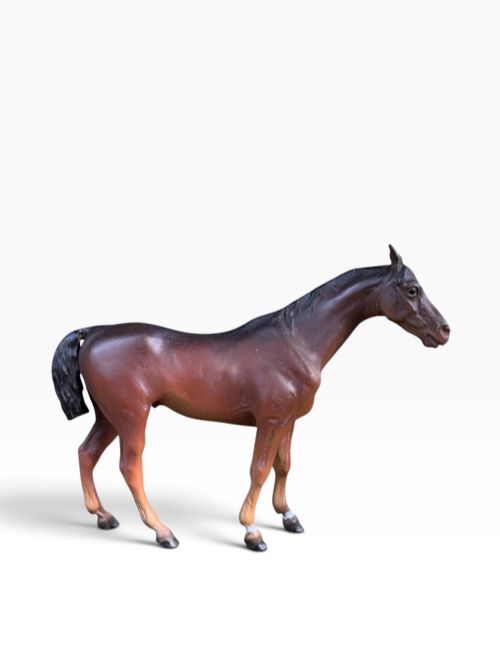
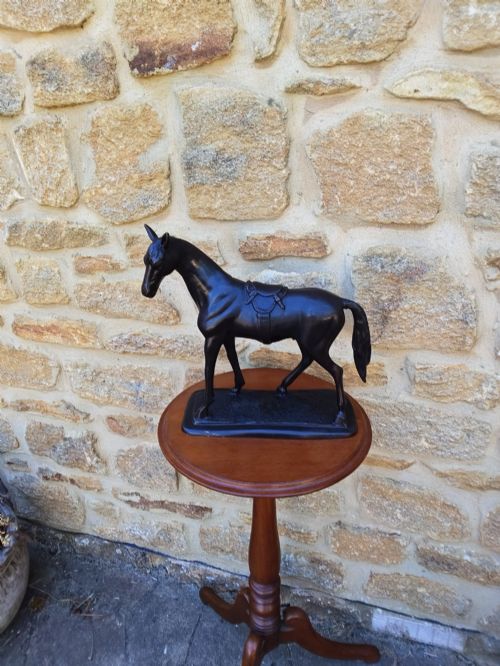
Vintage equine sculpture encompasses figures, doorstops, and models depicting horses across various periods including the nineteenth century, Edwardian era, and mid-century.
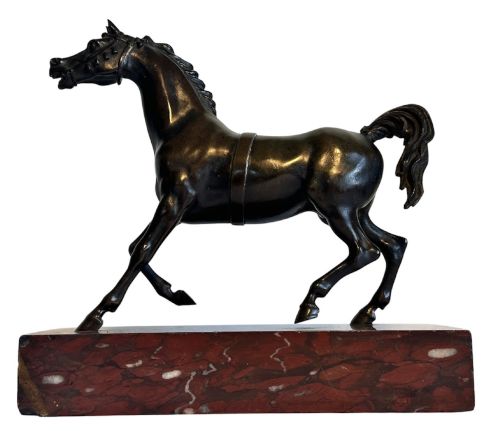
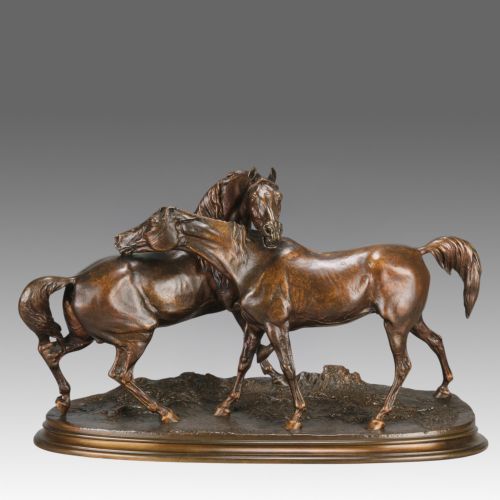
Buyers seeking vintage equine sculpture encounter diverse interpretations ranging from French Animalier bronzes and Austrian cold-painted works to Japanese bronze studies and English brass door porters.
These pieces manifest as detailed stallions, draught horses, and pack animals fashioned in styles from Art Deco to Mid-Century Modern.
How they were made
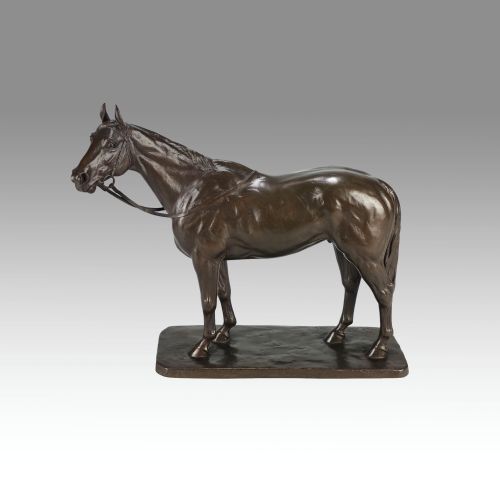
Metal sculptures utilise bronze and brass, often cast using traditional foundry methods and occasionally finished with cold painting, silvering, or patination.
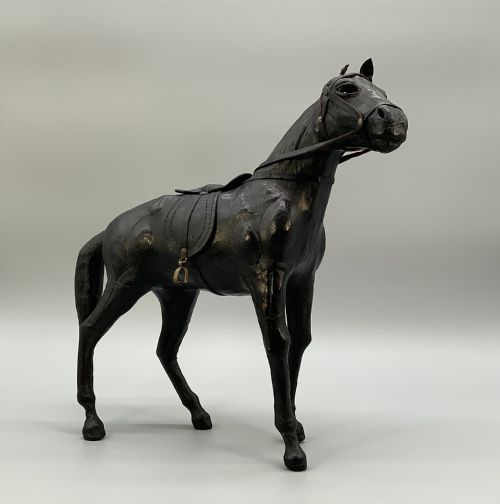
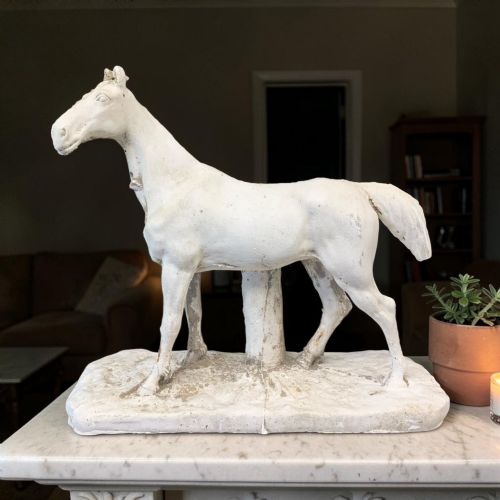
Carved and modelled pieces employ hardwoods, carved wood, plaster, and leather over frames, demonstrating craftsmanship through detailed texturing and form.
Listings span from the nineteenth century through the 1950s, featuring materials such as bronze, brass, wood, marble, and leather.
What varies in quality
Quality rests upon the fidelity of the anatomical modelling, the expressiveness of the pose, and the crispness of the casting or carving detail.
The sophistication of the surface finish, whether patinated bronze, glazed pottery, or stitched leather, distinguishes superior examples from simpler ones.
P J Mêne·Kunio Itô·Sakai Kōzan
The Vintage Equine Sculpture Glossary
- Animalier
- A nineteenth-century artistic movement focused on the realistic depiction of animals, particularly prominent in French bronze sculpture.
- Cold-painted bronze
- A method where bronze figures are painted with polychrome paints that are not fired in a kiln, characteristic of Viennese workshops.
- Doorstop
- A heavy utility object, frequently cast in brass or iron in the shape of an animal, designed to hold doors open.
- Sancai
- A traditional Chinese three-color glaze technique often utilised on pottery figures and vessels.
Vintage Equine Sculpture: Frequently Asked Questions
What materials are used?
Pieces are commonly found in bronze, brass, wood, hard-wood, leather, and pottery.
Some examples incorporate marble bases or plaster casts.
How do I date a piece?
Dating relies on stylistic markers, foundry marks, and the specific materials typical of periods like the Victorian era or mid-century.
Signatures or stamps from known makers and foundries also help establish chronology.
Were these decorative or functional?
Many function purely as decorative sculptures, figurines, or artists' models.
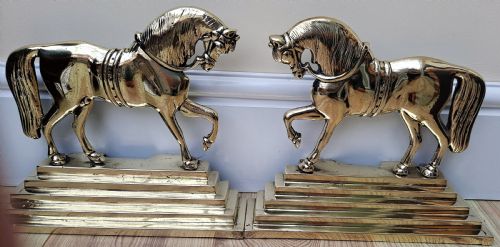
Others, such as brass chimney horses, served practical purposes as doorstops and door porters.
How do I display them?
Bronze and brass studies suit desks, sideboards, and mantelpieces where their weight provides stability.
Larger leather or wooden models work well as floor-standing decorative elements or on sturdy display tables.