
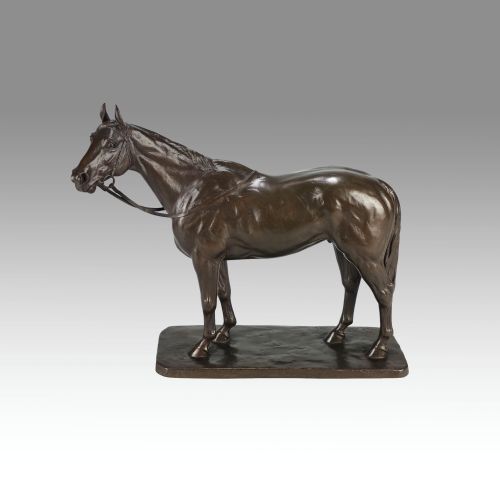


Equine Bronze Figurine
An equine bronze figurine captures the power and movement of the horse through enduring cast metal.
Equine Bronze Figurine
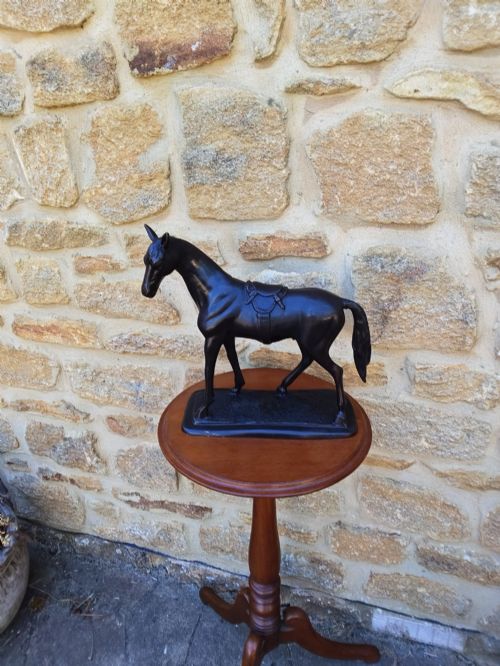
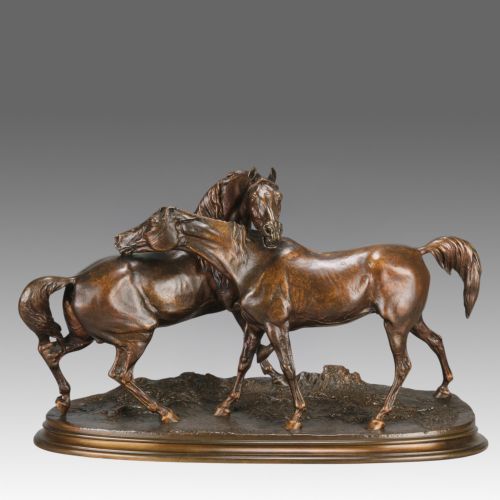
An equine bronze figurine represents the horse across various international schools and decades, spanning from the Victorian era into the Art Deco period. These pieces encompass detailed animalier studies, monumental Marly horse depictions, and figures mounted upon marble or onyx bases.
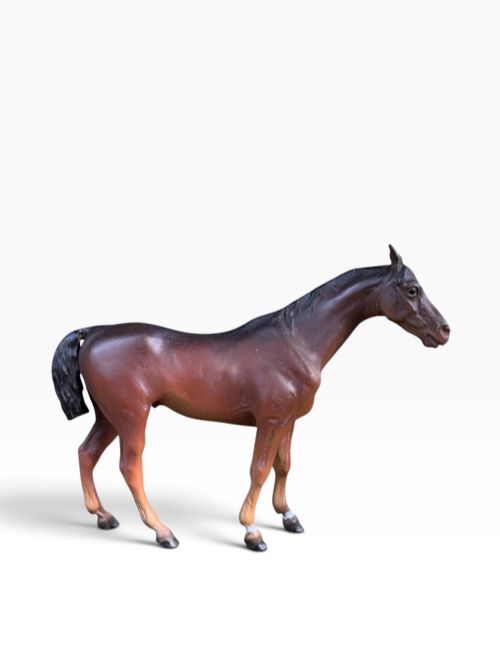
The versions most commonly met on this page range from late 19th-century French animalier casts to early 20th-century Austrian cold-painted works and Japanese bronze sculptures. Buyers encounter both naturalistic portrayals of stallions and stylised interpretations influenced by the Art Deco movement.
How they were made
These sculptures utilise bronze as the primary medium, frequently finished with a dark patination or hand-applied paint in the cold-painted Vienna manner. Cast bronze techniques allow for precise muscular definition and texture across the animal's coat.
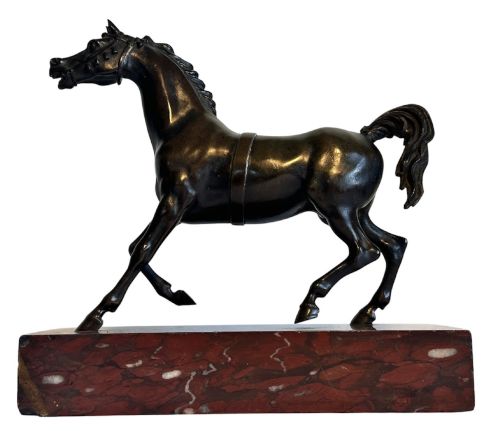
Many figures are mounted upon heavy stone plinths, combining cast bronze with natural materials such as marble or onyx to provide stability and visual contrast.
Listings feature pieces spanning the 19th century, the Victorian era, and early 20th century movements including Art Deco.
What varies in quality
Quality in these figures rests upon the crispness of the casting and the fidelity of the anatomical detail achieved by the founder. Superior examples display subtle musculature, expressive stances, and well-preserved patination or original cold-painted surfaces.
The integration of the base and the weight of the metal distinguish finer works from simpler commercial castings. Masterful French and Austrian animalier pieces command attention through the dynamism of their composition and the precision of the finisher's chisel.
P J Mêne·Kunio Itô·Franz Bergman·Pierre Jules
The Equine Bronze Figurine Glossary
- Animalier
- A 19th-century artistic movement focused on the realistic depiction of animals. Sculptors in this style studied live subjects closely to capture natural anatomy and movement.
- Cold-painted bronze
- A technique where bronze figures are painted with cold enamel layers rather than fired in a kiln. This method allows for vivid, detailed polychrome finishes characteristic of Viennese workshops.
- Patination
- The chemical or natural alteration of the bronze surface over time. A rich patina enhances the depth of the metal and protects the sculpture.
- Marly horse
- A monumental sculptural subject depicting a rearing horse restrained by a handler. Originating from large public works in France, smaller bronze reductions became popular domestic decorative objects.
Equine Bronze Figurine: Frequently Asked Questions
What is an equine bronze figurine?
An equine bronze figurine is a metal sculpture depicting a horse, produced across the 19th and 20th centuries by various European and Asian makers. These range from realistic animalier studies to stylised Art Deco interpretations.
They serve as decorative works of art, capturing the form and spirit of the horse through durable cast metal.
How do I care for a bronze horse sculpture?
Bronze requires minimal maintenance, typically needing only gentle dusting with a soft, dry cloth to prevent grime accumulation. Avoid using chemical polishes, which can strip the original patina.
Keeping the piece away from direct moisture and extreme temperature fluctuations preserves both the metal and any stone base.
How are different periods told apart?
Periods are identified through stylistic cues, casting techniques, and mounting materials. Victorian and 19th-century pieces often lean towards academic realism and detailed animalier studies.
Later Edwardian, Art Deco, and 1930s examples introduce sleeker lines, stylised forms, or distinct Japanese Shōwa and Taisho period influences.
Where were these bronze figures made?
These sculptures originate from prominent European art centres such as France and Austria, as well as Japanese foundries. French animalier works and Viennese cold-painted bronzes represent major European production hubs.
Japanese bronze sculptures from the early 20th century demonstrate distinct Eastern casting traditions and artistic sensibilities.