




Dark Brown Bronze Horse
A dark brown bronze horse captures muscular tension and spirited movement through metal, offering any room a focal point of genuine weight and presence.
Dark Brown Bronze Horse
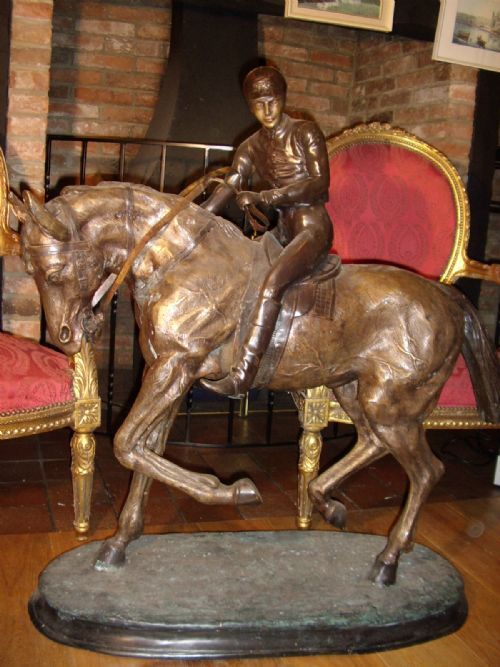
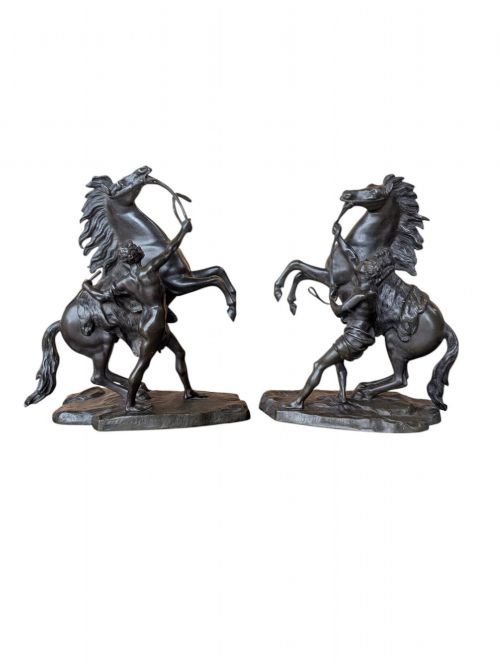
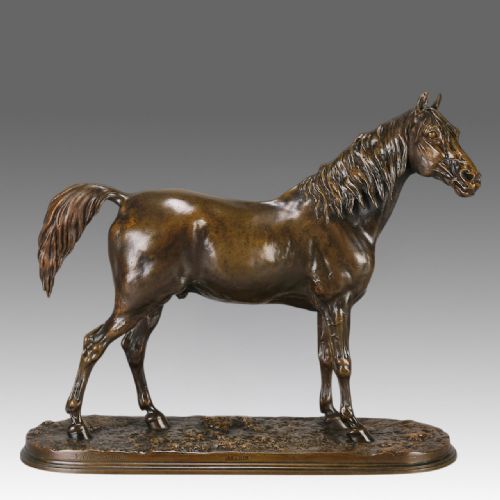
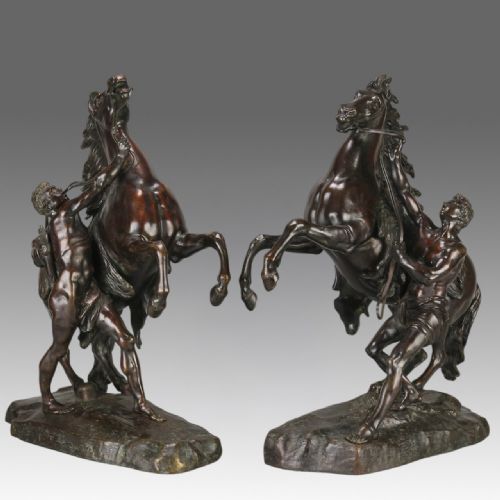
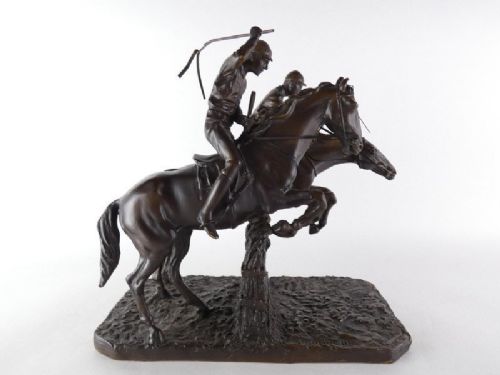
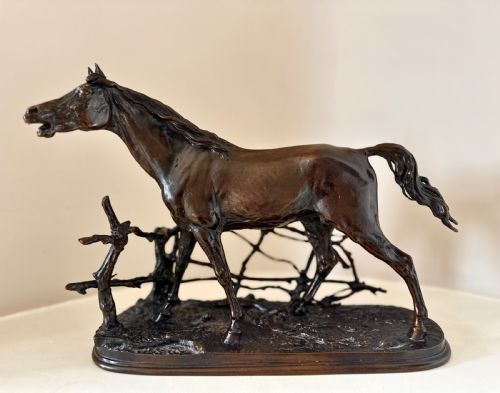
A dark brown bronze horse encompasses sculptural works created primarily during the nineteenth and early twentieth centuries, capturing equine anatomy with striking realism. Buyers seeking a dark brown bronze horse typically encounter French Animalier studies, neoclassical reductions, and cold-painted Vienna bronzes originating from diverse European foundries. These pieces range from substantial racehorse depictions and hurdling scenes to romantic groupings of mares and stallions.
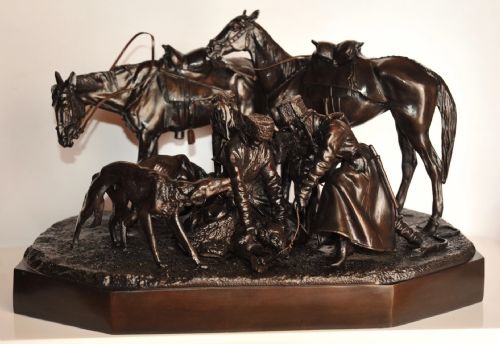
The selections span the Victorian era, the year eighteen eighty, and nineteen hundred, reflecting rigorous academic standards of sculpture. Forms vary from single equestrian figures and groom groups to dramatic hunting scenes involving wolves and riders. Each dark brown bronze horse demonstrates the enduring fascination makers held for equine form and movement.
Materials and construction
Makers constructed these figures using bronze cast via traditional methods, frequently applying patination to achieve deep dark brown tones. Certain examples incorporate hand-applied paint over cold-painted metal surfaces, adding nuanced colour to saddles and harness details.
Mounts and bases occasionally integrate marble, providing a heavy, stable foundation for dynamic compositions such as rearing horses and leaping figures. Founders often chased the metal surfaces by hand after casting, sharpening muscle definition, mannes, and tack before applying the final dark brown finish.
Franz Bergman hid tiny surprises in his workshop, turning ordinary cold-painted metal horses into whimsical conversation starters.
Assessing quality and craftsmanship
Quality reveals itself in the precision of the casting and the fidelity of the anatomical modelling, distinguishing accomplished foundry work from lesser commercial output. Superior pieces retain crisp detail in musculature, veins, and facial expressions without smoothing over the intricate textures of hair and harness.
The depth and consistency of the dark brown patination play a vital role in the visual impact of the sculpture. Masterful chasing and finishing ensure that transitions between muscle groups appear natural and convincing from every viewing angle.
Pierre Jules Mene·Isidore Jules Bonheur·Charles Crozatier·Franz Bergman·Nikolai Lieberich
The Dark Brown Bronze Horse Glossary
- Animalier
- A nineteenth-century artistic movement focusing on the realistic depiction of animals, particularly horses, lions, and dogs. Practitioners studied live subjects extensively in menageries and abattoirs to ensure anatomical accuracy.
- Patinated Bronze
- Bronze metal treated with chemical solutions to produce a specific surface colour, most commonly rich dark brown or black. This finish protects the metal and enhances sculptural depth.
- Cold-Painted Bronze
- Metal sculptures painted with oil or enamel paints after casting, rather than fired in a kiln. This technique was widely utilised by Viennese foundries to create colourful miniature figures.
- Chasing
- The manual process of refining a bronze casting with hammers, chisels, and punches to remove foundry flaws and sharpen surface details. High-quality chasing separates master bronzes from unrefined commercial copies.
Dark Brown Bronze Horse: Frequently Asked Questions
What is an animalier bronze?
An animalier bronze is a nineteenth-century sculpture depicting animals with a strong emphasis on naturalism and anatomical accuracy. These works were created by specialised sculptors who observed live beasts in motion.
Such sculptures range from dramatic hunting groups to calm studies of horses, capturing creatures in realistic poses.
Where were these sculptures made?
The majority of these bronze sculptures originated in European workshops, with French foundries dominating the nineteenth-century animalier school. Vienna also produced significant numbers of smaller decorative bronzes.
Foundries in Russia contributed specialised hunting groups reflecting local wildlife and equestrian traditions.
How should I display a bronze horse?
Display these sculptures on stable furniture where their weight and detailed casting can be appreciated safely. Keep them away from direct heat sources to protect patinated or painted surfaces.
Occasional dusting with a soft, dry cloth maintains the dark brown finish without harming the metal.