


Vintage Horse Desk Ornament
These vintage horse desk ornament pieces bring equestrian character to a study, spanning bronze and silver forms from the nineteenth century to the mid-twentieth century.
Vintage Horse Desk Ornament
A vintage horse desk ornament serves as a functional paperweight or a decorative study on a writing table. The pieces found here range from compact paperweights to substantial cabinet bronzes and carved stone groupings.
Most examples date from the late nineteenth century through to the middle of the twentieth century. Makers worked across European centres such as Vienna, Rome and Paris, alongside output reflecting East Asian folk art traditions.
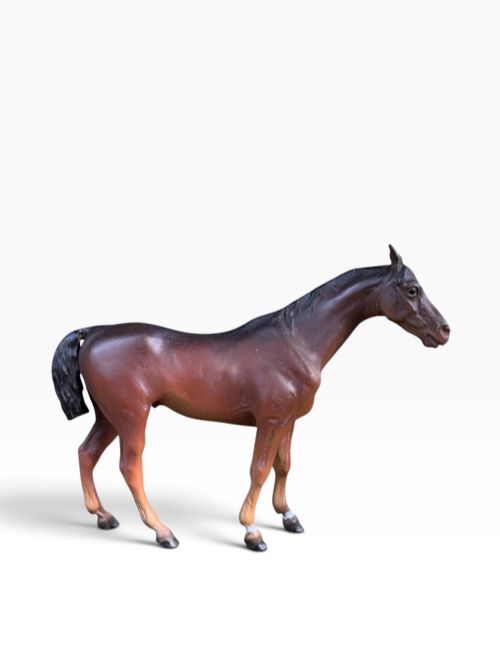
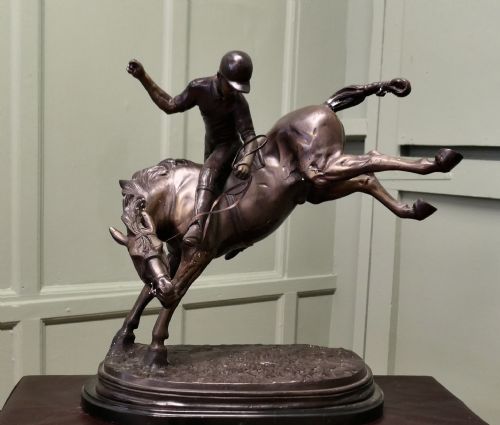
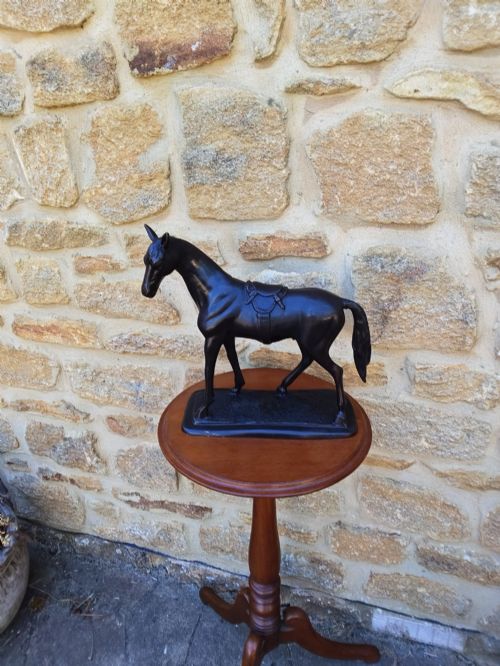
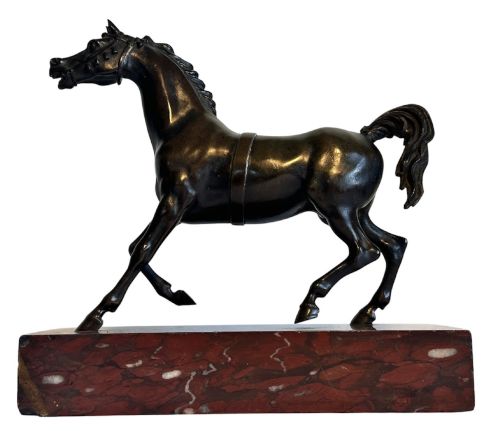
Common formats include realistic stallion figures on marble bases, polo players in action, chess knight paperweights and derby winners. Buyers encounter animalier bronzes alongside carved specimen marble studies of horses.
How they were made
Foundries cast these figures in bronze or silver, often mounting the metal subjects onto heavy marble or specimen marble bases to serve as desk paperweights. Cold painted bronze techniques added naturalistic polychrome surface colour to Viennese animalier pieces.
Carvers shaped other examples directly from crystalline quartz, wood and specimen marble. Silversmiths utilised sterling silver and silver plated metal, occasionally applying silver gilt finishes to cast race horse figures.
Listings span the nineteenth century, Edwardian era, Art Deco period and mid-century Italian design, utilising bronze, silver, marble and wood.
What varies in quality
Quality rests in the anatomical precision of the modelling and the crispness of the casting detail in the mane, muscle and tack. Superior examples capture the tension and movement of an animalier subject rather than presenting a stiff silhouette.
The choice of base materials influences the overall character, with heavy multi-coloured specimen marble and fitted stone plinths marking out finer productions. The preservation of original cold painted surfaces or silver gilt finishes dictates the visual success of the piece.
M.S
The Vintage Horse Desk Ornament Glossary
- Animalier
- A nineteenth-century artistic focus on the realistic depiction of animals. Sculptors captured beasts in dynamic or resting poses.
- Cold painted bronze
- A method where bronze figures receive non-fired paint applications. Viennese workshops utilised this technique extensively for animal subjects.
- Specimen marble
- Stonework composed of various multicoloured marble fragments. Italian carvers utilised these rich materials for bases and sculptural studies.
- Silver gilt
- Silver covered with a thin layer of gold. This finish provided a rich, warm metallic lustre to decorative equestrian figures.
- Paperweight
- A heavy object placed on loose documents to prevent them from scattering. Many equestrian desk pieces served this dual practical purpose.
Vintage Horse Desk Ornament: Frequently Asked Questions
What is a horse desk ornament?
A horse desk ornament is a small sculptural figure or paperweight placed upon a writing table. These pieces depict horses, jockeys or polo players in bronze, silver and stone.
Craftsmen produced them to serve a practical function while adding equestrian character to an interior workspace.
How do I date a bronze horse?
Dating relies upon stylistic markers such as the naturalistic modelling of the animalier school or the geometric lines of Art Deco design. Materials like marble bases and manufacturing marks also help establish the period.
Examining the casting technique and the wear on the metal surface provides further clues to the age of the piece.
Where were these desk ornaments made?
European workshops in cities such as Vienna, Paris and Rome produced a significant proportion of these equestrian sculptures. Other examples originate from British silversmiths and East Asian folk art traditions.
Italian makers specialised in carved specimen marble studies, while Viennese foundries focused on cold painted bronze.
How do I care for silver and bronze?
Bronze and silver require gentle dusting with a soft, dry cloth to prevent the accumulation of grit. Avoid using aggressive chemical polishes that strip away patination or delicate cold painted surfaces.
Keeping the pieces away from direct moisture and extreme temperature fluctuations preserves the integrity of the metal and stone bases.