





Art Deco Onyx Base
An art deco onyx base anchors figures and objects from the interwar decades, combining mineral weight with cast metal.
Art Deco Onyx Base
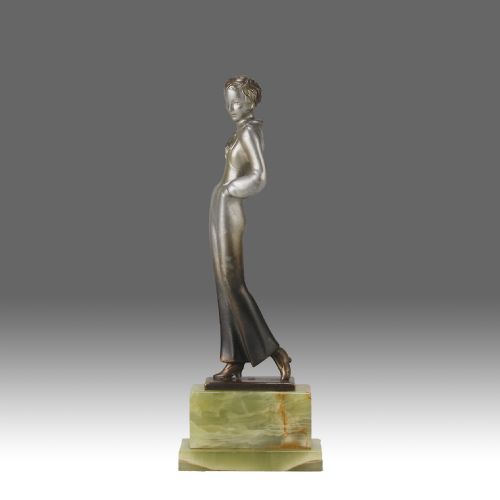
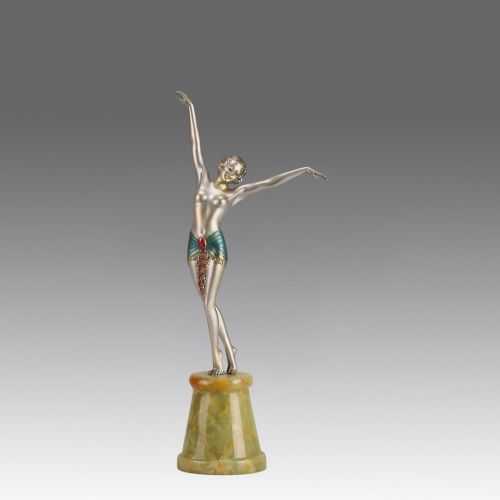
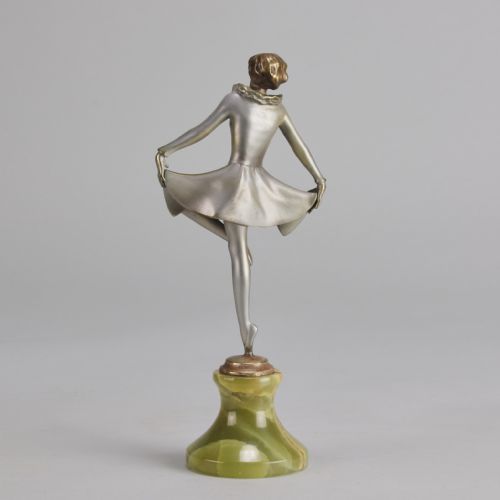
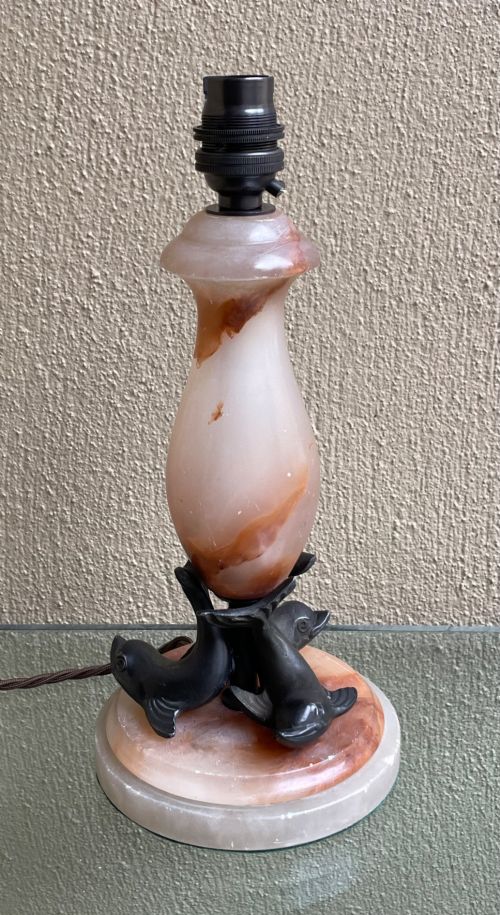
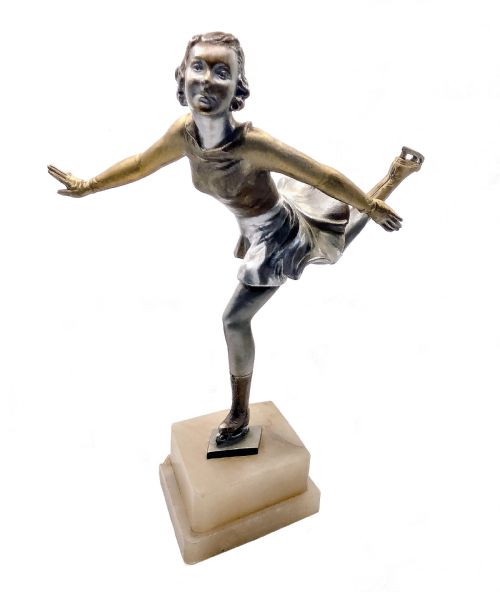
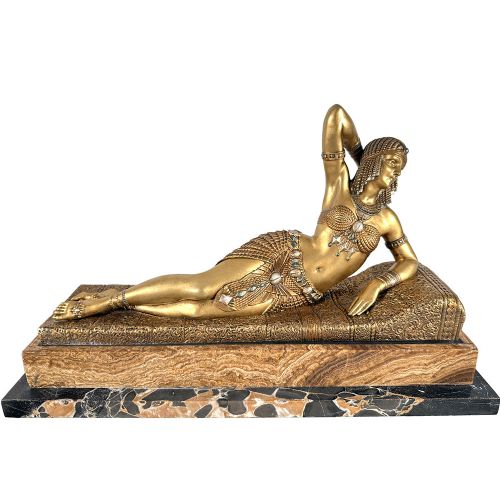
Buyers seeking an art deco onyx base encounter sculptural figures, desk items, and lighting fixtures produced across the nineteen-twenties and nineteen-thirties. These pieces combine a polished stone plinth with figures cast in bronze, gilt bronze, silvered bronze, cold-painted metal, and spelter.
The most common version meeting a buyer on this page pairs a dancer or animal figure by makers such as Josef Lorenzl with a substantial banded stone foundation. Animal studies, bookends, mantel clocks, and table lighters also utilise this structural mounting.
Originating largely from French and Austrian workshops of the interwar period, these pieces reflect the sleek geometric and figurative tastes of the era. The stone itself provides a stable, contrasting platform that elevates the metalwork above ordinary desk or mantel surfaces.
Materials and construction
Metals such as bronze, silvered bronze, and spelter were shaped using casting techniques, including lost wax methods for finer bronze works. Cold-painting and gilt applications were subsequently added to highlight details on dancers, animals, and human figures.
Onyx and marble were cut, shaped, and polished to form geometric or stepped bases that anchor the heavier metal sculptures. Selected works also incorporate carved ivory or Ivorine in chryselephantine combinations alongside the stone and metal components.
Desk calendars and lighters share shelf space with dancers, proving that nineteen-thirties administration required serious style.
Distinctions in craftsmanship
The precision of the metal casting and the subtlety of cold-painted or patinated finishes separate standard commercial production from master works. Detailed chiselling on the figures and the sharpness of the casting reveal the skill of the original workshop.
The selection and preparation of the onyx base itself dictate the visual impact of the piece. Uniform stone with rich banding, polished flat surfaces, and secure mechanical mounting demonstrate superior execution.
Josef Lorenzl·Demetre Chiparus·Pierre Le Faguays·Claire Colinet·Bruno Zach·Ignacio Gallo
The Art Deco Onyx Base Glossary
- Spelter
- A zinc alloy commonly utilised as a less costly alternative to bronze for casting decorative figures and lamps during the period. It accepts patination and cold-painted finishes readily.
- Chryselephantine
- A term describing sculptures combining carved ivory with bronze or other metals. This method was frequently employed for dancers and female figures of the nineteen-twenties.
- Cold-painted
- A technique where paint is applied to metal without subsequent firing. It appears frequently on Austrian bronzes from the interwar years.
- Lost wax
- A method of metal casting where a wax model is melted from a mould and replaced with molten bronze. This allows for intricate detail in figurative work.
Art Deco Onyx Base: Frequently Asked Questions
What metals are used?
Pieces combine bronze, silvered bronze, gilt bronze, and spelter for the figures and structural elements. Cold-painted finishes and patinated metal surfaces add colour and texture to the casts.
Selected items integrate ivory or Ivorine alongside these metals in chryselephantine compositions.
How do I clean onyx?
Polished stone surfaces require gentle dusting with a soft, dry cloth to prevent scratching the finish. Moisture and chemical cleaners should be avoided to protect the natural mineral structure.
Metal components benefit from similar dry care to preserve existing cold-painted or patinated details.
Are bases solid stone?
Foundations consist of natural onyx or marble, often shaped into rectangular, stepped, or rounded plinths. These heavy stones provide the necessary counterweight to balance cantilevered figures and bookends.
Some examples pair onyx with marble in layered constructions to vary the visual weight.
When were these made?
Surviving examples originate primarily from the nineteen-twenties and nineteen-thirties, spanning the height of the Art Deco movement. A small number of related items date from the nineteen-tens and nineteen-forties.
Stylistic cues and signature practises align these works with French and Austrian interwar design.