




Vintage Drop Leaf Desk
A vintage drop leaf desk brings compact writing space and folding leaves into a room, offering clever surfaces that tuck away when not in use.
Vintage Drop Leaf Desk
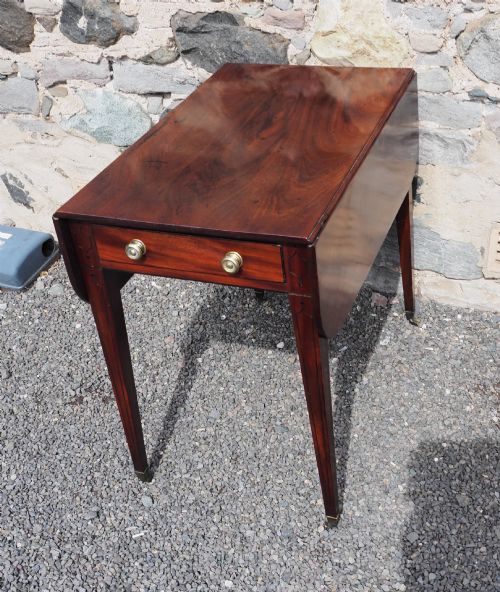
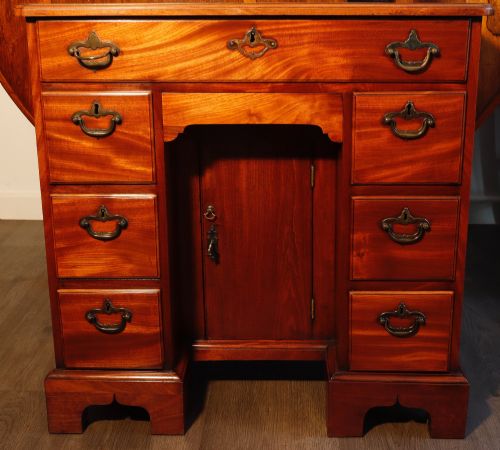
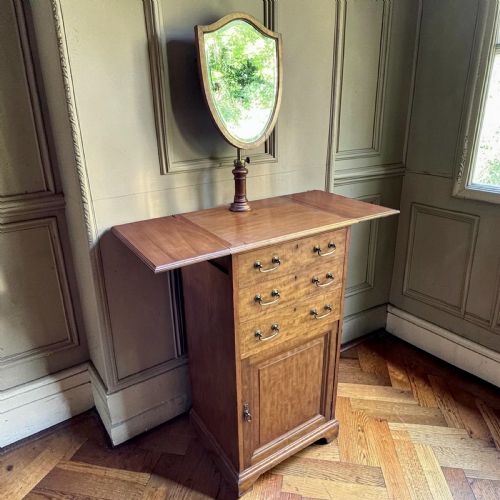
When you search for a vintage drop leaf desk, you find pieces that span centuries of cabinetmaking, from Georgian and Regency eras through to Edwardian and Art Deco periods. These items encompass writing tables, bureaus, and Pembroke tables with folding side flaps designed to adjust the surface area quickly.
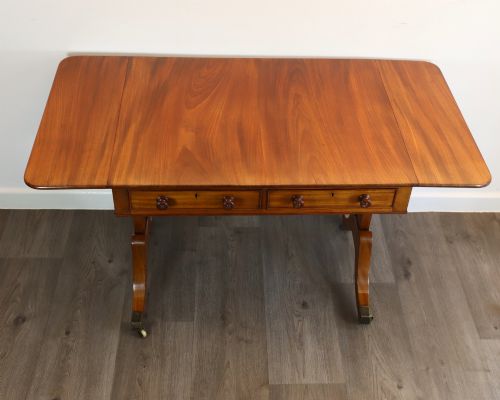
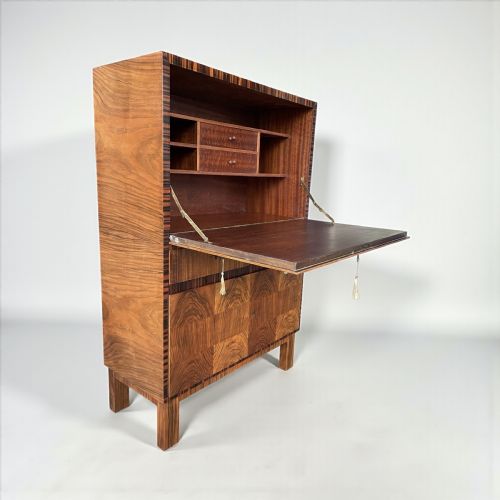
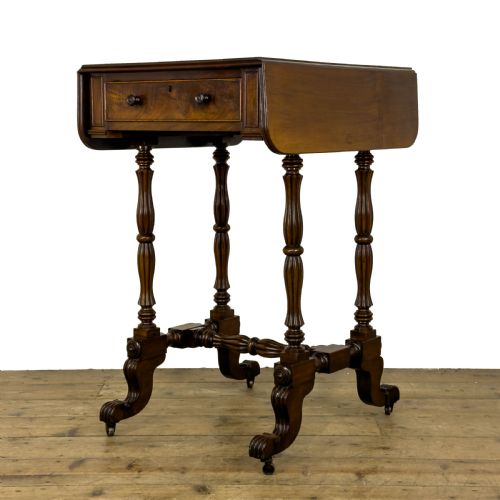
The selection on this page relies heavily on mahogany, oak, and walnut timbers, often constructed as sofa tables, writing tables, or compact bureaus with drop-down writing flaps. You will encounter occasional tables and library tables featuring drop leaves, alongside specialised pieces like bureau cabinets and campaign style desks.
Origins stretch across English workshops, French cabinetry, and Swedish pine designs, showing a wide geographic spread in domestic furniture. The forms range from simple gateleg tables used for writing to sophisticated sofa tables with inlaid details and secret drawers.
Materials and construction
Cabinetmakers built these desks using primary hardwoods such as mahogany, oak, walnut, and rosewood, paired with secondary timbers for interior framing. Satinwood often appeared as contrasting inlay, while pine and occasionally marble formed the structure or top surface of specific regional pieces.
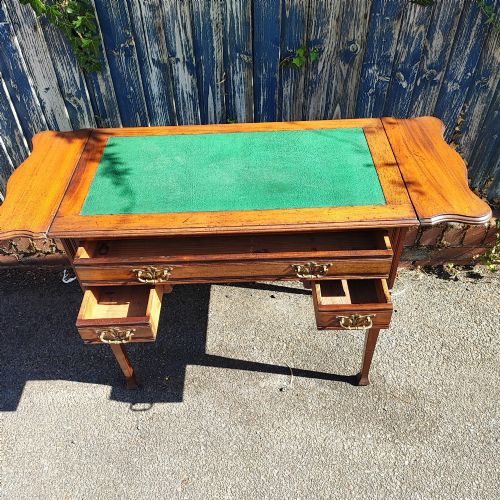
Drop leaves and folding flaps relied on sturdy hinged mechanisms, gateleg frames, or pull-out supports to bear weight when extended. Joinery techniques included dovetailing for drawers and secure hinge fixings for moving flaps, often complemented by brass handles, hardware, and leather inserts on writing surfaces.
Some nineteenth-century cabinets hide secret drawers behind their folding panels, keeping private notes safely tucked away from wandering eyes.
Judging quality and execution
Quality rests upon the selection of timber figures, such as burr walnut or figured mahogany, and the precision of the joinery where the drop leaves meet the fixed centre. Finer examples display meticulous inlay work, matching wood grains across the folding flaps, and smooth action in the drawers and drop fronts.
Structural integrity in the hinge mechanisms and folding supports distinguishes superior pieces from standard utilitarian items. The presence of original brass hardware, clean patination on the timber, and thoughtful proportions elevate a desk from a basic folding table to a refined piece of period furniture.
Andrew Thomson And Sons
The Vintage Drop Leaf Desk Glossary
- Pembroke table
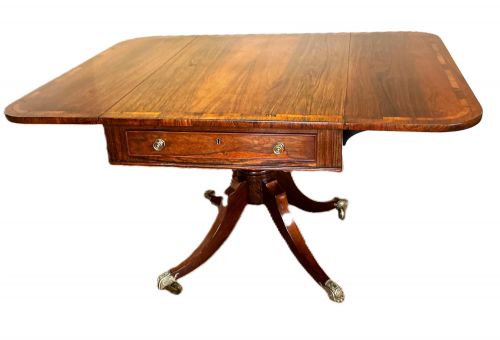
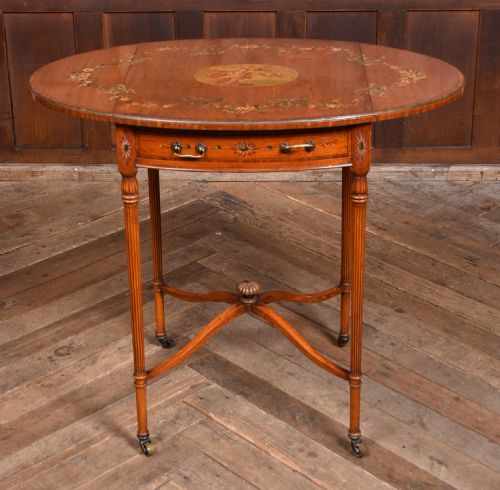
- A small occasional or writing table featuring two hinged drop leaves on opposing sides. It usually contains one or more small drawers.
- Gateleg table
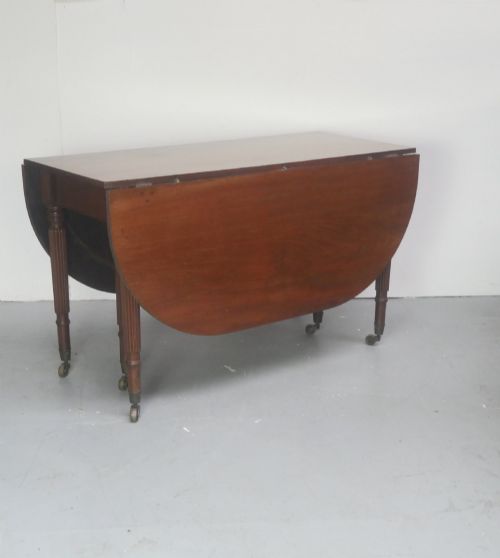
- A table with hinged leaves supported by swinging legs that pivot outward like a gate. This design provides sturdy support for the drop leaves when open.
- Sofa table
- A rectangular table traditionally placed behind a sofa, often fitted with drop leaves and twin pedestals or trestle supports. These pieces frequently house small drawers.
- Secrétaire à abattant
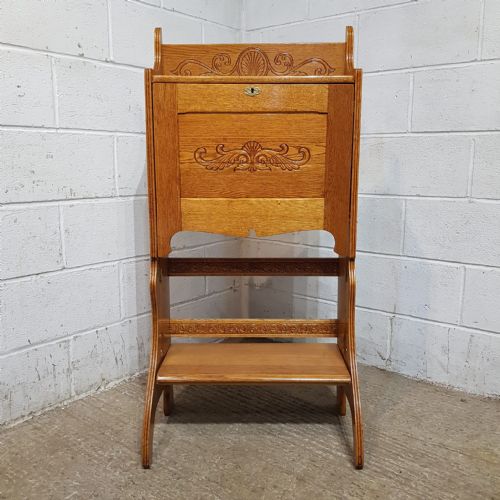
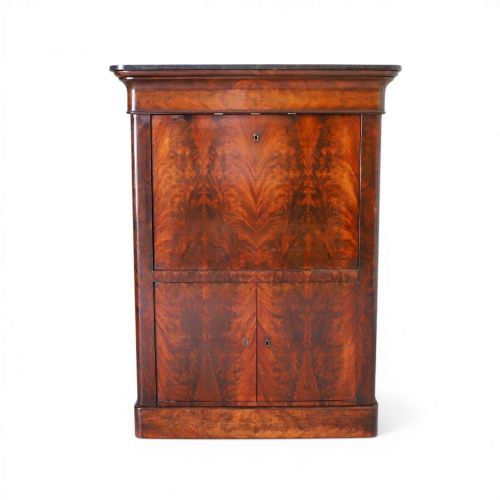
- A tall cabinet featuring a drop-down front panel that serves as a writing surface. This form typically conceals small interior compartments and secret drawers.
- Sutherland table
- A narrow drop-leaf table with exceptionally slim folding leaves that drop almost vertically. It rests on a castor-mounted frame designed to save space.
Vintage Drop Leaf Desk: Frequently Asked Questions
How do drop leaf desks save space?
Drop leaf desks feature hinged flaps on the sides or front that fold down when the surface is not needed. This reduces the footprint of the furniture in smaller rooms.
When extra workspace is required, the leaves lift up and lock into place using swinging legs, gateleg actions, or pull-out brackets.
What is the difference between a Pembroke table and a bureau?
A Pembroke table is a small table with two hinged side flaps and usually a single drawer underneath. It functions flexibly as a writing or occasional surface.
A bureau incorporates a sloping or vertical drop-front panel that opens to reveal pigeonholes and small drawers specifically designed for writing and correspondence.
How can I tell a Georgian desk from an Edwardian one?
Georgian desks, dating from the eighteenth and early nineteenth centuries, tend to feature dense solid mahogany, restrained lines, and heavy patination. They rely on proportion and timber quality for their presence.
Edwardian pieces from the early twentieth century often display lighter satinwood inlay, neoclassical revival motifs, and brighter finishes. They reflect the lighter domestic tastes of the Edwardian period.
Can these desks be used for daily laptop work?
Many vintage drop leaf desks provide adequate surface area and sturdy support for modern laptops when the leaves are raised. The folding mechanisms are built to handle regular use.
However, users should check the interior depth and drawer clearance of older bureau models to ensure modern tech accessories fit comfortably inside when closed.