
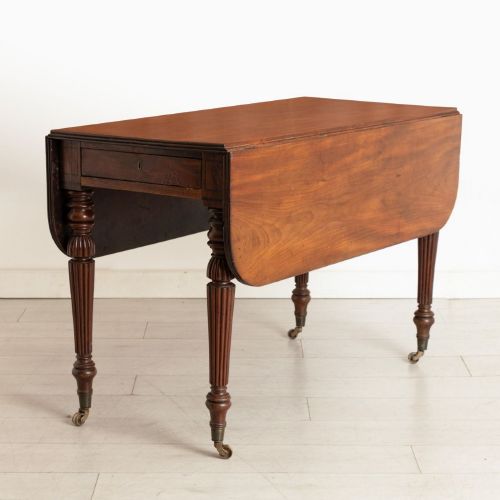

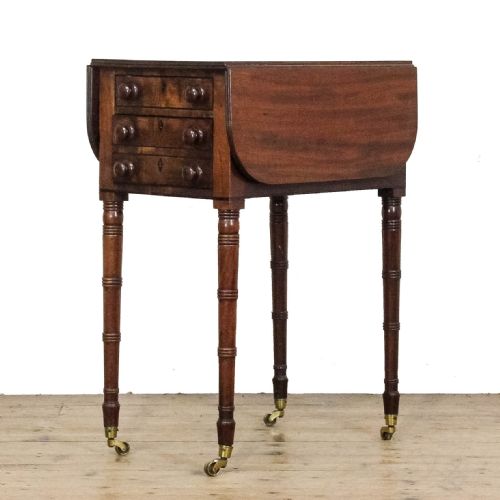


Traditional Pembroke Table
A traditional pembroke table offers folding drop leaves and neat proportions, making it a versatile small table for a period interior.
Traditional Pembroke Table
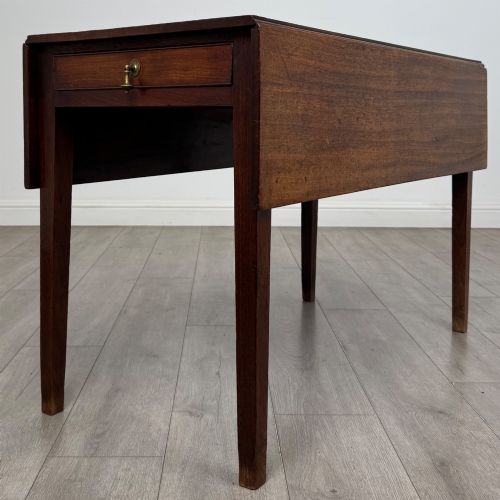
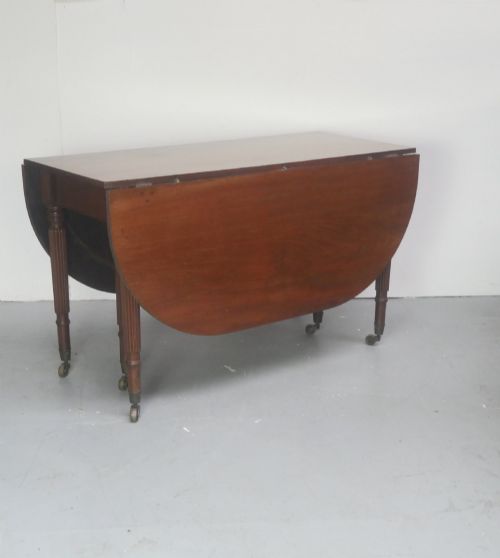
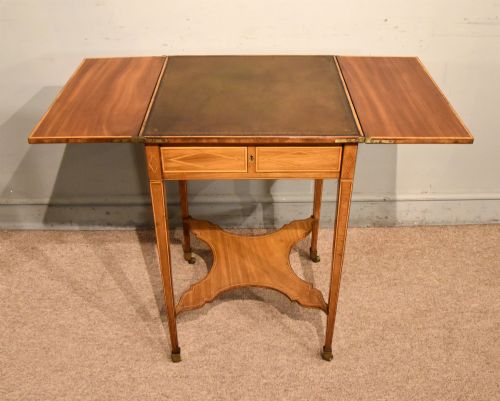
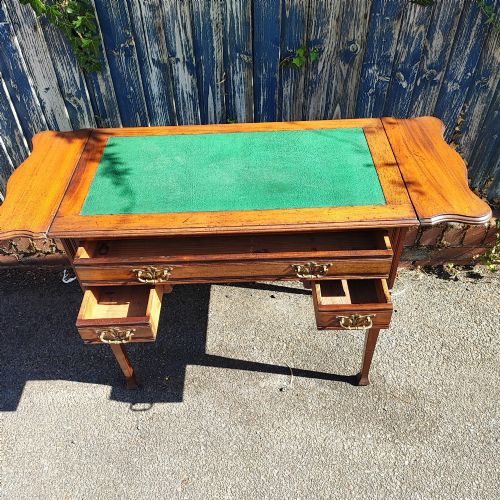
A traditional pembroke table is a small, versatile table featuring drop leaves supported by hinged brackets or swinging legs, designed to sit against a wall when closed and open out when extra surface area is needed. These tables appear in various forms across this page, ranging from Georgian and Regency examples to Victorian and later revivals.
The pieces listed on this page span several periods including Georgian, Regency, William IV, and Victorian eras, alongside later pieces from the nineteenth and early twentieth centuries. Mahogany is the predominant wood seen across these listings, accompanied by oak, painted pine, and satinwood inlay.
Buyers will find these pieces catalogued under several related object types on this page, including drop leaf tables, occasional tables, sofa tables, and writing tables. They function equally well as side tables or compact dining tables depending on the scale of the room.
How they were made
Makers constructed traditional pembroke tables using solid timbers and veneers, with Cuban mahogany appearing alongside general mahogany, oak, and painted pine. Joinery techniques ensured stability in the folding leaf mechanisms while maintaining slender legs.
Surface decoration on these pieces includes satinwood inlay and painted finishes on pine, reflecting the stylistic preferences of the Georgian, Regency, and Victorian periods.
Object types grouped under this search include drop leaf tables, occasional tables, sofa tables, writing desks, and side tables.
What varies in quality
Quality in a traditional pembroke table rests on the selection of timber, such as figured Cuban mahogany, and the crispness of any satinwood inlay work. Finer examples show careful attention to grain matching across the top and the drop leaves.
The engineering of the drop leaf mechanism and the slenderness of the legs also separate standard pieces from superior examples. Better tables retain smooth movement in their folding flaps and sturdy joints without excessive play in the pivoting supports.
The Traditional Pembroke Table Glossary
- Pembroke table
- A small rectangular table with two hinged drop leaves on opposing sides, often fitted with one or two small drawers. The design originated in the eighteenth century and remained popular through the Victorian era.
- Drop leaf table
- A table with a fixed central section and hinged flaps that fold down at the sides. These leaves are supported when raised by hinged wooden brackets, rule joints, or swinging legs.
- Satinwood inlay
- Decorative contrasting wood inserted into recesses carved into the primary timber surface. It creates geometric or floral patterns popular in neoclassical furniture design.
- Cuban mahogany
- A dense, dark timber harvested in the West Indies and prized for its rich grain and deep colour. Cabinet makers utilised it for high-status furniture during the eighteenth and nineteenth centuries.
Traditional Pembroke Table: Frequently Asked Questions
What is a traditional pembroke table used for?
These tables served multiple functions in historic homes, acting as breakfast tables, writing desks, or side tables against a wall. Their folding leaves allowed them to occupy minimal space when not in use.
Today, they work well as accent pieces in sitting rooms, compact desk spaces, or small dining areas where flexibility is required.
How do I date a traditional pembroke table?
Dating relies on identifying timber choices, leg profiles, and construction methods characteristic of periods like George III, Regency, or Victorian. Georgian pieces often display slender tapering legs, while Victorian versions can be heavier and feature turned supports.
Hardware such as drawer pulls and the construction of the drawer linings also offer clues to the period of manufacture.
Are pembroke tables sturdy enough for daily dining?
Most pembroke tables were built as light occasional or breakfast tables rather than heavy refectory dining tables. The drop leaf supports are designed for moderate weight rather than heavy daily use.
Care should be taken when placing heavy items near the outer edges of the raised leaves to avoid straining the hinged brackets.
What woods were used to make these tables?
Mahogany is by far the most common timber found on this page, including dense Cuban mahogany varieties. Cabinet makers also employed oak, satinwood for inlay work, and painted pine for secondary or provincial pieces.
The choice of wood often aligns with the period, with rich mahogany dominating Georgian and Regency examples.