
Vintage Dining Room Sideboard
A vintage dining room sideboard anchors the entertaining space with timber grain, fitted drawers, and generous proportions built for service.
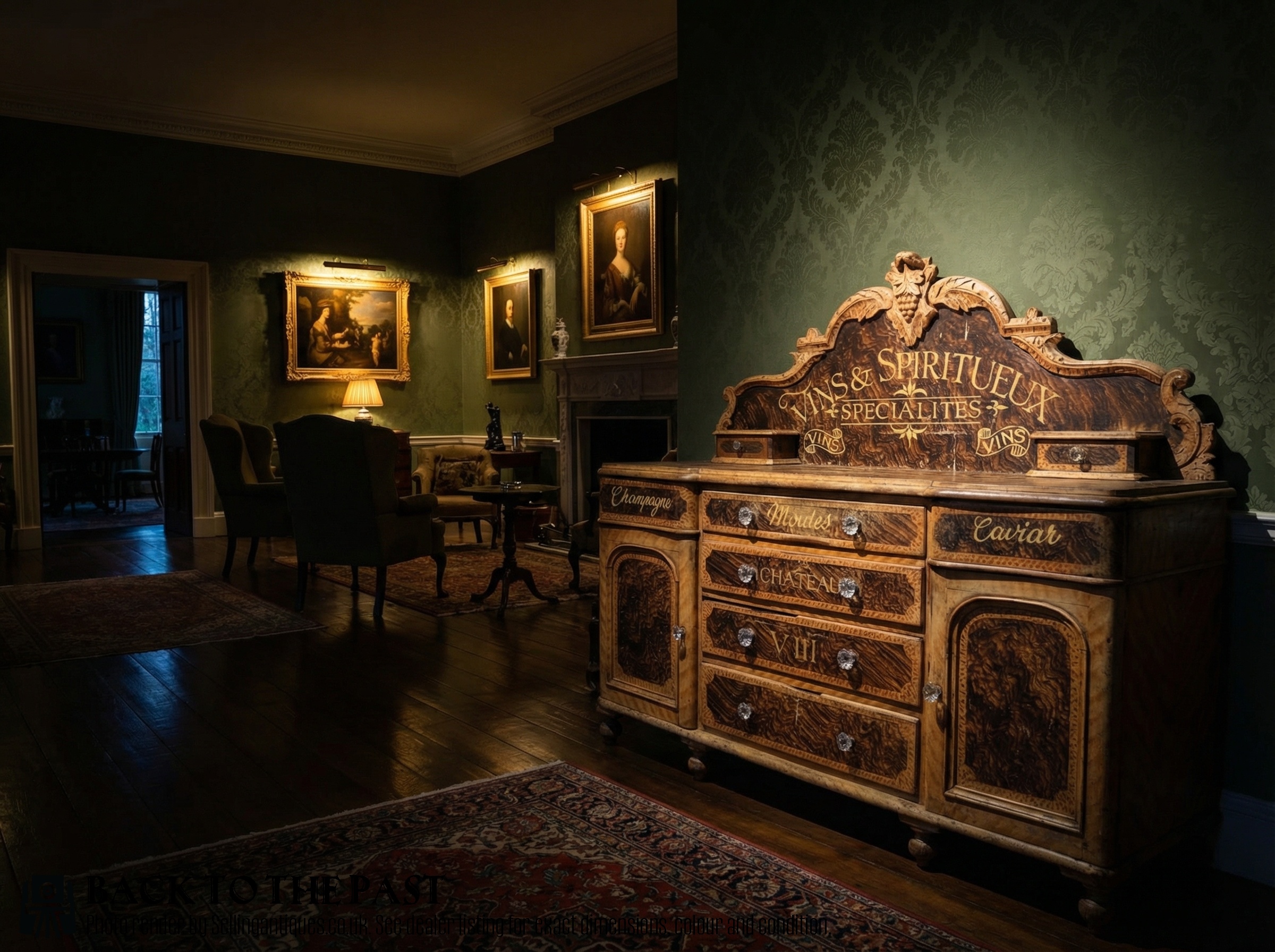
Vintage Dining Room Sideboard
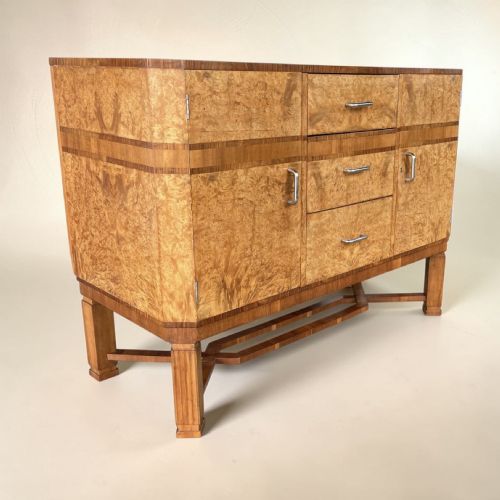
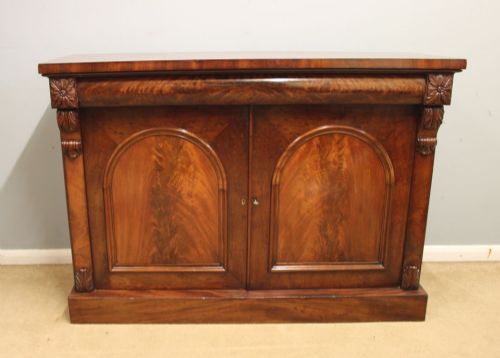
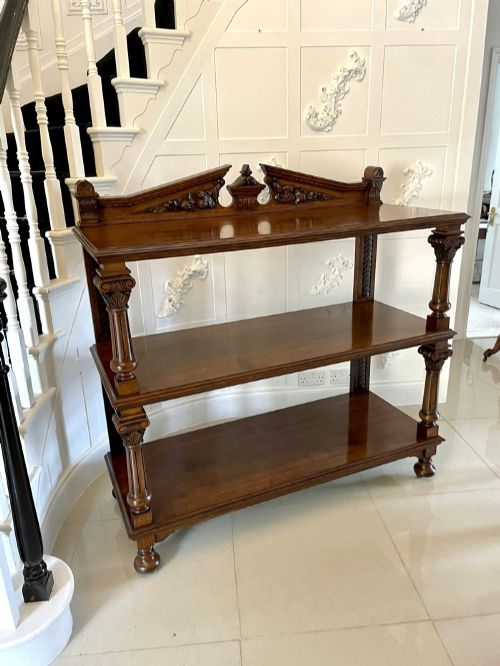
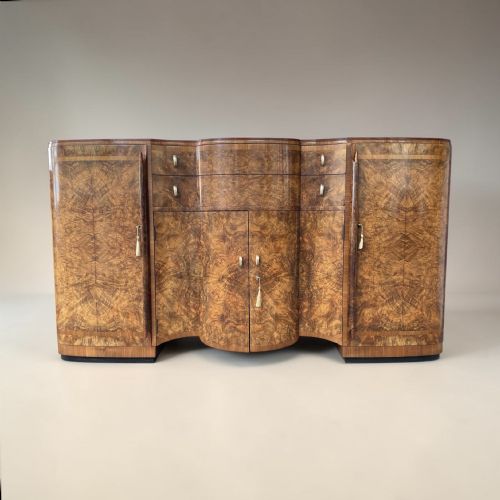
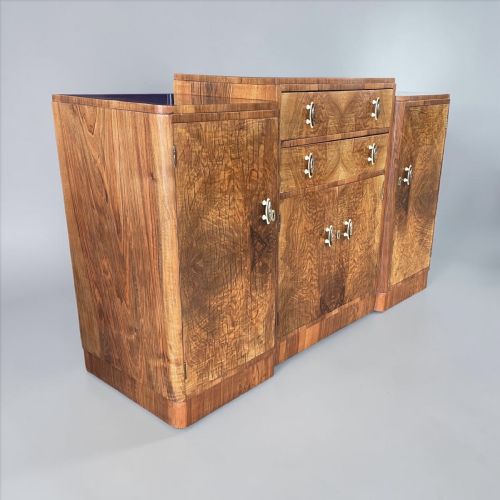
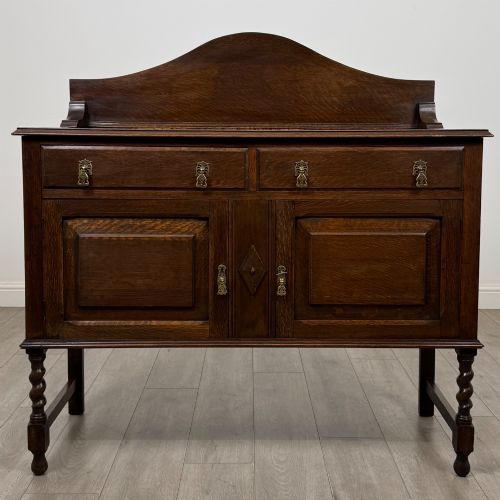
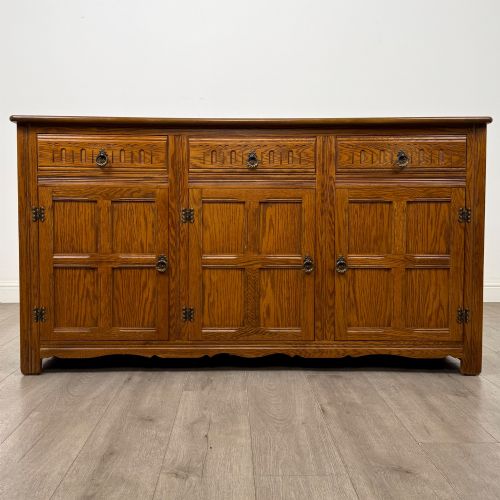
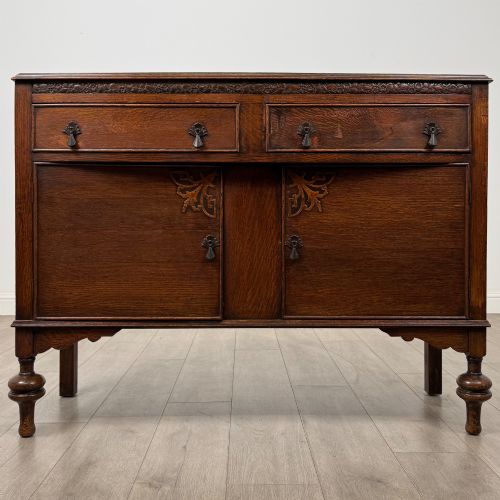
A vintage dining room sideboard covers heavy storage furniture designed for serving food and storing tableware, spanning styles from Edwardian oak to Art Deco burr walnut. Buyers meet both formal pedestal forms and simple cupboards, reflecting the varied dining traditions of the nineteenth and twentieth centuries.
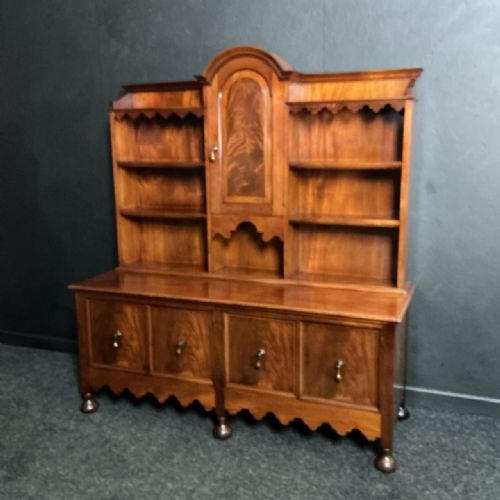
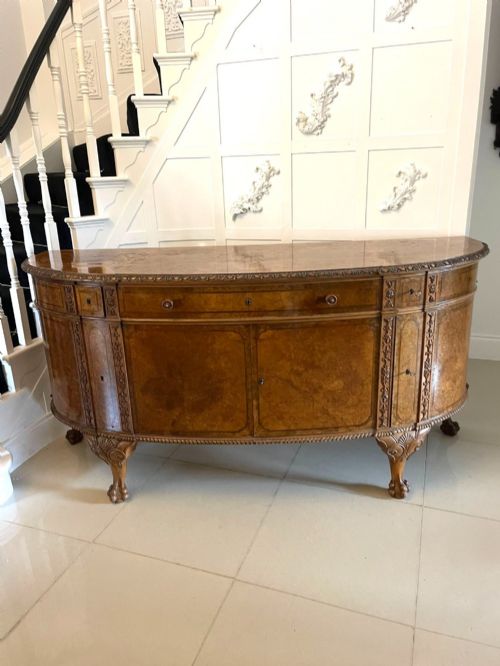
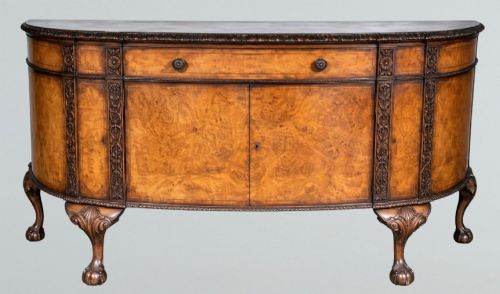
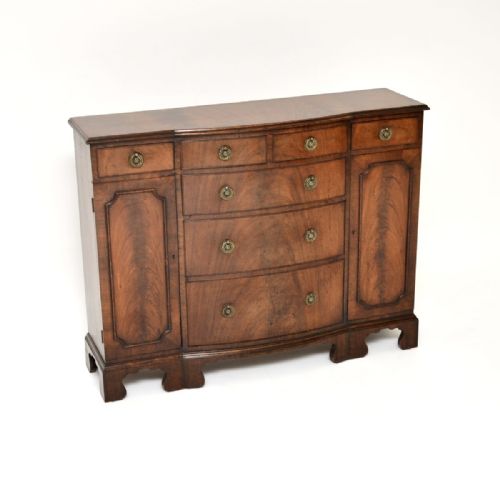
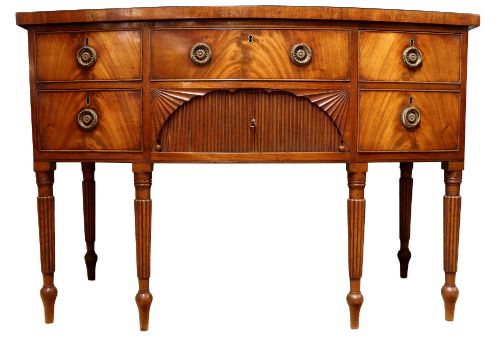
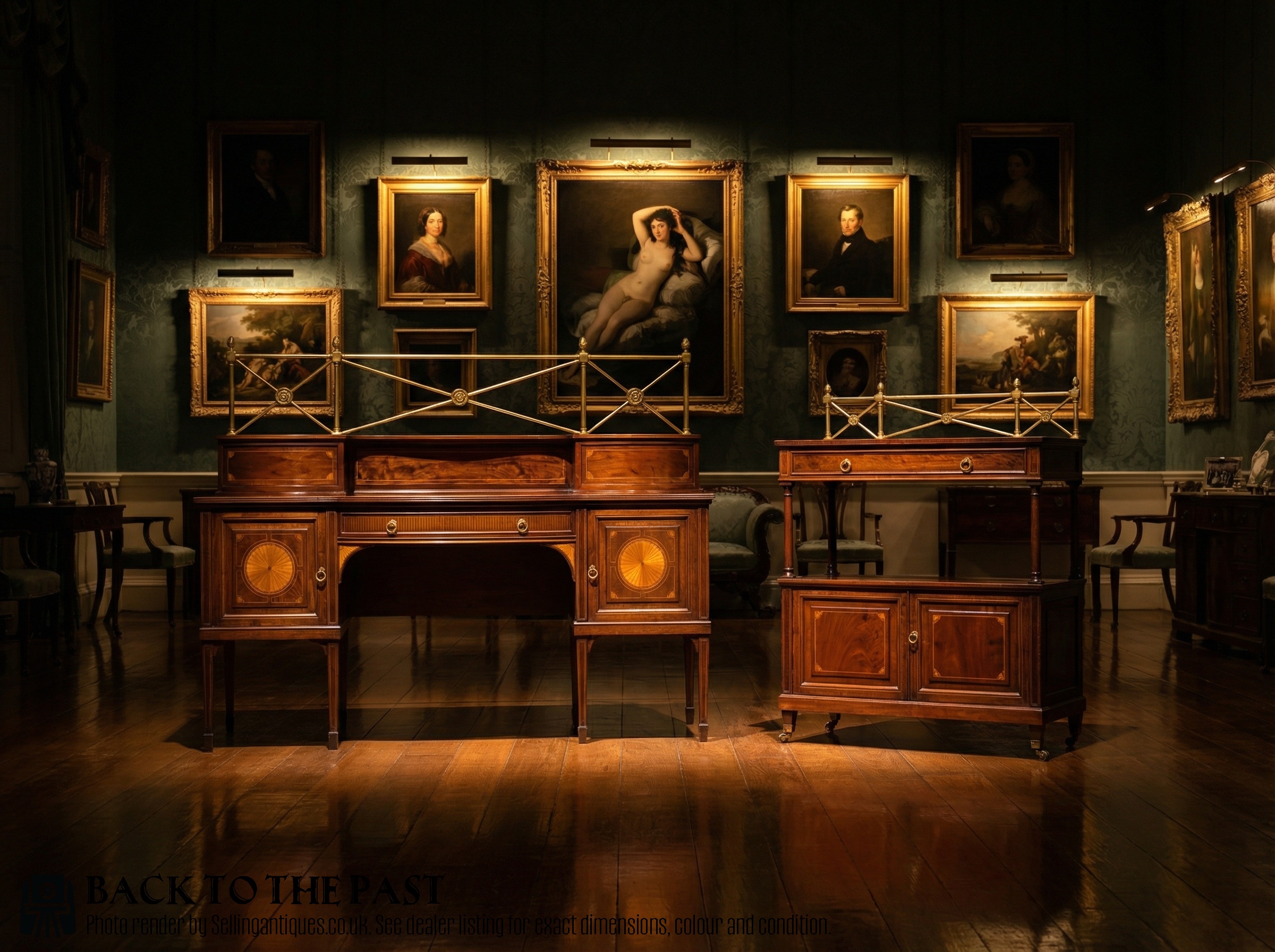
Mahogany and oak dominate the selection, appearing in flat fronts, bow fronts, and breakfront shapes influenced by Georgian and Regency designs. Pieces range from carved chiffoniers to large dining room servers fitted with cutlery sets and internal shelving.
Materials and construction methods
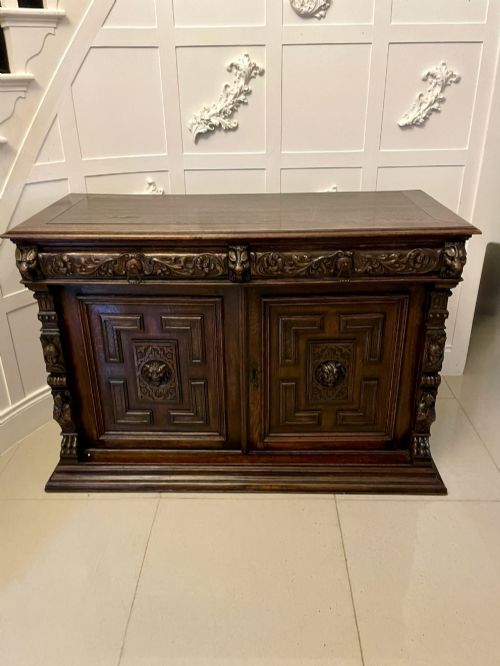
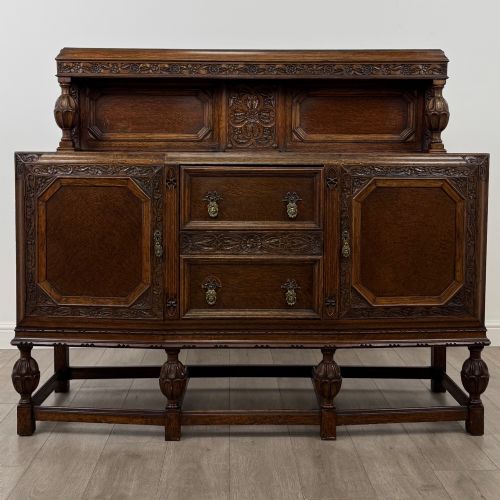
Makers utilised solid timbers alongside figured veneers, applying flame mahogany and burr walnut across drawer fronts to display rich grain patterns. Oak served structural frames and heavy carved panels, often embellished with barley-twist supports and applied mouldings.
Hardware such as brass handles and glass doors accompanied mortise and tenon joinery, ensuring rigid carcasses capable of holding heavy porcelain and silver. Inlays in contrasting woods defined Edwardian Sheraton revivals and geometric Art Deco outlines.
Listings feature oak, mahogany, and burr walnut across Edwardian, Victorian, and Art Deco periods.
Evaluating craftsmanship and proportion
Superior examples separate themselves through the selection of matched timber veneers and the crispness of hand-carved details, distinguishing custom workshop pieces from mass-produced furniture. Smooth drawer runs, original brassware, and balanced proportions determine the standing of each piece.
Timbers that retain deep natural colour without excessive refinishing hold greater architectural integrity, while inferior construction shows in misaligned doors or poorly secured decorative turnings.
Maurice Adams·Epstein·M. D. Miller & Sons, Nottingham
The Vintage Dining Room Sideboard Glossary
- Bow front
- A convex curved cabinet front popular in Regency and Edwardian designs. This shape softens the corners of a dining room.
- Chiffonier
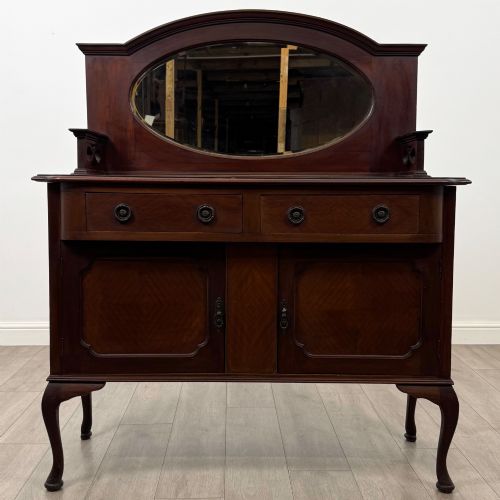
- A compact sideboard featuring enclosed shelving beneath a tiered superstructure. These served smaller Victorian and Edwardian dining spaces.
- Breakfront
- A cabinet facade where the central section projects forward from the flanking cupboards. It adds formal architectural depth to mahogany servers.
- Burr walnut
- A highly figured timber harvested from tree growths, utilised for decorative veneer panels. It creates swirling patterns across Art Deco doors.
- Barley twist
- A spiral turned wooden column used as a structural support on Jacobean Revival and oak pieces. This technique creates tactile vertical rhythm.
Vintage Dining Room Sideboard: Frequently Asked Questions
How do I style a sideboard in a modern dining room?
Pair the warm timber tones with simple ceramics or glassware to balance the historical weight of carved oak or figured walnut. Keep the surface uncluttered to let the grain and original hardware remain the focal point of the room.
Allow enough clearance around the piece for doors and drawers to open fully, especially with large bow front or breakfront models that project into the floor space.
What is the difference between a sideboard and a chiffonier?
Sideboards are generally longer storage units built with multiple drawers and cupboards specifically for serving food and storing dining linen. Chiffoniers are typically smaller Victorian variations that often include a raised back shelf or superstructure.
Both forms belong to the wider family of dining room storage but serve different spatial requirements depending on the scale of the room.
Can I use a sideboard in a hallway?
Shallow bow front cupboards and smaller servers adapt well to hallways, providing practical storage for keys and post without blocking foot traffic. Measure the depth of the piece carefully against the available corridor space.
Low Edwardian and Regency models work particularly well beneath hallway mirrors.