


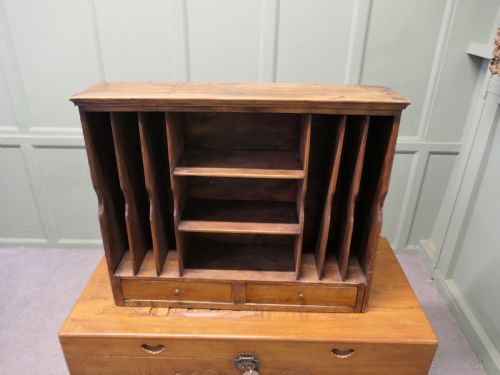


Vintage Desktop Organiser
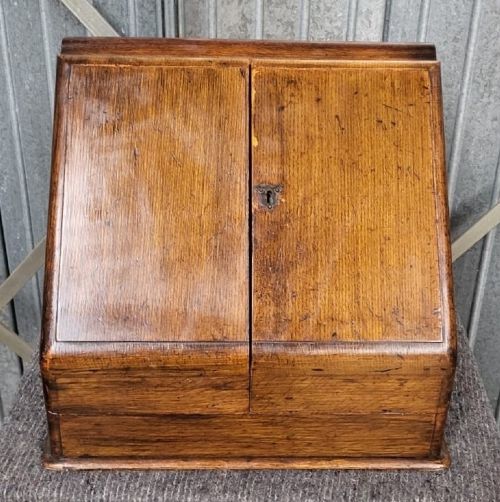
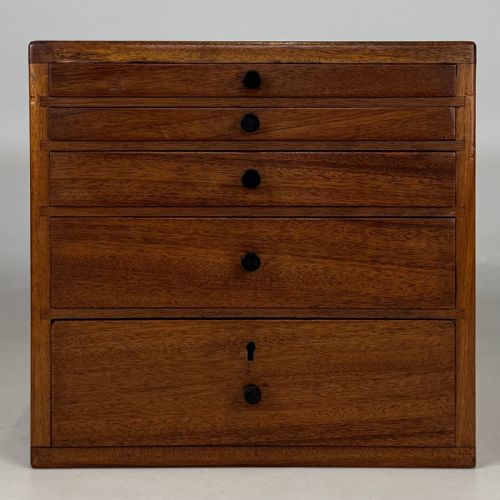
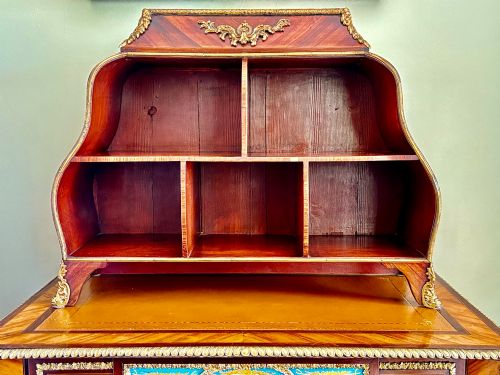
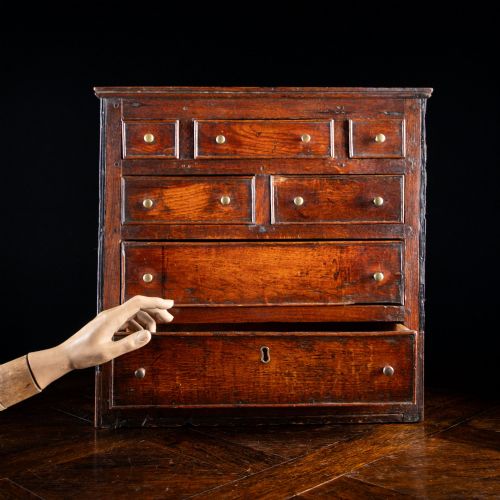
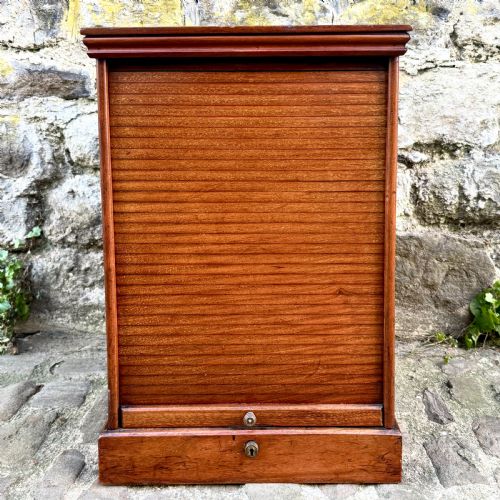
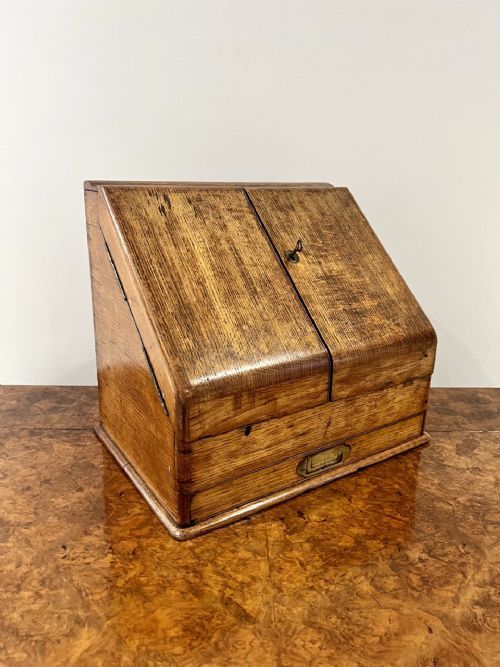
These vintage desktop organiser selections gather sturdy oak stationery boxes, mahogany filing cabinets and brass-mounted letter racks designed to keep a workspace orderly.
Vintage Desktop Organiser
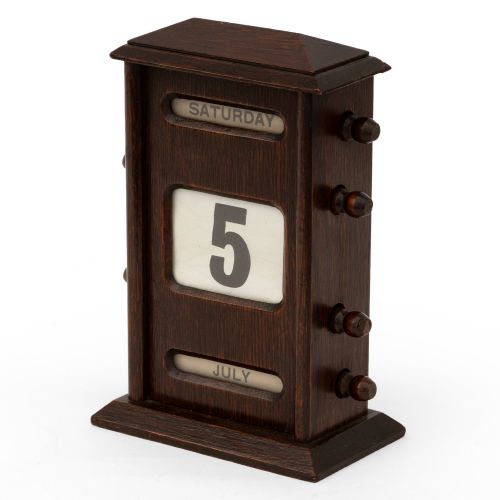
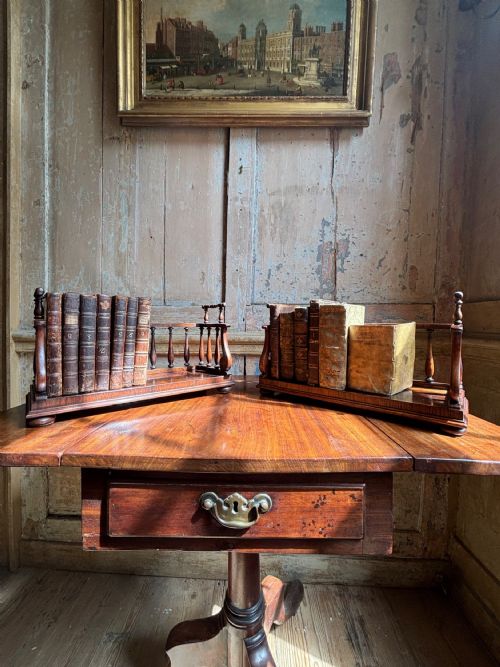
A vintage desktop organiser serves to sort correspondence, hold ledgers and tidy small writing supplies on a work surface. The examples found here span stationery cabinets, desk tidies, perpetual calendars and expanding book slides from the nineteenth and early twentieth centuries.
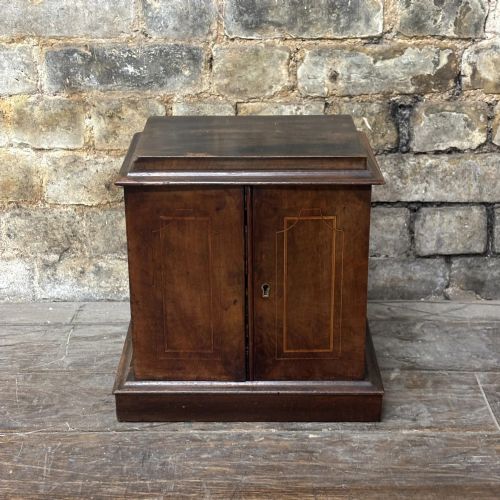
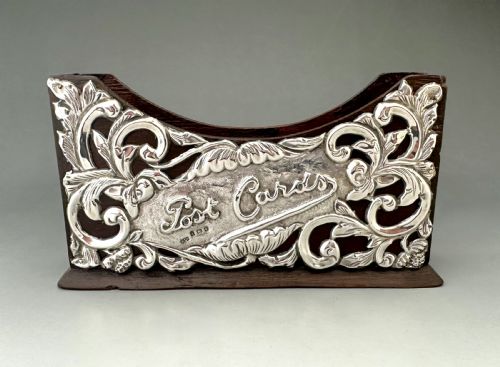
The most common forms on this page include oak and mahogany stationery boxes alongside letter racks and tabletop filing drawers. These utilitarian desk accessories reflect the bureaucratic and correspondence needs of Victorian and Edwardian offices or country house libraries.
What varies in quality
The distinction between standard utility items and superior pieces lies in the selection of timber and the intricacy of the cabinet work. Finely figured mahogany, complex inlaid marquetry, and substantial brass mounts separate high-end Victorian stationery cabinets from plain pine or beech storage boxes.
Mechanical complexity and completeness also define the grade of an item, seen in fully operational perpetual calendars, working locks with original keys, and clever interior compartments like drop-front writing surfaces or secret drawers.
Vintage Desktop Organiser Retail Price Guide 2026
Typical asking prices for vintage desktop organiser among the pieces listed under this phrase on Sellingantiques today, from the lower quarter to the upper quarter. They describe what is for sale here now, not the wider market.
Listings on this page include oak, mahogany, rosewood, pine and brass materials spanning the Victorian, Edwardian and Georgian periods.
Gillows·Amberg
The Vintage Desktop Organiser Glossary
- Stationery box
- A tabletop cabinet fitted with internal vertical dividers or pigeon holes specifically designed to hold writing paper and envelopes.
- Book slide
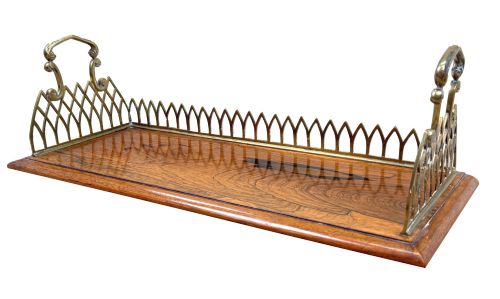
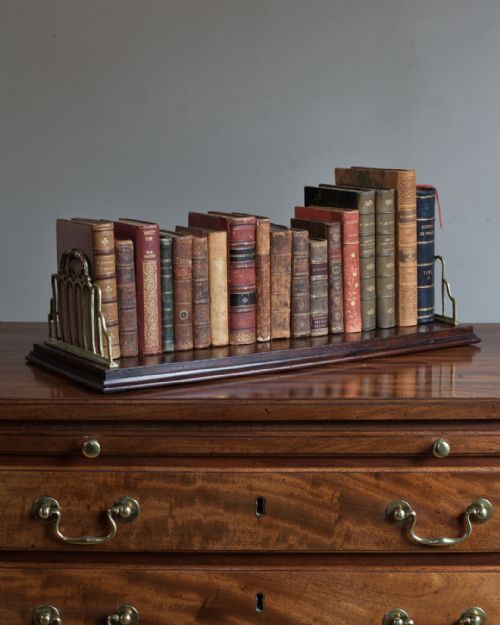
- An expanding wooden rack placed on a desk or shelf to hold a small selection of books upright between two end supports.
- Perpetual calendar
- A desk accessory with adjustable rollers, cards or dials that allows the user to manually set the correct day and month for any year.
- Pigeon holes
- A series of small, open compartments built into desk tidies and cabinets for sorting incoming mail and documents.
- Marquetry
- Decorative woodwork where thin slices of different coloured veneers are fitted into a wooden panel to form pictorial or geometric patterns.
Vintage Desktop Organiser: Frequently Asked Questions
What fits inside a vintage stationery box?
These boxes contain internal partitions, shelves and pigeon holes designed to hold folded writing paper, envelopes, and occasionally inkwells or pens.
Larger stationery cabinets also accommodate ledgers, correspondence folders, and small desk accessories behind drop-front or locking doors.
How do perpetual calendars operate?
Perpetual calendars use manually rotated wooden or metal rollers, sliding indicators or interchangeable cards to display the days of the week and dates.
Users adjust these components by hand each month to keep the calendar correct without needing a new yearly print.
Where were these desk accessories used?
These pieces originated in nineteenth and early twentieth-century offices, country house libraries, and home studies for managing daily correspondence.
They sat upon large partner desks, writing tables or bookshelves to keep working papers sorted and accessible.
How do you distinguish Victorian from Edwardian pieces?
Victorian items tend to feature heavy, dark timbers like solid oak and mahogany with robust brass hardware and elaborate stationery compartments.
Edwardian pieces often introduce lighter marquetry inlay, simpler Arts and Crafts influences, or refined silver mounts.