

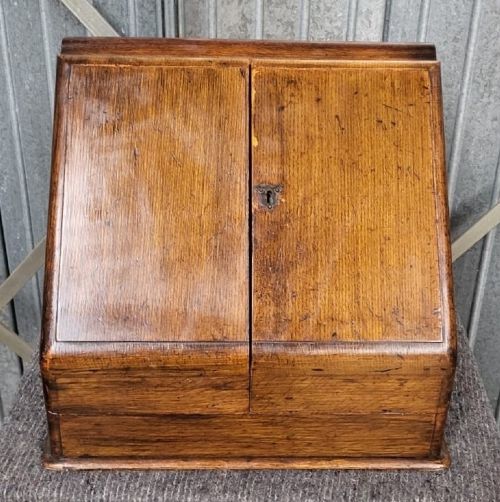


Brown Oak Stationery Box
These brown oak stationery box examples range from Georgian slopes to Edwardian cabinets, offering practical desk organisation with rich timber grain.
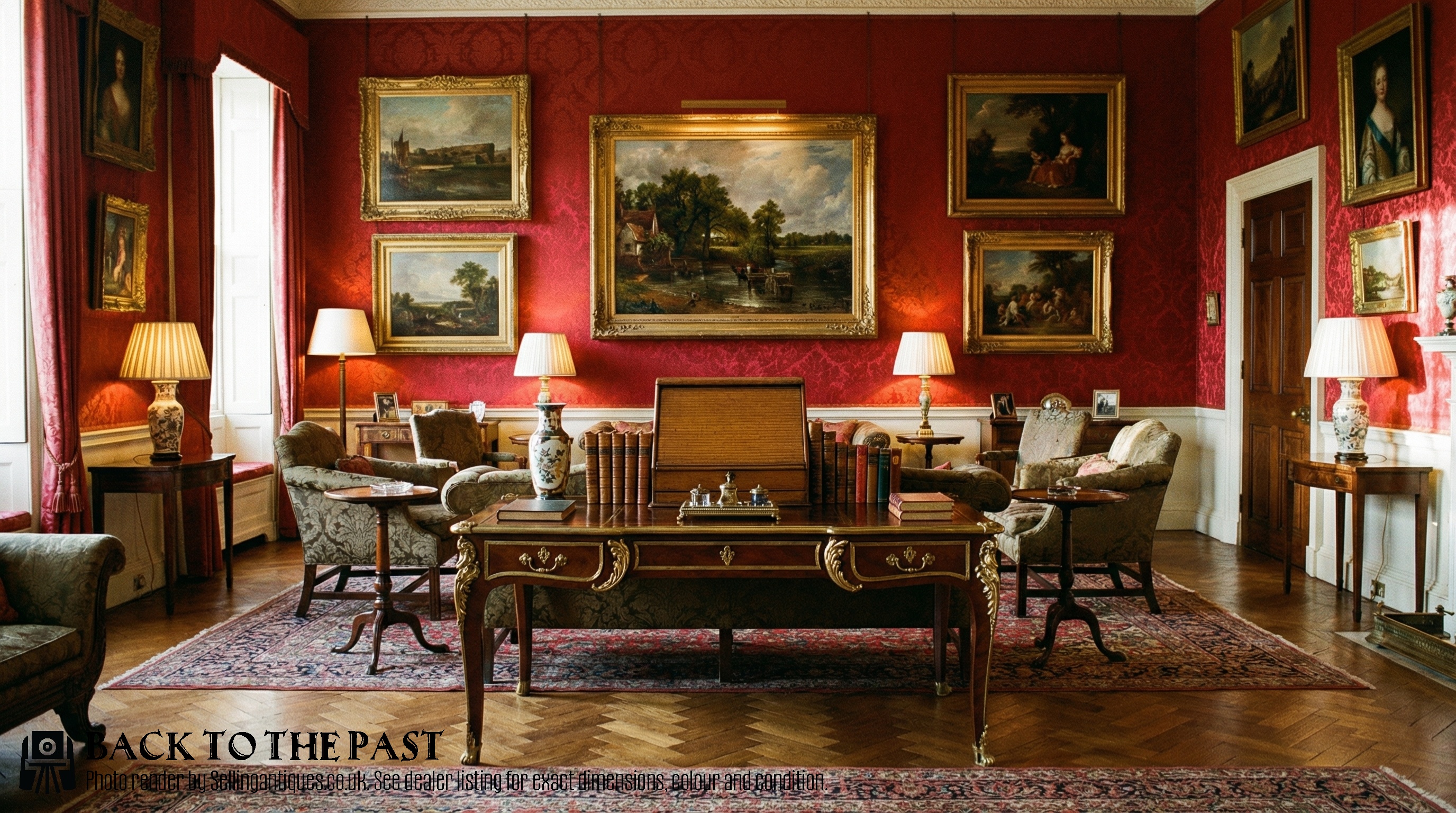
Brown Oak Stationery Box
A brown oak stationery box brings traditional desk organisation into a modern interior, housing letters, papers, and ink with timber built to last. When exploring a brown oak stationery box, buyers encounter forms ranging from simple lidded chests to elaborate cabinets fitted with internal compartments.
The selection on this page spans several eras, notably the nineteenth century, Victorian period, and Edwardian period, alongside earlier Georgian examples. Pieces take various functional shapes, including letter boxes, sloping writing chests, and desktop cabinets equipped with brass hardware.
How they were made
These items rely primarily on solid oak, chosen for its durability and distinctive grain pattern, often paired with contrasting brass hinges, locks, and binding corners. Makers constructed the structural carcass using traditional joinery methods suited to daily desktop use.
Internal layouts frequently incorporate fitted ledges, paper slots, and occasionally secret drawers, demonstrating careful carpentry. Some variations include glass panels or fabric linings to protect delicate correspondence.
Brown Oak Stationery Box Retail Price Guide 2026
Typical asking prices for brown oak stationery box among the pieces listed under this phrase on Sellingantiques today, from the lower quarter to the upper quarter. They describe what is for sale here now, not the wider market.
Several boxes hide tiny secret drawers originally intended for spare sovereign coins and postage stamps.
What varies in quality
Superior examples distinguish themselves through thoughtful proportion, precise cabinetwork, and the retention of original brass fittings rather than later replacements. The quality of the oak timber itself, particularly figured grain and warm natural tone, elevates certain pieces above standard utilitarian boxes.
Internal complexity also marks the division between basic desk tidies and superior cabinets, especially where sophisticated date mechanisms, secret compartments, or fitted inkwell sections remain intact and fully functioning.
The Brown Oak Stationery Box Glossary
- Stationery cabinet
- A desktop container specifically designed to hold writing paper, envelopes, and correspondence items upright or in flat tiers. These often feature hinged doors or falling fronts.
- Sloping writing box
- A chest featuring an angled lid once used to provide a comfortable writing surface before desks became universal. Many double as storage for letters and ink.
- Brass bound
- A descriptor for boxes strengthened along the edges and corners with brass strips and corner pieces. This technique added structural resilience for travel and daily handling.
- Secret drawer
- A concealed compartment built into the interior of a desk accessory, accessed by removing a false panel or operating a hidden release. Such additions indicate higher craftsmanship.
- Desk tidy
- A smaller open or lidded receptacle used to corral loose desk accessories like paperclips, stamps, and nibs. They keep working surfaces orderly.
Brown Oak Stationery Box: Frequently Asked Questions
What fits inside a stationery box?
These boxes typically hold standard writing paper, envelopes, and small writing implements within their fitted divisions. Many include dedicated slots for letters and post.
Larger cabinet versions can accommodate account books and larger documents, whilst smaller desktop tidies are suited for stamps and modern desk accessories.
How do I date an oak box?
Dating relies on observing construction techniques, hardware style, and the overall aesthetic movement reflected in the design. Georgian pieces often feature simpler dovetailing and hand-forged iron or brass fixings.
Later Victorian and Edwardian examples frequently incorporate machine-sawn timber, stamped brass hinges, and more complex internal mechanisms like adjustable date calendars.
Were these boxes used at home?
They served as essential writing desks in domestic studies, drawing rooms, and country house halls before the advent of modern postal systems. Households relied on them to keep personal correspondence private and organised.
Many styles, such as the country house postbox, were positioned near entryways to collect incoming mail until residents attended to it.
How do I care for antique oak?
Maintain the timber by keeping it away from direct heat sources and sudden humidity changes that cause wood to split. Regular dusting with a soft, dry cloth preserves the natural finish.
Applying a traditional beeswax occasionally helps nourish the oak and maintains a soft sheen without building up heavy chemical residues.