



Oak Writing Slope Box
An oak writing slope box provides a portable surface for correspondence, keeping ink, paper and letters contained within a hinged timber case.
Oak Writing Slope Box
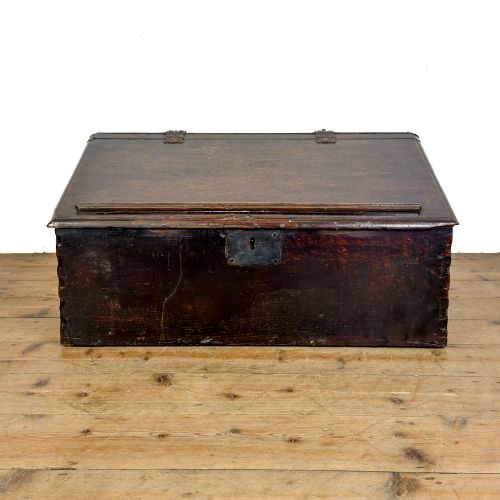
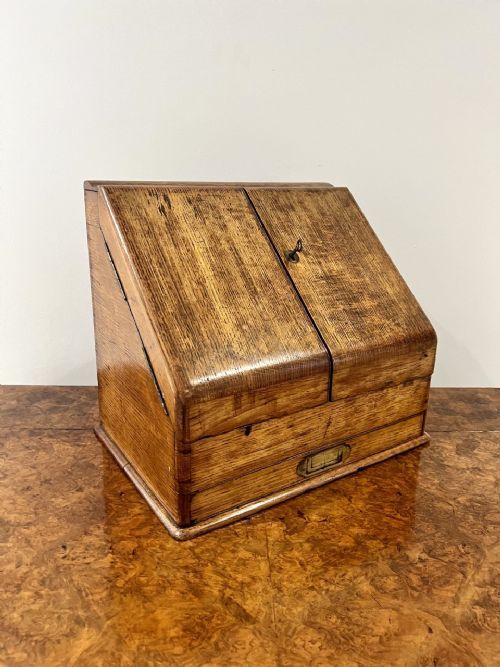
An oak writing slope box combines utilitarian desk storage with a slanted writing surface, frequently appearing across seventeenth-century, eighteenth-century, and Victorian periods. You will encounter compact Bible boxes, slant-front desk boxes, and stationery cabinets designed for tabletop use or mounted on stands.
The regional variety ranges from English country examples to Welsh miniatures and campaign-style boxes fitted with brass hardware. Pieces span from early seventeenth-century joined constructions to late nineteenth-century stationery tidies and Edwardian drop-front cabinets.
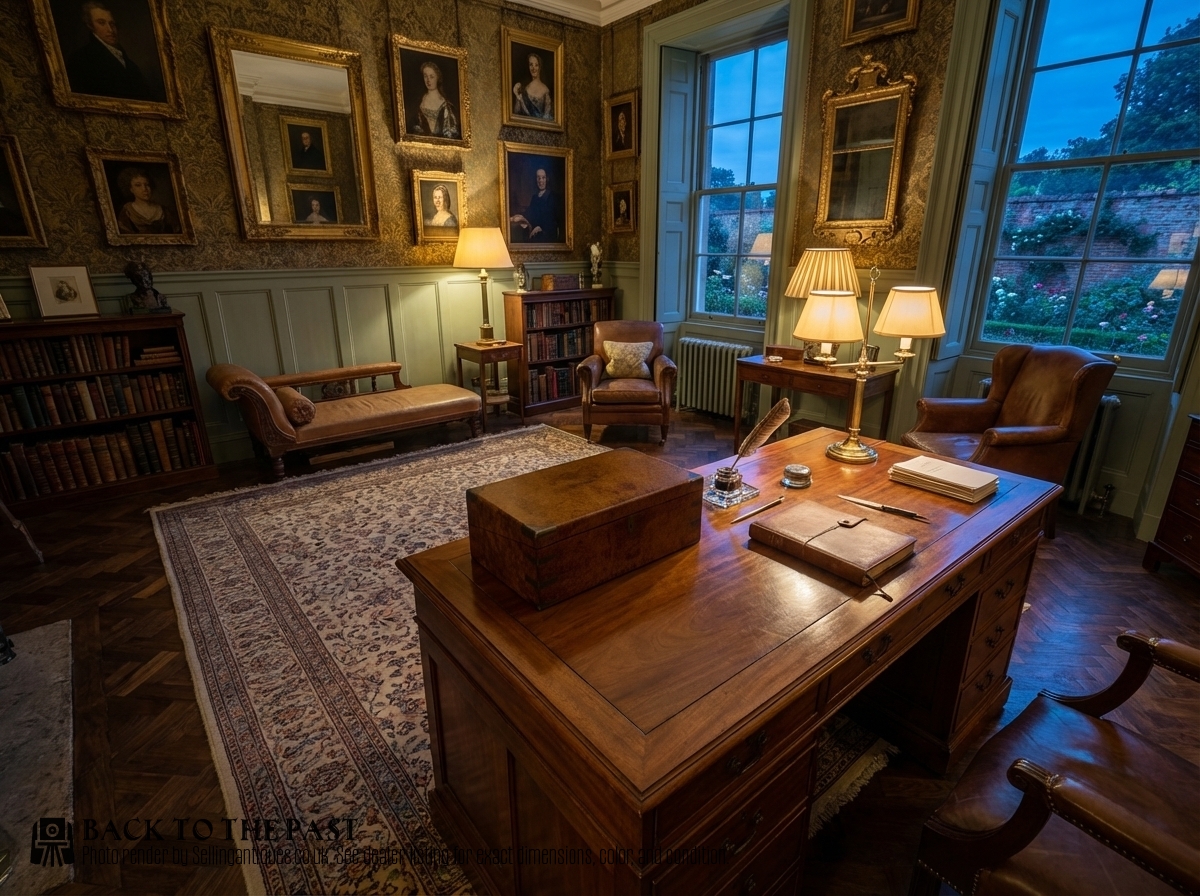
Materials and Construction
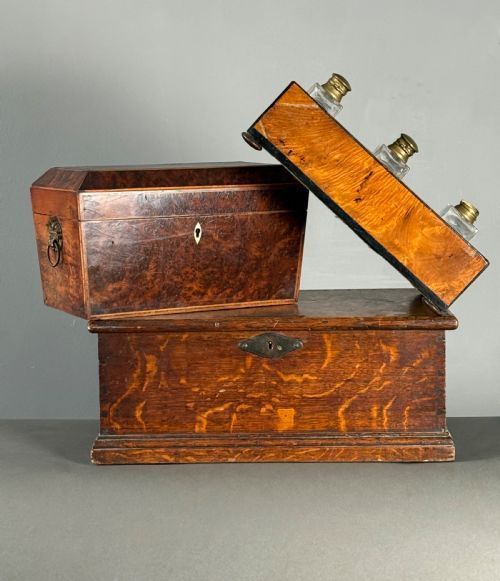
Makers utilised solid oak, often quarter-sawn to reveal dense medullary rays, supplemented by decorative elements in walnut, pollard oak, holly, and bog oak inlay. Secondary woods support interior compartments, while iron hinges and brass locks secure the folding lids and fall-front panels.
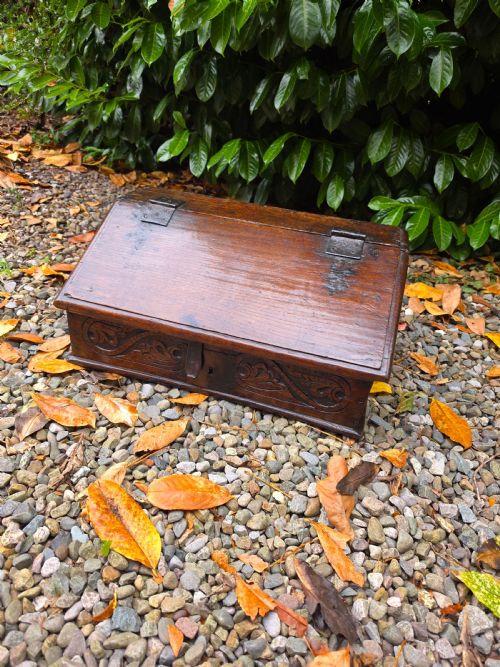
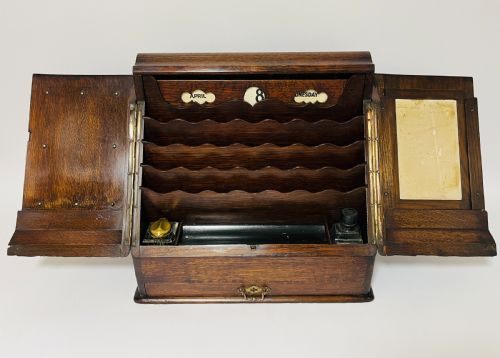
Surface detailing involves hand-carved friezes, incised owner initials, and occasional bone or mother-of-pearl accents on eighteenth-century iterations. Interior arrangements incorporate small drawers, letter slots, and receptacles for glass ink bottles.
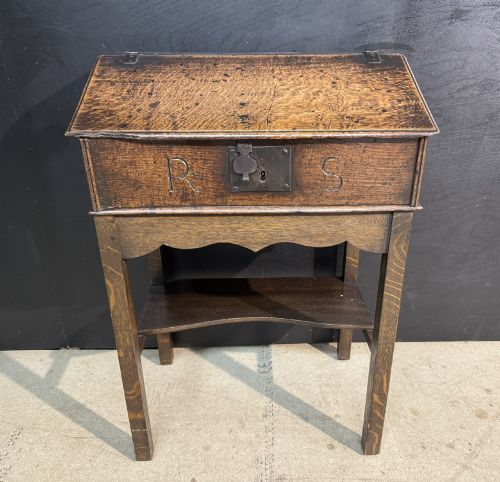
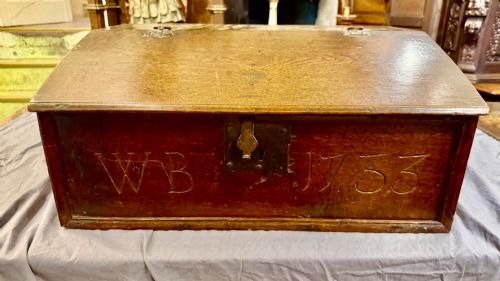
Several boxes preserve the original owner's initials and dates carved directly into the oak, recording who held the pen.
Quality and Execution
Superior execution shows in the precision of the dovetail joints, the crispness of carved geometric or foliate panels, and the integration of original hardware such as Bramah locks. Finer examples retain their internal partitions, miniature drawers, and matching inkstands without replacement timber.
Later adaptations, such as seventeenth-century boxes elevated on subsequent stands, alter the original form. The depth of the relief carving and the selection of figured timber distinguish standard utilitarian storage from exhibition-grade cabinet work.
The Oak Writing Slope Box Glossary
- Bible box
- A rigid timber container originally built to hold a large family Bible, often featuring a sloping lid that doubled as a reading rest. These form the architectural precursor to many slope boxes.
- Slant front
- An inclined writing lid hinged at the lower edge, which folds down to reveal an internal arrangement of small pigeonholes and drawers.
- Campaign style
- Furniture built for military travel, characterised by flush-fitting brass carrying handles, reinforced corners, and compact dimensions for portability.
- Pollard oak
- Timber taken from trees that have been pollarded, producing a knotted, highly figured grain pattern prized for decorative veneering.
- Fall front
- A hinged vertical panel that drops forward to provide access to correspondence slots and stationery compartments.
Oak Writing Slope Box: Frequently Asked Questions
How do I date an oak box?
Dating relies on construction methods like hand-cut dovetails, iron hinge types, and stylistic indicators such as carved strapwork or linenfold panels. Earlier seventeenth-century pieces display joined frame-and-panel construction, whereas Victorian boxes utilise tighter machine-sawn tolerances.
Secondary woods and lock mechanisms also provide chronological clues. Hand-forged ironwork typically precedes nineteenth-century brass hardware.
Were these boxes meant for travel?
Certain variations designated as campaign boxes featured robust brass bindings and recessed handles specifically for transport on journeys. Standard desk boxes and Bible boxes remained stationary on tabletops.
Stationery cabinets and table bureaus stayed in domestic studies or ecclesiastical offices rather than accompanying owners on the road.
What went inside a stationery box?
Interiors held folded sheets of writing paper, envelopes, sealing wax, and taper sticks for correspondence. Fitted glass ink bottles rested in dedicated internal wells.
Many contained partitioned ledgers or slots to sort incoming letters and receipts before the invention of modern filing systems.
Why do some boxes have carved dates?
Makers or owners occasionally inscribed initials, dates, or marriage ciphers directly onto the front frieze to commemorate domestic milestones. Welsh and English vernacular pieces frequently display these carved personal markers.
Such inscriptions help establish the original provenance and regional origin of vernacular country furniture.