
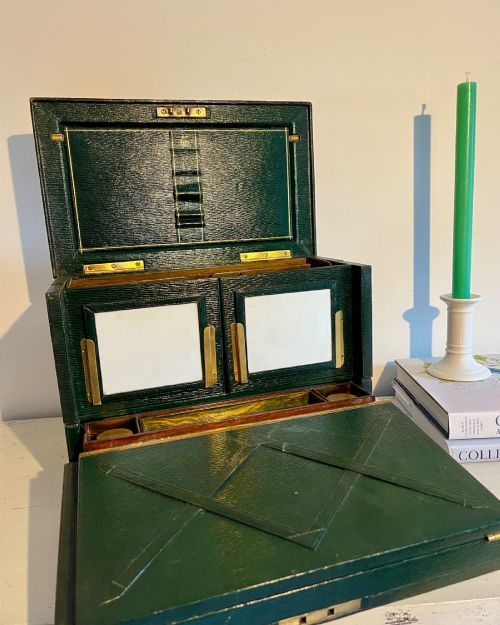
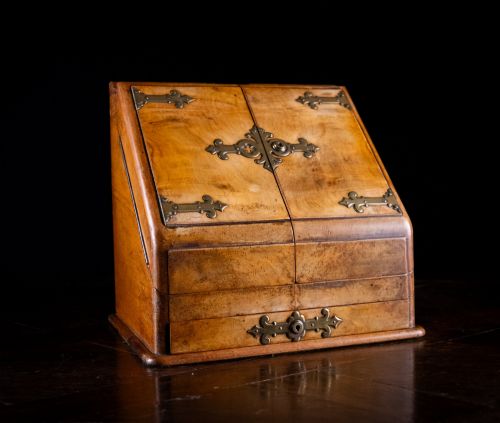
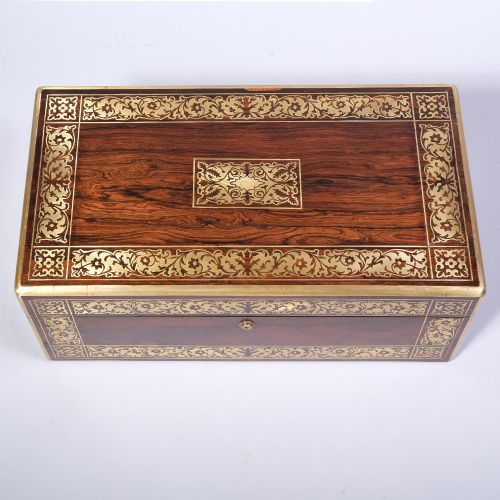
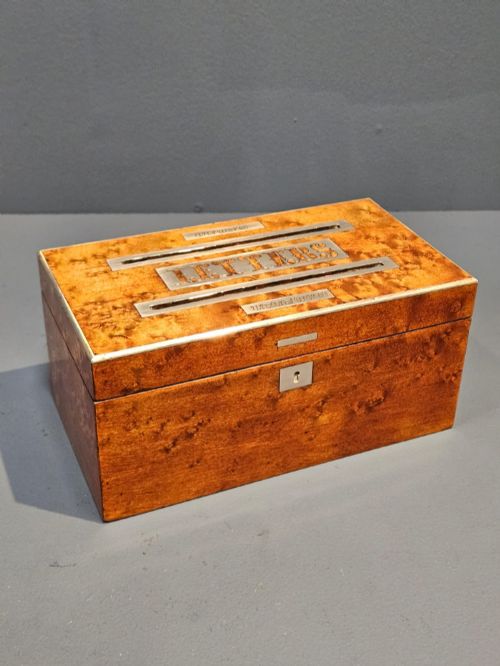




Victorian Desktop Stationery Box
These Victorian desktop stationery boxes organise correspondence with panelled timbers and brass fittings, bringing order to the nineteenth-century desk.
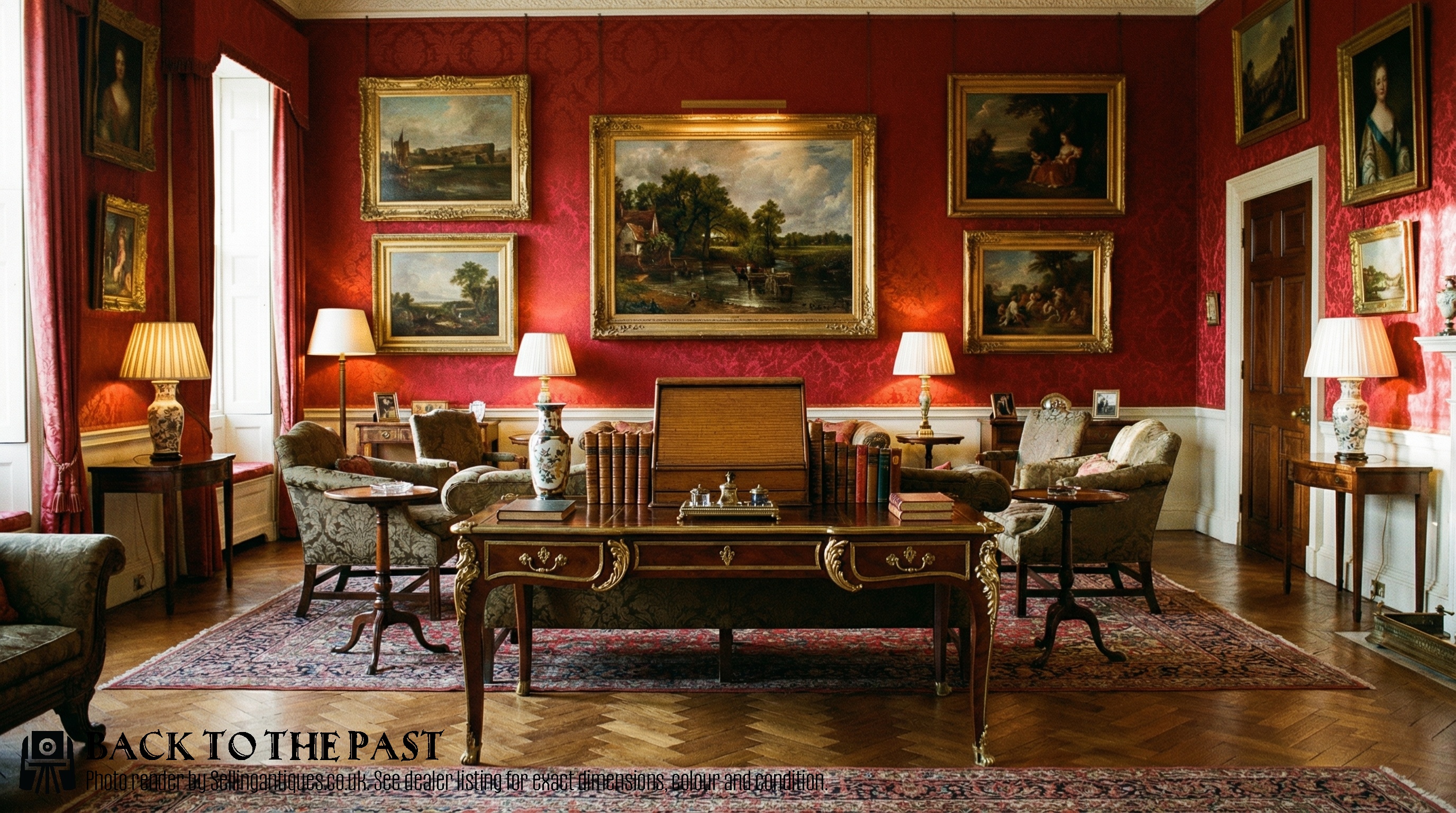
Victorian Desktop Stationery Box
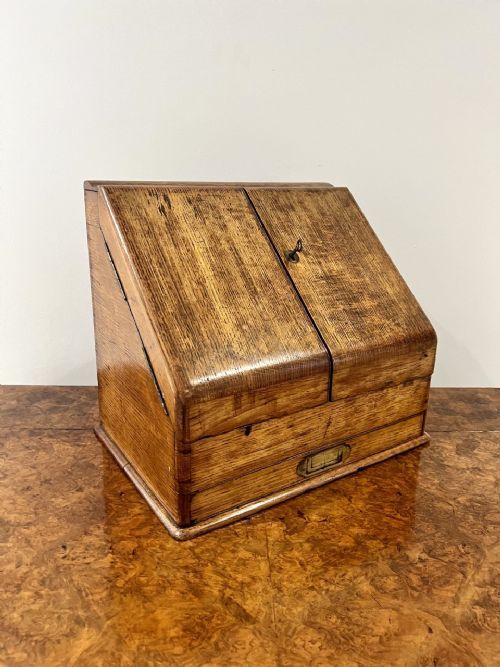
A victorian desktop stationery box provides compartmentalised storage for envelopes, paper, and writing implements on a library or study table. These pieces range from upright cabinets with fall fronts to slope-fronted writing boxes and letter racks.
Oak, walnut, and mahogany dominate the offerings, appearing alongside papier-mâché, coromandel, and rosewood. Examples span the nineteenth century, including Arts and Crafts interpretations and Gothic Revival variants.
Materials and construction
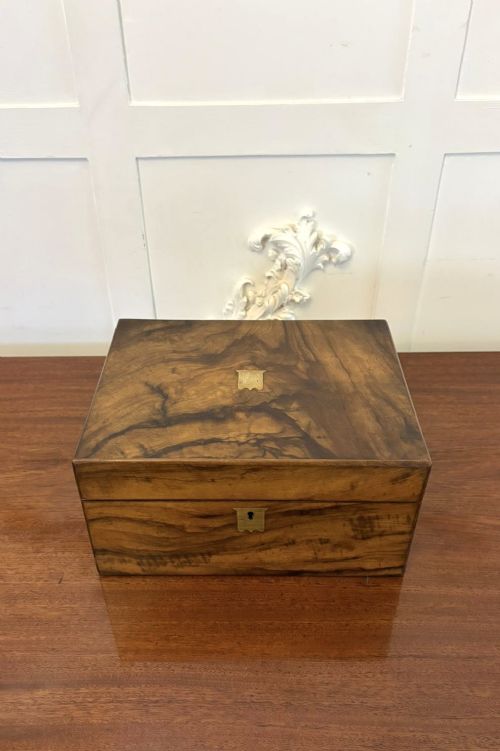
Cabinetmakers constructed the carcases from dense timbers such as oak, mahogany, and walnut, frequently applying burr veneers for visual depth. Brass mounts, strapwork, and hinges reinforce the corners and edges.
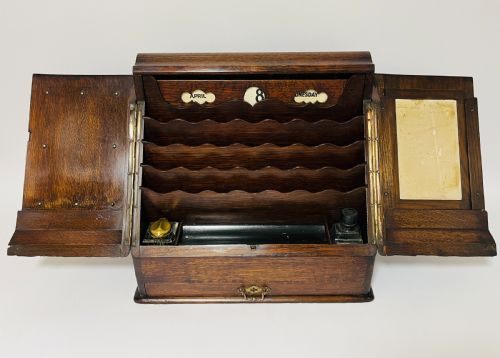
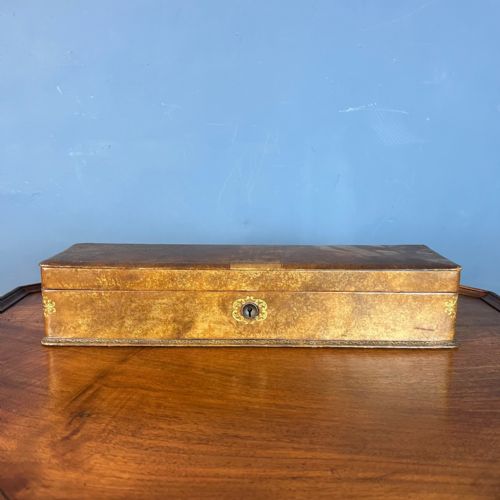
Surface decoration involves brass inlay, mother-of-pearl, Tunbridge ware mosaics, and leather tooling. Interiors often feature fitted letter slots, glass ink bottles, and concealed secret drawers.
Listings feature oak, walnut, and mahogany alongside exotic woods like coromandel and rosewood.
Judging execution and finish
Superior examples display precise joinery, well-figured timber veneers, and substantial brass hardware that sits flush with the wood. Inferior items rely on painted decoration to mask plain secondary timbers.
The sophistication of the internal fittings distinguishes finer pieces, particularly those incorporating integrated calendars, inkwells with matching glass inserts, and smoothly functioning fall fronts.
F Waller·Houghton & Gunn
The Victorian Desktop Stationery Box Glossary
- Stationery box
- A desk accessory designed to hold writing paper, envelopes, and correspondence upright in internal dividers.
- Writing slope
- A desk box featuring an angled hinged lid that opens to reveal a velvet-lined writing surface and compartments for pens.
- Tunbridge ware
- Woodwork decorated with mosaic patterns assembled from thousands of tiny tinted wood blocks to form geometric or pictorial scenes.
- Correspondence box
- A cabinet fitted specifically for sorting incoming and outgoing mail, often labelled for answers.
- Fall front
- A hinged panel that drops forward to provide access to internal stationery compartments and letter slots.
Victorian Desktop Stationery Box: Frequently Asked Questions
How were stationery boxes used?
These boxes sat upon writing tables to keep paper, envelopes, and incoming post neatly sorted in dedicated compartments.
Many included internal racks for letters, small drawers for stamps, and spaces for glass ink bottles.
What is the difference between a box and a slope?
A stationery box stands upright to hold paper and letters vertically behind doors or a drop front.
A writing slope opens with an inclined lid to create a slanted writing surface with storage underneath.
How do I date a stationery box?
Dating relies on timber choices, brass hardware styles, and decorative motifs such as Gothic Revival or Arts and Crafts carving.
Makers' labels, registration marks, and secondary woods like pine or oak also help narrow the period.
Can these boxes hold modern paper?
Standard modern letter paper generally fits within the internal dividers of larger nineteenth-century cabinets.
Smaller antique compartments suit note cards and custom stationery rather than oversized modern envelopes.