





Antique Desk Compendium
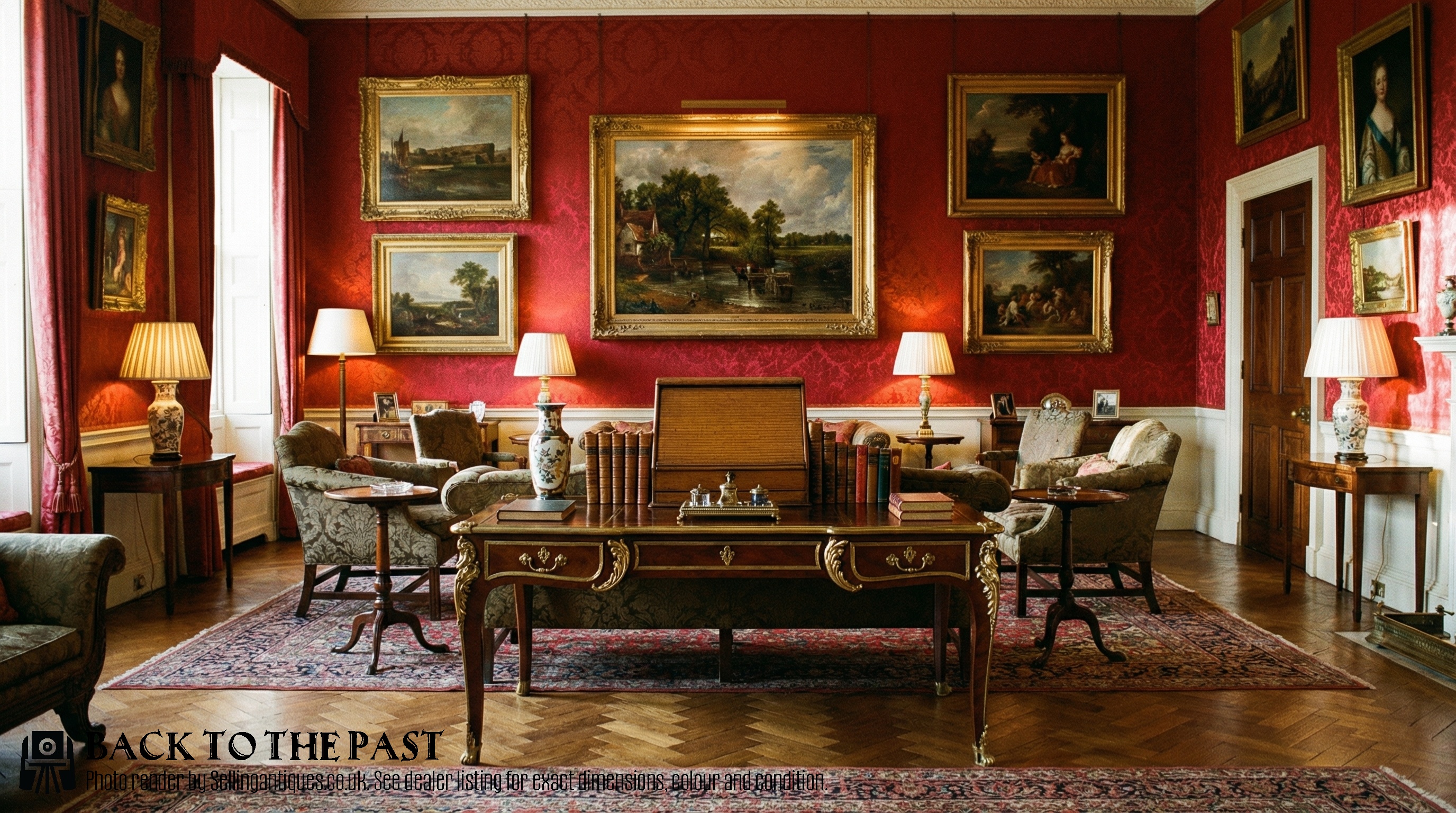
An antique desk compendium brings together the various tools of correspondence and study in a single, well-crafted desktop home.
Antique Desk Compendium
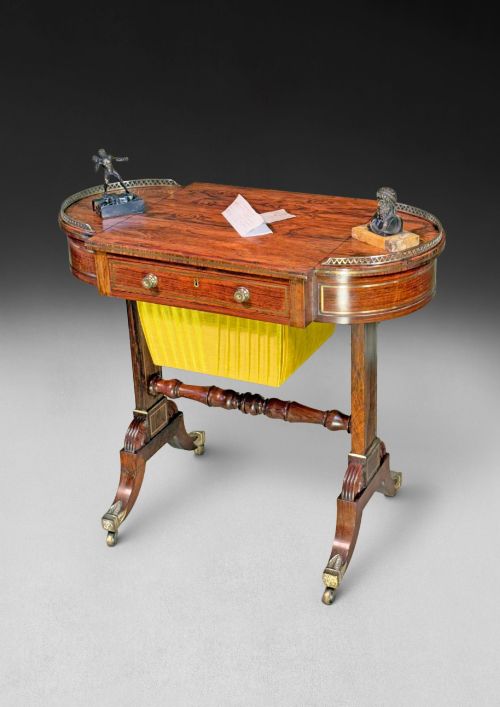
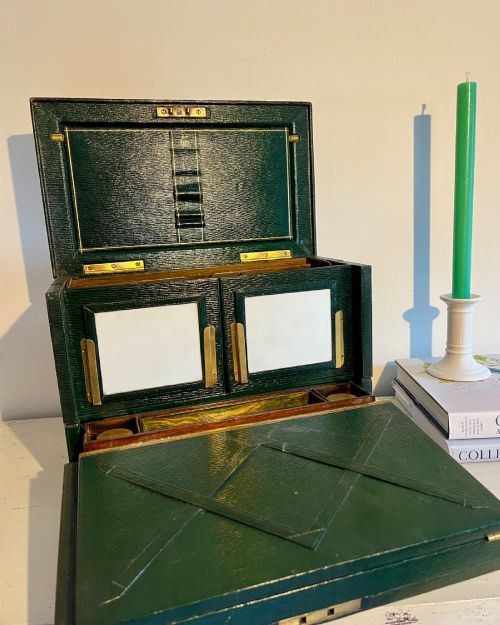
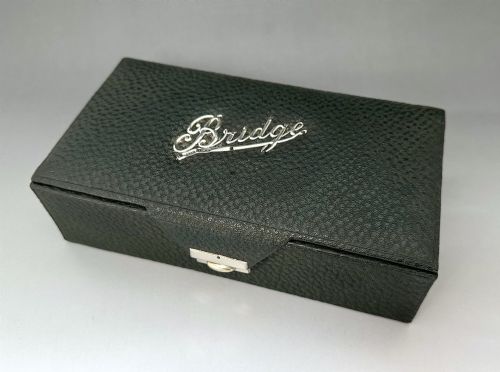
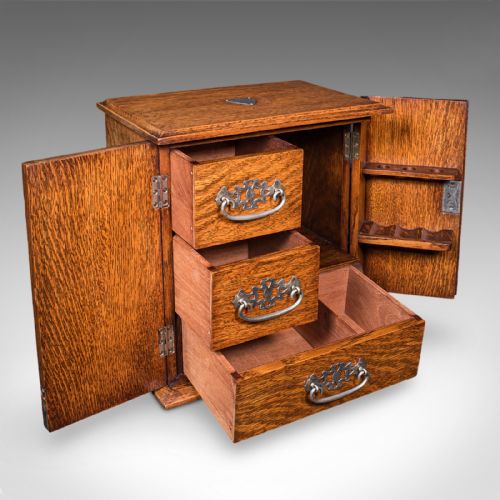
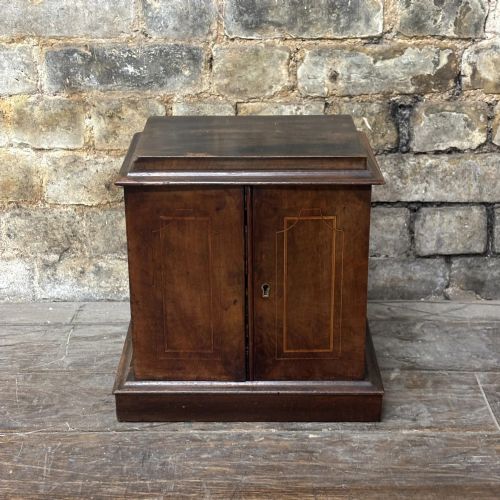
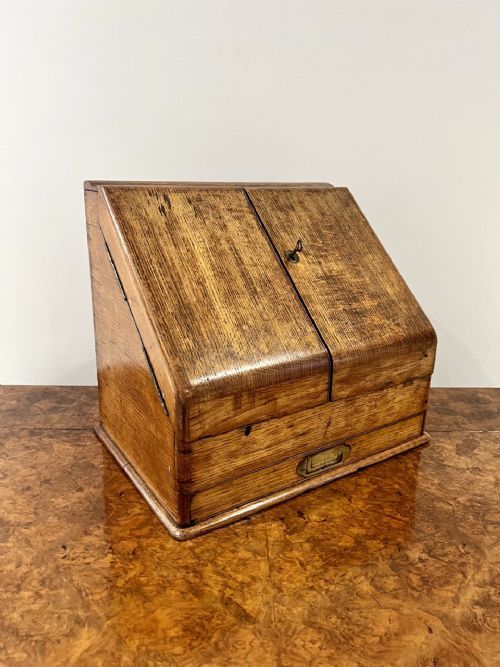
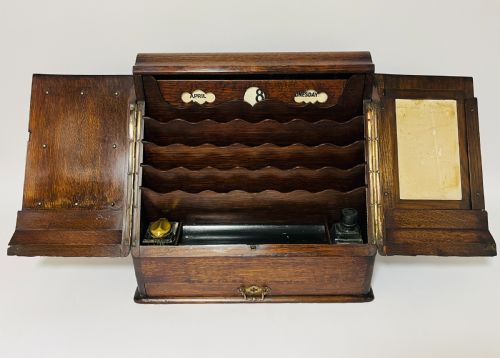
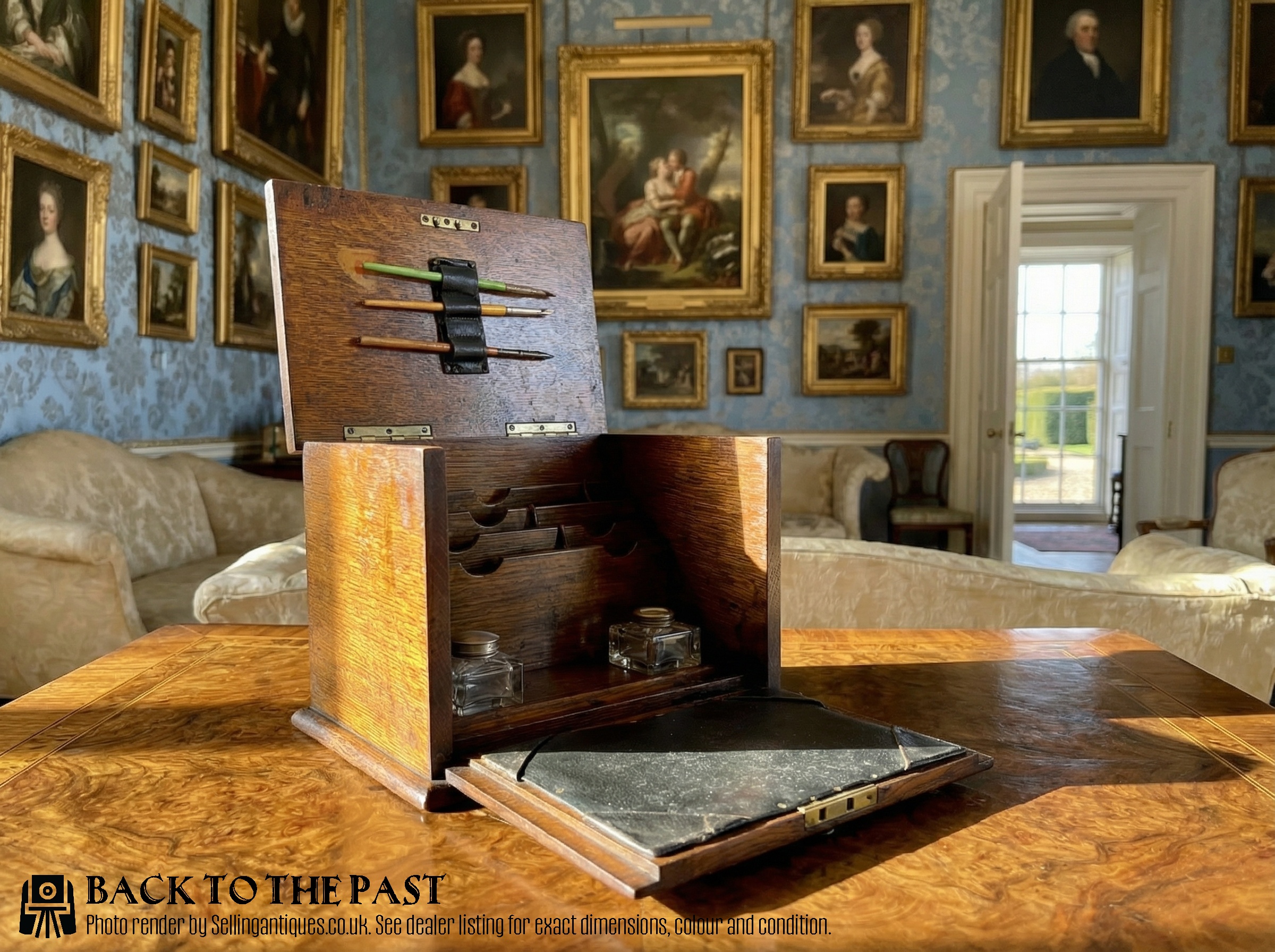
When you search for an antique desk compendium, you are looking at fitted desktop containers designed to hold writing materials, smoking requisites, or timepieces. These pieces range from simple oak and mahogany stationery boxes to elaborate fitted cabinets with fall fronts and integrated calendars.
The versions you are most likely to meet on this page date from the Victorian and Edwardian eras, constructed in solid woods like oak and mahogany. Many pieces combine multiple functions, housing pens, paper, stamps, and cigars within a single designated footprint on a study or library table.
Beyond standard stationery boxes, the selection includes novelty pieces shaped as industrial items like miners lamps or railway wagons. These varied forms reflect the Victorian taste for combining utility with mechanical ingenuity and decorative display on the writing desk.
How they were made
Cabinetmakers utilised dense hardwoods such as oak, mahogany, walnut, and exotic coromandel to construct the carcass of each compendium. These woods were chosen for their durability and grain, often finished with brass mounts, strapwork, or lockplates.
Interiors were frequently lined with leather, velvet, or silk to protect delicate writing instruments and silver accessories. Joinery techniques such as dovetailed drawers and secure fall fronts ensured the boxes withstood daily use on the desktop.
Antique Desk Compendium Retail Price Guide 2026
Typical asking prices for desk compendium among the pieces listed under this phrase on Sellingantiques today, from the lower quarter to the upper quarter. They describe what is for sale here now, not the wider market.
Some Victorians preferred writing their letters beside miniature railway wagons and miner lamps resting on the study desk.
What varies in quality
The distinction between ordinary and superior pieces rests on the choice of timber and the complexity of the interior mechanism. Finer examples employ figured veneers like coromandel or burr walnut, paired with heavy cast brass hardware and working locks by noted makers.
Execution of internal fittings marks the upper tier of production, seen in custom glass inkwells, sterling silver mounts, and clever folding actions. Pieces bearing retailer signatures or maker marks demonstrate a higher grade of craftsmanship than unbranded workshop output.
Guilmet·J.C Vickery·Houghton and Gunn·Hermes Paris·Mappin & Webb·F Waller·Asprey London
The Antique Desk Compendium Glossary
- Stationery cabinet
- A desktop box featuring fitted vertical slots and shelves for paper, envelopes, and correspondence. These cabinets often include drop-front writing surfaces or internal drawers.
- Fall front
- A hinged panel that folds downward to reveal writing slopes, pigeonholes, or concealed storage compartments within a cabinet. It provides access to the interior while maintaining a flat front when closed.
- Novelty compendium
- A desk accessory fashioned in the likeness of an unrelated object, such as a locomotive, lamp, or architectural model. They combine practical storage with playful Victorian design.
- Campaign writing compendium
- A portable box engineered for travel, featuring folding supports or compact internal compartments. These pieces allowed writers to transport their materials securely.
Antique Desk Compendium: Frequently Asked Questions
What fits inside a desk compendium?
These boxes accommodate everyday writing supplies, including stationery paper, envelopes, inkwells, and stamps. Some variations also house smoking requisites like cigars and matches.
The internal configuration depends on the specific model, with specialised slots designed for specific desk tools rather than general storage.
How do I care for wooden surfaces?
Keep wooden cabinets away from direct sunlight and radiators to prevent the timber and veneers from drying out. Periodic application of a suitable wax preserves the finish and natural grain.
Avoid excessive moisture on leather interiors and silver mounts during routine cleaning.
Were these made for travel?
Certain compendiums feature campaign designs intended for portability, allowing writers to pack up their correspondence tools securely. Most examples, however, remained stationary on library and study desks.
Heavier cabinets built from solid oak or fitted with clocks were permanent fixtures in the home or office.
How are Victorian pieces dated?
Dating relies on timber choices, brass hardware styles, and construction methods characteristic of the period. Maker marks, retailer signatures, and occasional patent dates stamped on locks provide the most precise indication.
Stylistic shifts from heavy Gothic revival oak to inlaid Edwardian mahogany help narrow the decade of manufacture.