





Victorian Letter Cabinet
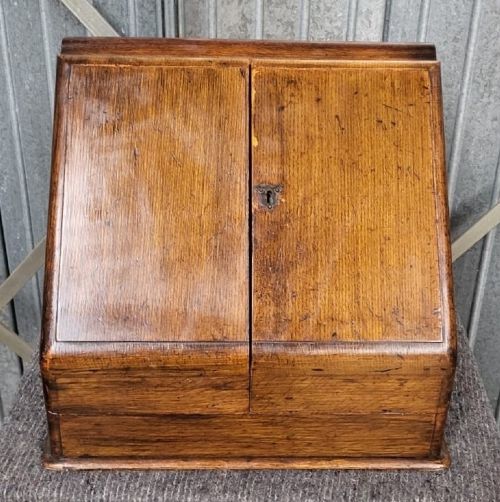
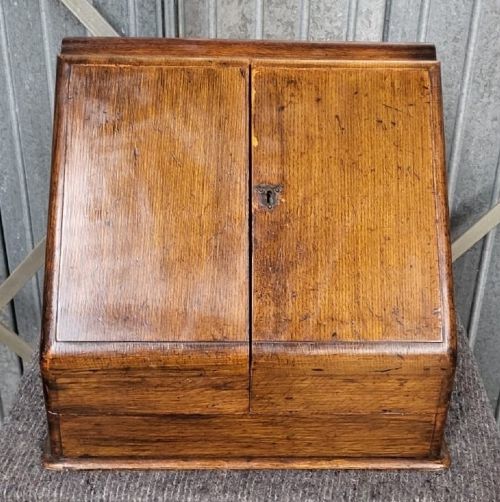
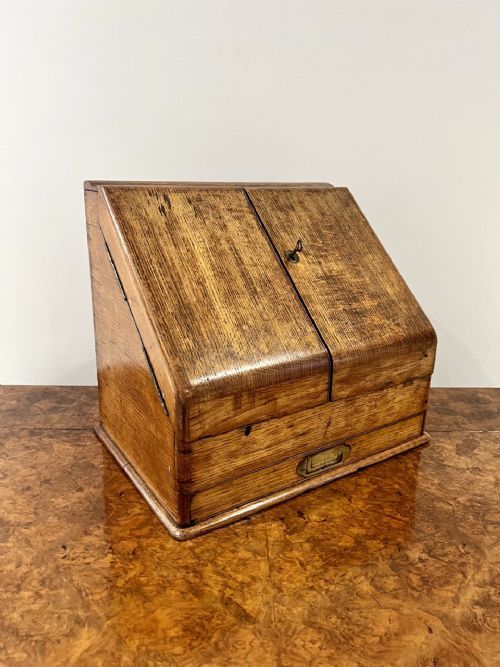
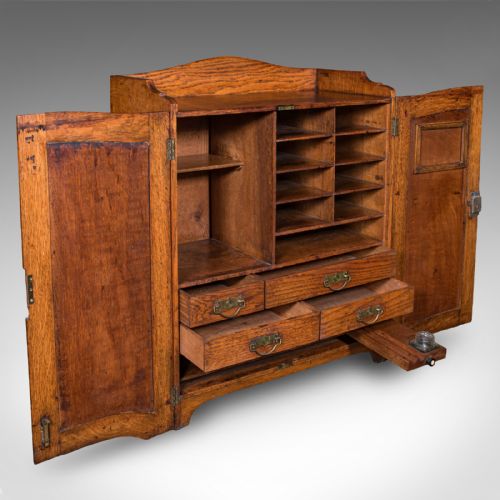
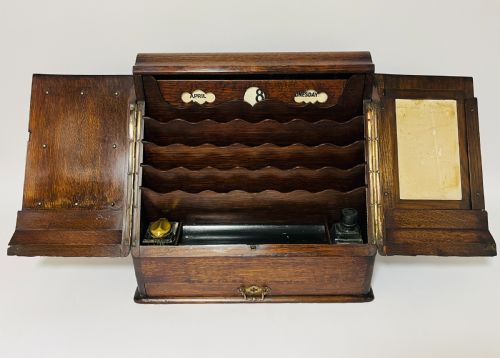
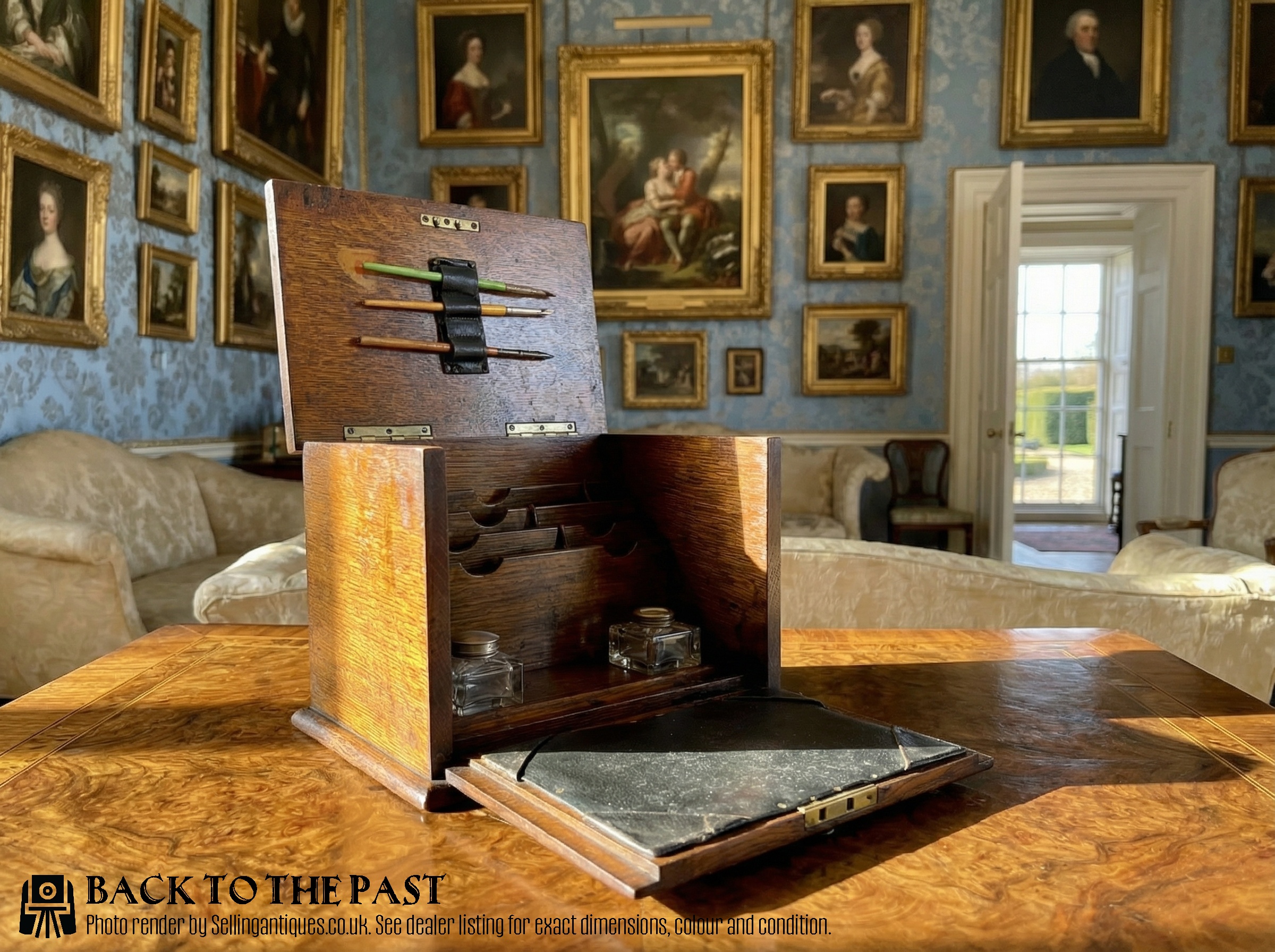
These pieces are a victorian letter cabinet, functional desk furniture designed to organise correspondence and writing materials in nineteenth-century offices and homes.
Victorian Letter Cabinet
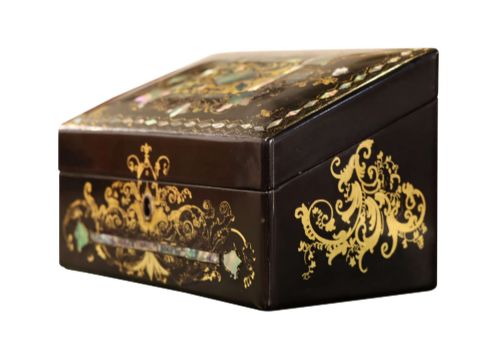
The predominant forms are desktop stationery boxes, drop-front cabinets, and letter racks equipped with internal compartments, pigeon holes, and inkstand fittings. Oak and mahogany versions appear frequently alongside occasional pieces in walnut, rosewood, and coromandel.
Alternative forms in the evidence include patent letter file cabinets, wall-mounted letter boxes, and country house postboxes. These items served the daily administration of Victorian households and businesses before modern postal systems.
Materials and construction
Cabinet makers utilised dense hardwoods such as oak, mahogany, walnut, and rosewood, frequently constructing the carcass with dovetailed joints to withstand daily use. More decorative examples incorporated exotic timbers like coromandel or applied brass mounts, glass panels, and leather trims.
Internal arrangements relied on fine secondary timbers for pigeon holes, drawer linings, and letter dividers. Fixtures such as hinges, handles, and lock escutcheons were cast or stamped in brass, sometimes featuring patented locking mechanisms or integrated date displays.
Victorian Letter Cabinet Retail Price Guide 2026
Typical asking prices for victorian letter cabinet among the pieces listed under this phrase on Sellingantiques today, from the lower quarter to the upper quarter. They describe what is for sale here now, not the wider market.
The archive includes specialised variants such as apothecary chests, gamekeeper cupboards, and patent letter file cabinets alongside standard stationery boxes.
Distinctions in quality
Quality rests on the selection of timber and the precision of the joinery within the internal pigeon holes and drawers. Superior pieces display carefully matched grain veneers, tight dovetailing, and original brass hardware rather than later replacements.
Maker signatures, retailer labels, or patented systems elevate certain items above standard production pieces. The inclusion of original matched ink bottles, functioning locks with keys, and integrated perpetual calendars indicates higher workshop standards.
Houghton and Gunn·F Waller
The Victorian Letter Cabinet Glossary
- Stationery box
- A desk accessory with fitted compartments designed to hold writing paper, envelopes, and small writing implements. These boxes often feature sloping lids or folding fronts.
- Pigeon hole
- A small open compartment within a desk or cabinet used for sorting letters and documents. Multiple stacked pigeon holes form the interior framework of letter cabinets.
- Cartonnuer
- A desktop chest of drawers or compartments designed specifically for holding loose papers, documents, or cartons. This French form appears in revival styles during the nineteenth century.
- Ormolu
- Gilded bronze mounts applied as decorative ornamentation to furniture and cabinet work. The technique involves mercury gilding on a bronze base.
- Coromandel
- A dense, heavily figured exotic timber imported from Asia, valued for rich dark brown colouring and contrasting streaks. Makers reserved this wood for luxury Victorian desk accessories and luxury boxes.
Victorian Letter Cabinet: Frequently Asked Questions
What is a victorian letter cabinet used for?
These cabinets served to organise incoming and outgoing post, writing paper, and envelopes on a desk or table. Interiors typically contained dedicated slots for answered and unanswered correspondence.
In domestic settings, they kept personal writing materials tidy. In commercial environments, larger cabinets managed business documents and filing systems.
How do I date a letter cabinet?
Dating relies on timber choices, construction methods, and stylistic indicators such as Victorian Gothic revival or Arts and Crafts influences. Oak and mahogany appear throughout the era, while exotic woods like coromandel tend to appear in mid-Victorian pieces.
Patent marks, retailer paper labels, and integrated hardware like adjustable date mechanisms provide narrower chronological markers. Late nineteenth-century examples often reflect mass production techniques or specific office filing patents.
Where should I place a letter cabinet in my home?
These pieces sit comfortably on a writing desk, side table, or chest of drawers where their internal compartments remain accessible. Wall-mounted letter boxes function effectively in hallways or entrance spaces.
Avoid placing antique wood furniture in direct sunlight or near heat sources to protect polished timber surfaces and original veneers.
Are all letter cabinets made of solid wood?
Many examples utilise solid oak or mahogany for the main structure, particularly utilitarian or provincial pieces. High-end stationery boxes often feature softwood carcasses veneered with decorative hardwoods such as walnut, rosewood, or coromandel.
Internal dividers and drawer bases frequently employ secondary timbers like pine or cedar.