


Wooden Stationery Cabinet
A wooden stationery cabinet organises correspondence and desk accessories, combining practical storage with period craftsmanship.
Wooden Stationery Cabinet
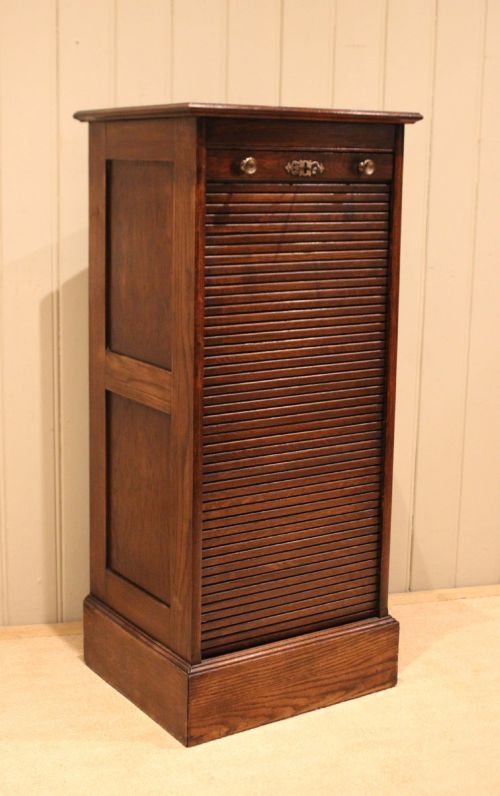
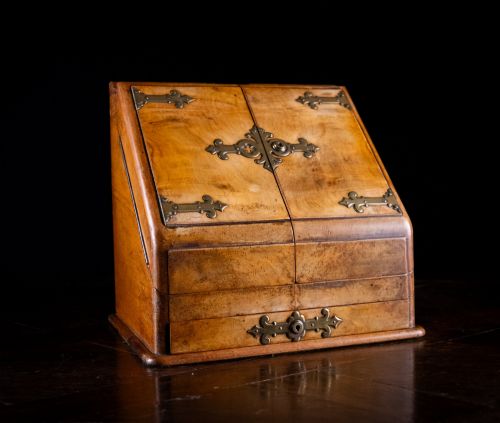
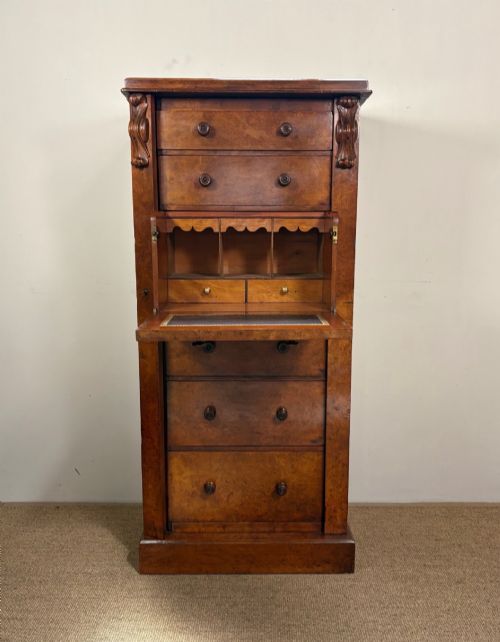
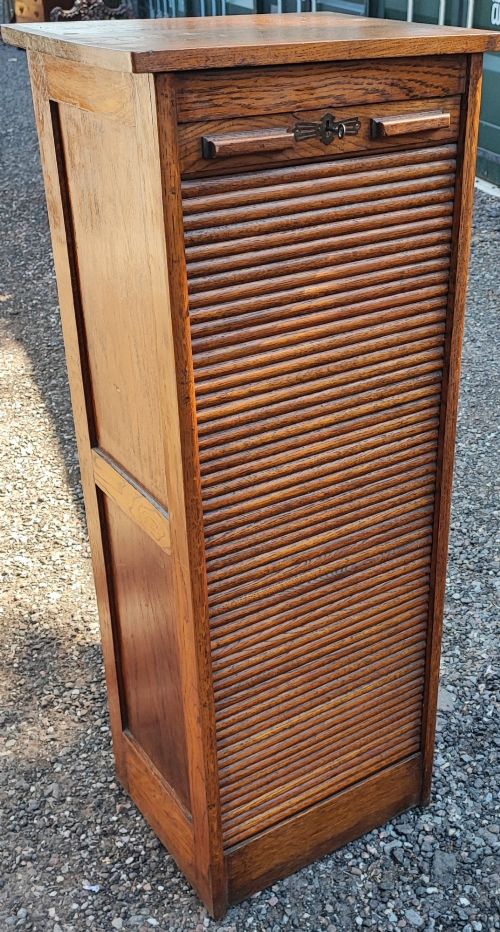
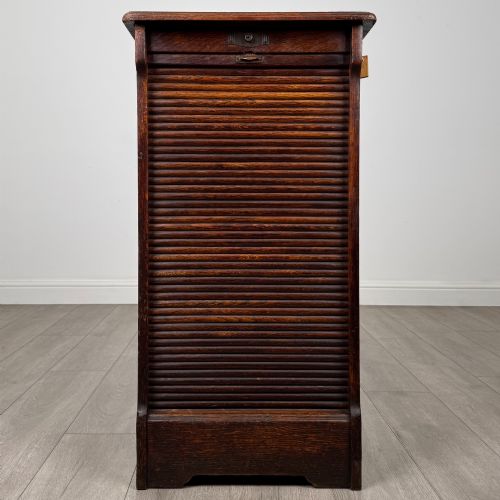
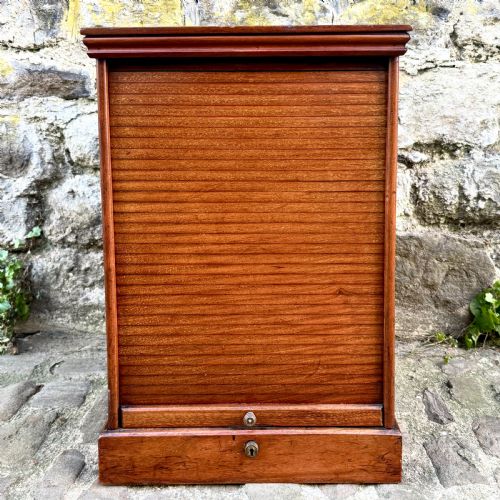
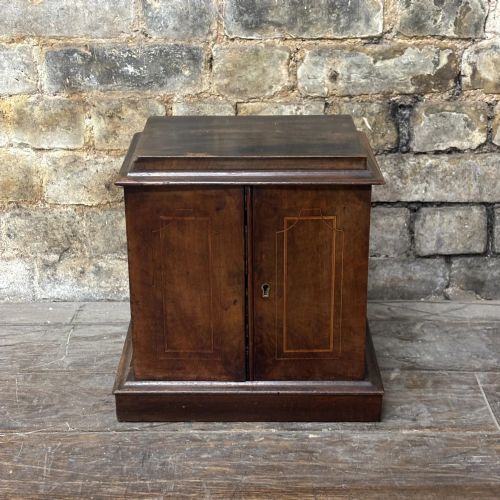
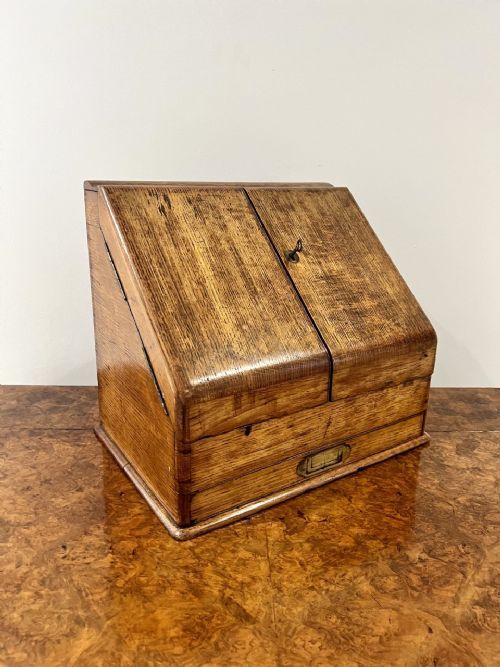
A wooden stationery cabinet takes several formats, from tabletop boxes and slope-front writing desks to tall tambour-front filing units. These pieces originate predominantly across the Victorian and Edwardian eras, reflecting the administrative demands of those periods.
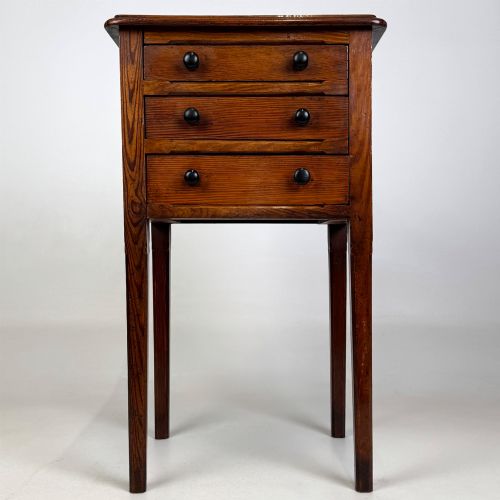
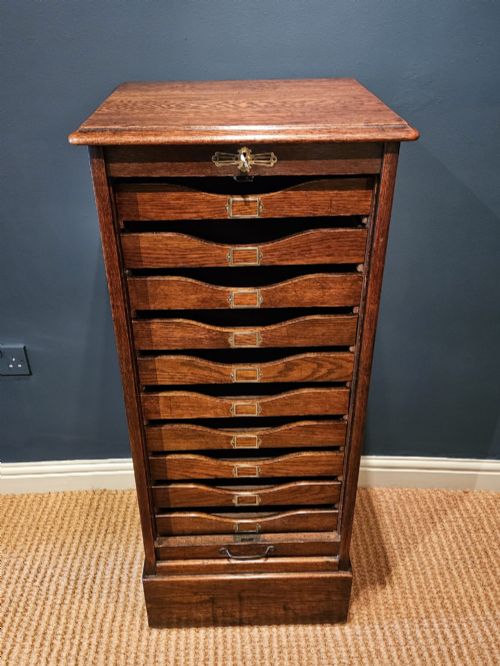
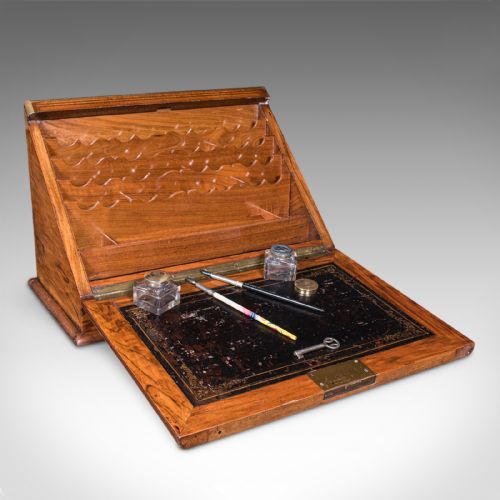
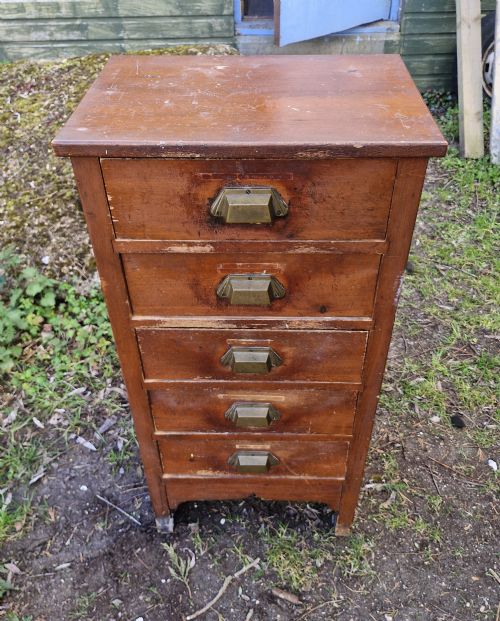
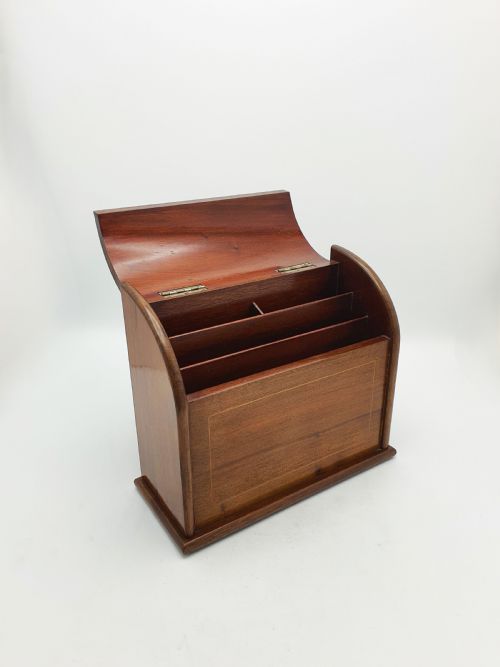
Tabletop versions and slant-front document boxes appear frequently, often fitted with internal partitions for letters, ink bottles and envelopes. Larger office cabinets incorporate multiple drawers or rolling shutters to manage correspondence.
Makers utilised various scales, ranging from compact desk tidies intended for private chambers to substantial multi-drawer office furniture built for commercial or domestic studies.
Materials and Construction
Carpenters constructed these cabinets primarily in hardwoods such as oak, mahogany, walnut and rosewood, occasionally employing satinwood or pitch pine for interior sections and decorative contrast. These timbers were selected for stability and grain figure.
Joinery techniques include precise dovetailing for drawers and boxes, alongside panelled construction for larger carcasses. Tambour doors utilise numerous small wooden slats glued to a flexible fabric backing to slide smoothly within curved tracks.
Hardware consists chiefly of cast brass handles, escutcheons, hinges and locking mechanisms, which provide both structural reinforcement and decorative accent to the timber.
Wooden Stationery Cabinet Retail Price Guide 2026
Typical asking prices for wooden stationery cabinet among the pieces listed under this phrase on Sellingantiques today, from the lower quarter to the upper quarter. They describe what is for sale here now, not the wider market.
Standards of Craftsmanship
Quality rests upon the selection of timber and the precision of the internal fittings, such as closely aligned pigeonholes and well-fitted ink glass compartments. Superior pieces demonstrate consistent grain matching across visible surfaces and smooth operation of drawers and tambour mechanisms.
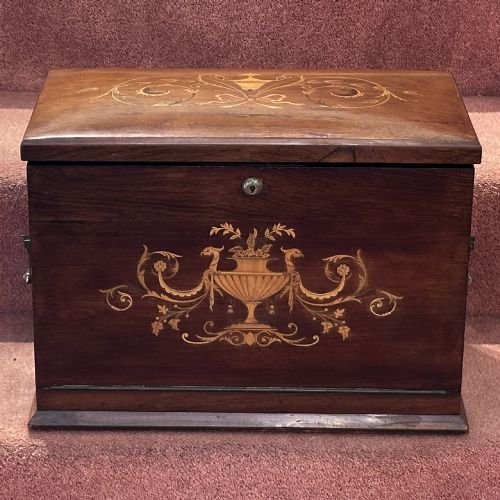
Decorative embellishments separate standard utility items from finer examples, including subtle marquetry inlay, contrasting stringing or carved details executed by hand rather than machine. The integrity of original brass hardware and working locks also influences the standing of a piece.
J.C Vickery·F Waller
The Wooden Stationery Cabinet Glossary
- Tambour
- A flexible door or shutter formed of narrow wooden slats attached to canvas, allowing it to slide around a curved track to enclose a cabinet front. This mechanism gained popularity in late nineteenth-century office furniture.
- Escutcheon
- A protective metal plate surrounding a keyhole, usually cast in brass and secured with small pins. It prevents the surrounding wood from wearing away through repeated use of the key.
- Pigeonhole
- A small, open compartment within a desk or stationery cabinet designed to hold letters and documents upright. These partitions form the internal sorting grid of the piece.
- Marquetry
- The art of applying decorative veneer pieces of various woods to a structural surface to create pictorial or geometric patterns. It appears on finer Edwardian and Victorian cabinet facades.
- Dovetail
- A joint formed by interlocking wedge-shaped fingers, known as pins and tails, glued together at right angles. This method secures drawer corners and box frames with high tensile strength.
Wooden Stationery Cabinet: Frequently Asked Questions
How do I date a wooden stationery cabinet?
Dating relies on observing the combination of timber choices, construction methods, and prevailing decorative styles. For instance, heavy carving points toward Victorian or Arts and Crafts origins, while lighter satinwood inlay often indicates the Edwardian period.
Examining internal hardware, secondary woods inside drawers, and lock types helps narrow the decade of manufacture. Comparing these elements with documented examples provides a reliable chronological frame.
What is a tambour front cabinet?
A tambour front consists of narrow vertical strips of wood fixed to a flexible fabric backing, allowing the door to slide smoothly along a grooved track around the corner of a cabinet. This ingenious mechanism encloses the workspace without requiring clearance for swinging doors.
Cabinetmakers utilised this technique extensively on office filing units and desk organizers from the late nineteenth and early twentieth centuries to save space.
Were these cabinets used in homes or offices?
These pieces served both domestic and commercial environments, depending on their size and internal layout. Smaller slope-front boxes and tabletop cabinets remained popular in private libraries and ladies' writing desks for personal correspondence.
Larger multi-drawer setups and tambour filing chests belonged in professional offices, legal chambers, and institutional study spaces where managing large volumes of paper was essential.
How should I maintain the wood surface?
Maintaining the finish requires keeping the cabinet away from direct sunlight and steady heat sources that can dry out and split the antique timber. Regular dusting with a soft, dry cloth prevents particulate build-up.
Applying a traditional beeswax polish periodically helps nourish the grain and preserve the lustre of the polish without forming a heavy buildup. Avoid silicone-based sprays, which can permanently alter historic finishes.