


Antique Wooden Inkstand
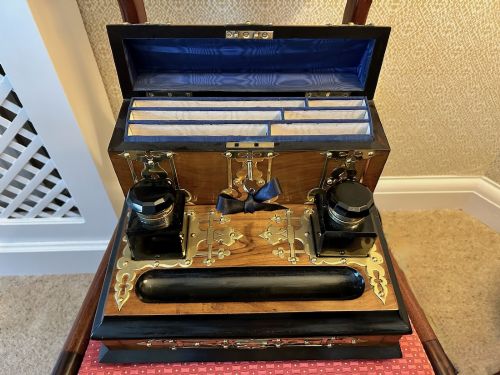
An antique wooden inkstand sits on a writing desk to hold pens and ink bottles.
Antique Wooden Inkstand
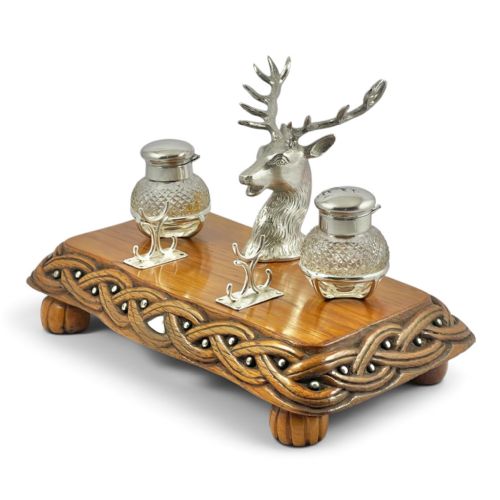
An antique wooden inkstand serves as a desk accessory designed to hold inkwells, pens and stationery items together in one place. These practical desk pieces date primarily from the nineteenth century and the Edwardian era, reflecting a time when handwritten correspondence was a daily necessity. Buyers searching for an antique wooden inkstand encounter items ranging from simple oak desk tidies to heavily carved novelty pieces.
Factors determining quality
Condition and originality dictate the standing of an inkstand among collectors, with complete sets retaining their original glass inserts and matching lids commanding greater interest. Altered elements, replaced brass mounts or missing pen trays detract from the integrity of the object. Pieces that retain their original patination and undamaged carved details represent the upper tier of surviving examples.
Listings feature oak, walnut, coromandel and linden wood across nineteenth-century and Edwardian pieces.
Maison F. Mack
The Antique Wooden Inkstand Glossary
- Standish
- A portable desk stand or tray holding inkwells, pen holders and sanders used for writing. This traditional term applies to elaborate metal and wooden desk sets from the nineteenth century.
- Desk tidy
- A compartmentalised wooden tray or box used to organise stationery, letters and writing implements on a desktop. These items often incorporate one or two inkwells alongside slots for envelopes.
- Black Forest
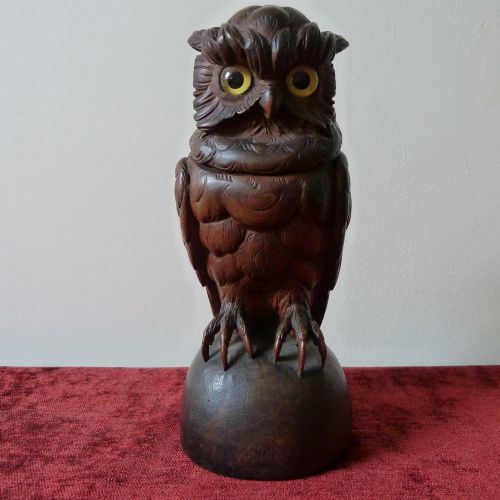
- A regional style of wood carving originating from Switzerland and Germany during the nineteenth century. These pieces are characterised by realistic animal figures and foliage rendered in carved linden wood.
- Tunbridgeware
- A form of decorative woodworking utilising thousands of tiny coloured wood blocks to create mosaic geometric patterns on boxes and desk accessories. This technique was popular in nineteenth-century England.
- Coromandel wood
- A dense, heavy exotic timber featuring dark brown stripes, utilised by cabinet makers for luxury Victorian desk sets and boxes. It provides a rich, polished surface for nineteenth-century stationery fittings.
Antique Wooden Inkstand: Frequently Asked Questions
What is the difference between an inkstand and an inkwell?
An inkstand is a complete desk set featuring a tray or base that holds one or more inkwells alongside space for pens and stamps. An inkwell is simply the individual glass or ceramic pot with a lid that actually contains the liquid ink.
Many antique wooden pieces combine both terms by housing removable glass inkwells within a larger carved wooden desk tidy or standish.
How do I clean a wooden inkstand without damaging the wood?
Dust the wooden surfaces gently with a dry, soft cloth to remove everyday particles without scratching the antique finish. Avoid using water, harsh detergents or modern chemical polishes that can strip the historic wax or varnish.
If the wood appears dry, apply a traditional beeswax-based furniture polish sparingly and buff it gently with a clean cloth to restore the natural sheen.
Are the glass ink bottles usually original to the stand?
Many surviving wooden inkstands retain their original heavy glass ink bottles, often featuring matching brass or plated screw caps and hinged lids. However, because glass bottles were fragile and prone to chipping or cracking through daily use, replacements are common.
Buyers should examine whether the bottle fits snugly into the wooden or brass collar, as mismatched replacements may sit unevenly in the housing.
How can I tell a Black Forest inkstand from other styles?
Black Forest inkstands are instantly recognizable by their deeply carved, naturalistic wooden animals such as bears, dogs, owls and stags interacting with logs or foliage. These pieces were carved in European workshops during the nineteenth century using pale timbers like linden wood.
Other Victorian styles rely on geometric veneers, brass stringing or Gothic architectural motifs rather than figurative animal carvings.