
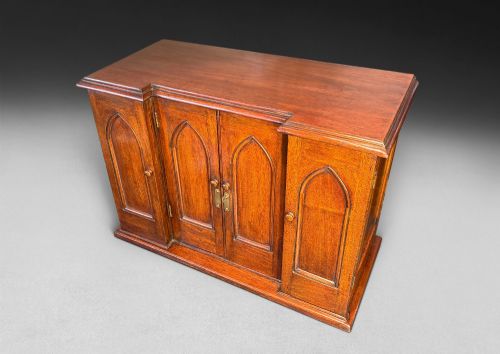


Brown Oak Mini Chest
A brown oak mini chest brings small-scale craftsmanship into any room, offering neat proportions and rich timber grain.
Brown Oak Mini Chest
A brown oak mini chest encompasses compact storage forms ranging from miniature chests of drawers and collector cabinets to desktop drawers and tea caddies. These pieces reflect vernacular and formal domestic woodworking traditions spanning Georgian, Victorian, and later periods.
Buyers encountering this search phrase find oak featured prominently alongside burr oak and painted wood variants. Forms vary from simple rustic boxes to elaborate Gothic Revival or Arts and Crafts miniature furniture.
Origins include English workshops, Welsh traditions such as the coffor bach, and occasional French provincial commodes. The scale remains consistently small, designed for tabletops, dressers, or specialised collections.
Materials and construction methods
Makers utilised solid oak and burr oak timbers, often combined with pine secondary woods for drawer linings and internal dividers. Surfaces display natural grain patterns, sometimes enhanced through simulated paint finishes or subtle inlay work.
Hardware details typically include brass handles, hinges, and escutcheons, complemented by iron fastenings on specific utilitarian or vernacular examples. Joinery follows traditional cabinetmaking techniques suited to miniature proportions.
Listings feature oak material alongside brass hardware, pine, and painted wood surfaces across Georgian and Victorian periods.
Assessing quality in miniature furniture
Quality rests in the selection of timber, particularly the richness of the oak or the decorative character of burr oak veneers. Finer pieces demonstrate precise miniature joinery and well-proportioned drawer configurations that mirror full-size case furniture.
The integrity of original brass hardware and the crispness of carved or applied stylistic details, such as Gothic or Arts and Crafts motifs, distinguish standard workshop output from exceptional examples.
The Brown Oak Mini Chest Glossary
- Coffor bach
- A traditional Welsh miniature coffer or chest used historically for storing valuables or as a bridal gift. These small oak pieces often feature hinged lids and internal till compartments.
- Burr oak
- Timber taken from the growth excrescences on oak trees, yielding highly figured, swirling grain patterns. Cabinetmakers utilised these veneers on focal surfaces like drawer fronts.
- Collector cabinet
- A specialised small cabinet fitted with multiple shallow drawers designed to house natural history specimens, coins, or trinkets. Examples from the Victorian period frequently employ oak construction.
- Tea caddy
- A small container originally built to store loose tea leaves securely. Georgian and later versions appear in miniature furniture collections due to their refined box construction.
Brown Oak Mini Chest: Frequently Asked Questions
What were mini chests originally used for?
These small chests served multiple domestic purposes, from storing precious keepsakes and jewellery to organising documents or natural history specimens.
Craftsmen also produced them as apprentice pieces to demonstrate advanced woodworking skill or as specialised containers for luxury goods like tea.
How do I date an antique oak mini chest?
Dating relies on examining construction methods, timber preparation, and stylistic markers visible in the hardware and mouldings. Georgian and Victorian pieces show distinct shifts in proportion and decorative vocabulary.
Secondary woods and drawer linings offer further clues regarding the period and regional workshop origin of the item.
Are these pieces made entirely of solid oak?
While primary external surfaces and frames utilise solid oak or burr oak, secondary timbers like pine frequently appear in concealed areas such as drawer bottoms and back panels.
Some examples incorporate decorative wood inlay or painted finishes over the primary wooden structure rather than relying solely on polished timber.
How should I care for antique miniature furniture?
Position these small chests away from direct heat sources and strong sunlight to prevent the oak timber from drying out or splitting. Gentle dusting with a dry cloth maintains the surface without requiring heavy polishes.