


Vintage Oak Index Cabinet
These vintage oak index cabinets are sturdy filing pieces built for paper organisation, offering practical storage and honest period craftsmanship.
Vintage Oak Index Cabinet
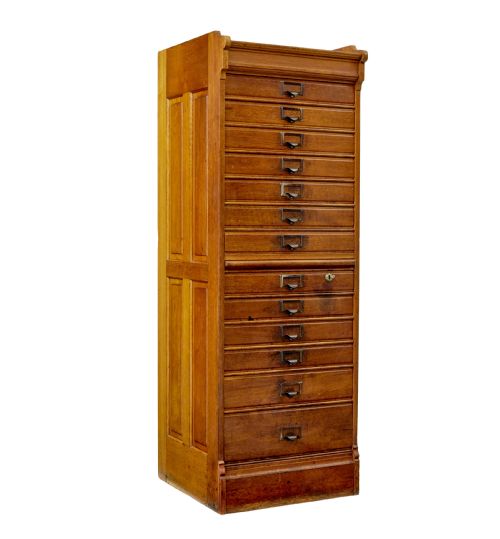
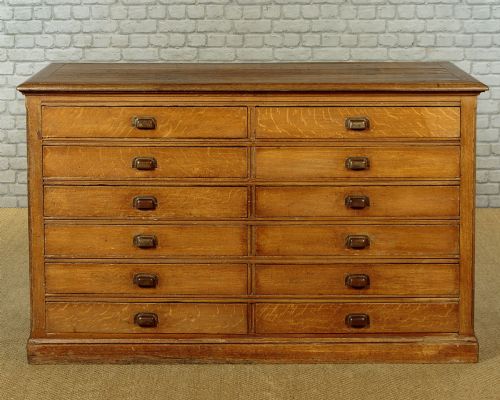
A vintage oak index cabinet is a functional storage unit designed for documents, letters, or small items, originating from periods between the late nineteenth century and the nineteen-thirties. You will encounter various formats here, including banks of drawers, desktop versions, haberdashery units, and specialised letter files.
The pieces on this page span Edwardian, late Victorian, Art Deco, and industrial styles, reflecting the changing office needs of their eras. Most examples rely on durable construction to withstand daily commercial or domestic use while retaining a warm timber aesthetic.
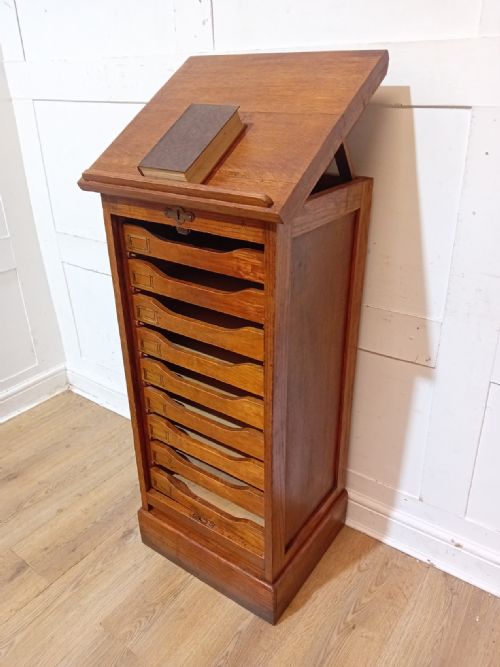
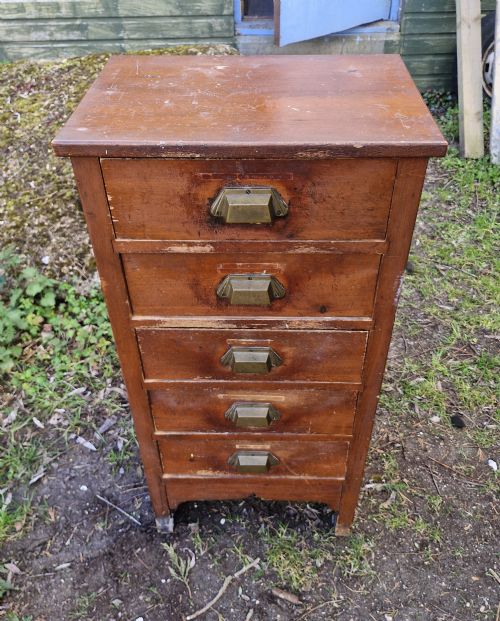
Forms range from compact five-drawer office cabinets to larger multi-drawer banks and tambour front designs. This variety allows collectors and organizers to find specific configurations that suit modern interiors without losing historical character.
How they were made
Makers built these cabinets primarily using solid oak and pine, paired with brass and metal hardware for handles and label holders. This combination provided the structural strength required for heavy filing tasks in busy offices.
Construction methods focused on utility and longevity, incorporating panelled sides, dovetail joints, and specialised mechanisms such as tambour doors or patent letter filing systems. The exterior surfaces were finished to highlight the natural grain of the oak.
Listings feature oak, pine, and brass materials across Victorian and Edwardian periods.
What varies in quality
Quality differences lie in the sophistication of the mechanism, such as patent letter filing systems or smooth-sliding tambour fronts, alongside the complexity of the drawer configuration. Cabinets featuring specialised hardware by known makers stand apart from standard utilitarian boxes.
The selection of timber and the preservation of original brass handles also dictate the standing of a piece. Finer examples retain their original patination and operational integrity across numerous drawers.
Amberg·Shannon
The Vintage Oak Index Cabinet Glossary
- Tambour
- A flexible door constructed from narrow slats of wood glued to canvas, allowing it to slide smoothly around a curved track to conceal interior drawers.
- Patent letter file
- An indexed filing mechanism designed to hold correspondence securely, often featuring spring-loaded clips or alphabetical dividers.
- Haberdashery cabinet
- A set of shallow drawers originally used in shops to display small goods, now utilised for organising flat items or collections.
- Dovetail joint
- A traditional interlocking woodworking joint prized for its tensile strength and resistance to being pulled apart.
- Lecturn top
- An inclined upper surface designed for reading or writing, sometimes integrated into the top of a filing cabinet.
Vintage Oak Index Cabinet: Frequently Asked Questions
What were vintage oak index cabinets used for?
These cabinets served businesses, offices, and institutions for organising correspondence, client records, and reference materials before modern digital filing.
They kept workspaces orderly by housing letters and index cards within a secure, accessible wooden structure.
How do I fit an index cabinet into a modern room?
Their compact footprints and warm timber tones allow them to function well as bedside tables, hallway storage, or desk companions.
They bring tactile texture and practical surface space to contemporary living areas or home studies.
How can I tell the period of a cabinet?
Stylistic clues such as brass handle design, patent markings, and overall proportions help date a piece between the late nineteenth century and the nineteen-thirties.
Edwardian and Victorian examples tend to feature heavier brasswork, while nineteen-thirties pieces often showcase streamlined tambour fronts.
Are tambour doors difficult to maintain?
Tambour tracks require occasional cleaning and light waxing to ensure the wooden slats slide freely around the curve without binding.
Keeping the grooves free from dust preserves the mechanical action of the rolling front.