





Vintage Curved Console Table
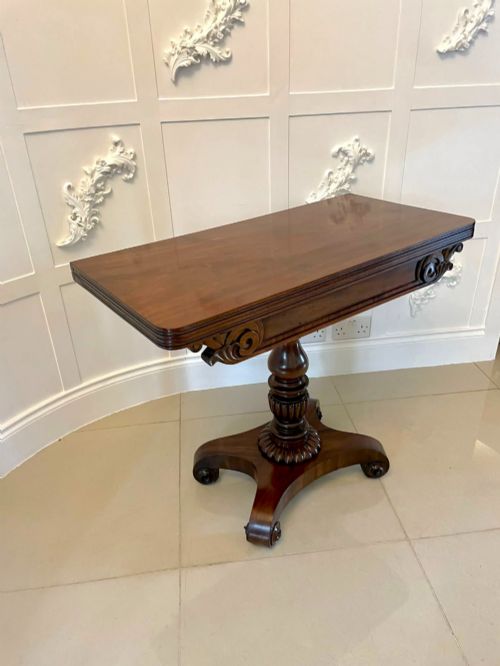
A vintage curved console table brings elegance to a hallway, drawing the eye with graceful lines from the Georgian period through the Art Deco era.
Vintage Curved Console Table
A vintage curved console table combines practical surface space with a sweeping profile designed to sit flush against a wall in hallways and principal rooms. The selection on this page ranges from early Georgian hardwood pieces to striking Art Deco burr walnut designs.
How they were made
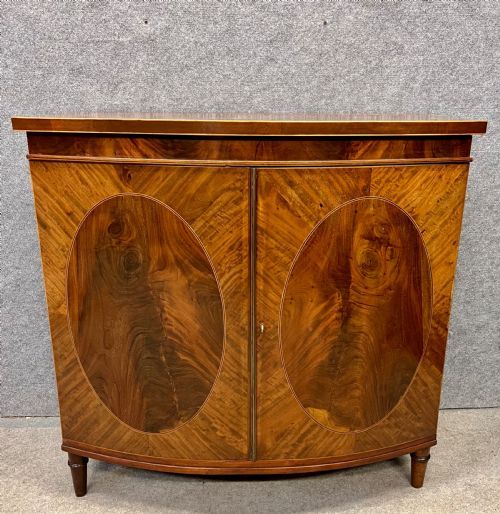
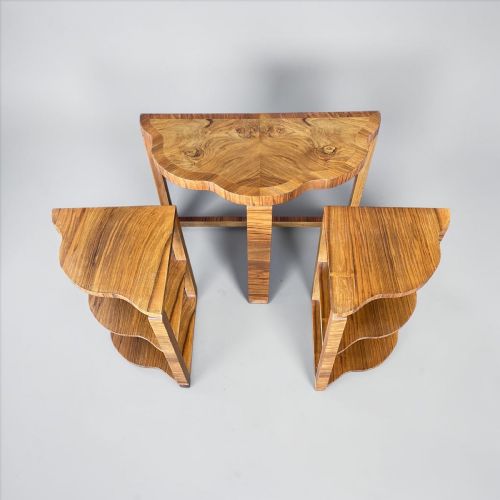
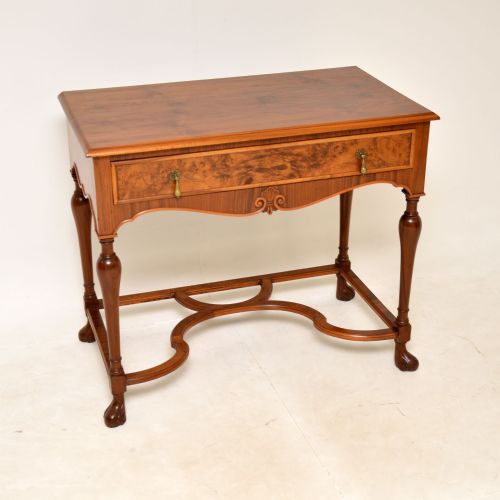
Cabinetmakers utilised rich timber veneers including burr walnut, mahogany, and birds eye maple laid over solid wood carcasses to create striking grain patterns on the curved tops. Inlays of satinwood and contrasting stringing frequently define the borders of Georgian and Edwardian tops.
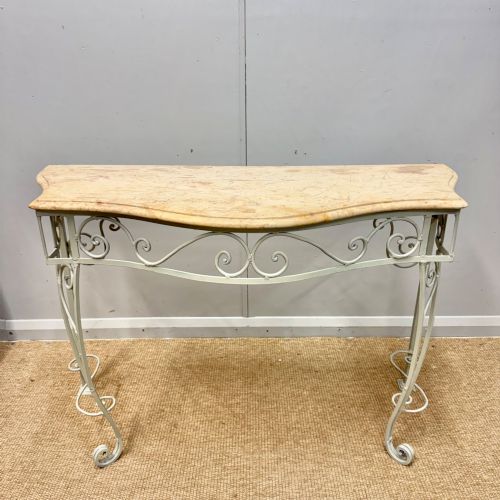
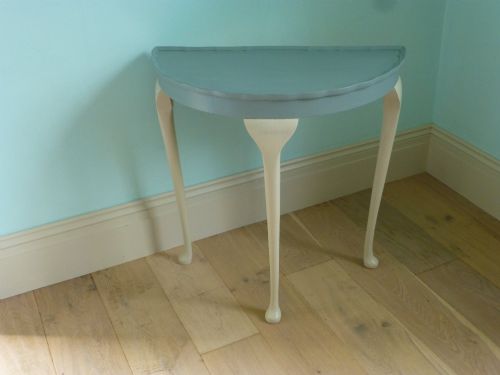
Metalwork played a structural and decorative role, with French examples incorporating wrought iron and brass frames supporting marble slabs. Paint finishes also appear, transforming pine and hardwood surfaces into decorative furnishings.
Materials in these listings include walnut, mahogany, brass, marble, and iron across periods spanning from the eighteenth century to the mid-twentieth century.
What varies in quality
Quality rests in the choice of timber figure, where richly grained burr walnut or figured mahogany distinguishes superior cabinet work from plain surfaces. The execution of the curve itself, whether a smooth demi-lune or a complex serpentine sweep, demands high joinery skill.
Maker attribution elevates certain pieces, with workshops such as Hille and Maple and Co representing notable standards of construction. The integration of fine details, such as brass mounts and delicate inlay, separates standard production from exceptional examples.
Hille·Maple and Co
The Vintage Curved Console Table Glossary
- Demi-lune
- A half-moon shape popular for console tables designed to stand flat against a wall.
- Serpentine
- A gently undulating curved edge flowing outward in the centre and inward at the sides, or vice versa.
- Bowfront
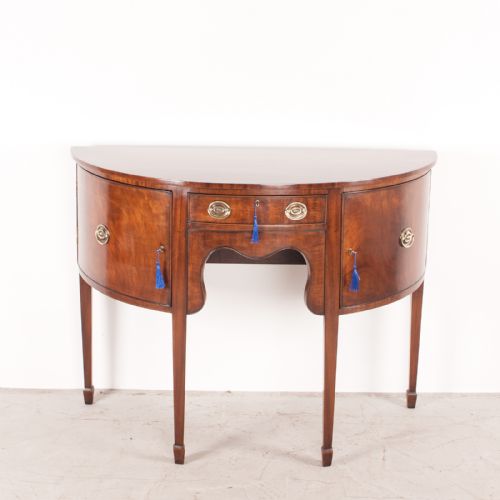
- A convex curved front profile frequently found on tables and sideboards from the eighteenth century onward.
- Burr walnut
- A highly prized timber veneer harvested from the burl growth of a walnut tree, showing swirling knot patterns.
- Inlay
- A technique where contrasting woods or metals are fitted into the surface of a piece to form decorative patterns.
Vintage Curved Console Table: Frequently Asked Questions
Where should I place a curved console table?
These tables suit narrow circulation areas such as hallways, entrance passages, and landings where a standard rectangular table would obstruct movement. Their shallow depth allows them to sit neatly against walls while providing a surface for lamps and decorative objects.
They also function well in living rooms and dining rooms beneath mirrors or artwork. The curved front softens linear room layouts and draws attention to architectural focal points.
How do I identify an Art Deco console table?
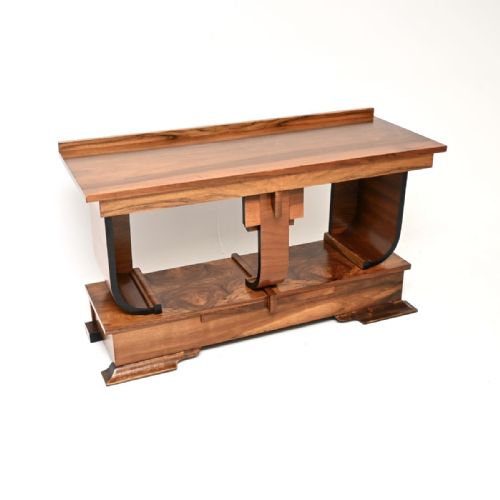
Art Deco pieces from the 1920s and 1930s often feature dramatic veneers like burr walnut and birds eye maple paired with clean, streamlined silhouettes. They showcase the modernist shift away from ornate historical revival styles.
Look for geometric simplicity combined with luxurious materials and polished ebonised details. These tables reflect the optimism and design experimentation of the interwar period.
What is the difference between a console table and a side table?
Console tables traditionally stand against a wall and were sometimes designed with brackets or legs intended to rely on wall fixings. Side tables are generally free-standing items of furniture finished on all sides.
In modern usage, the terms often overlap, particularly with demi-lune and bowfront forms that serve identical placement functions in domestic interiors.