
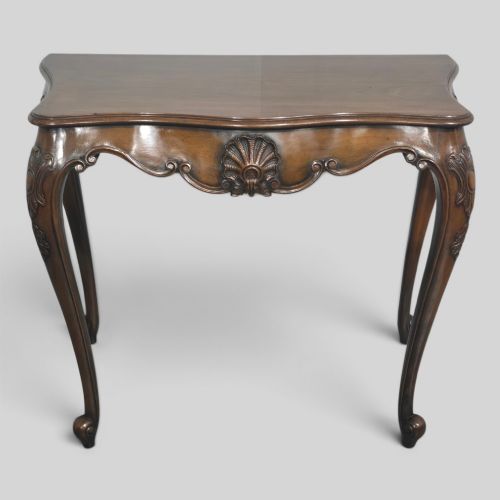
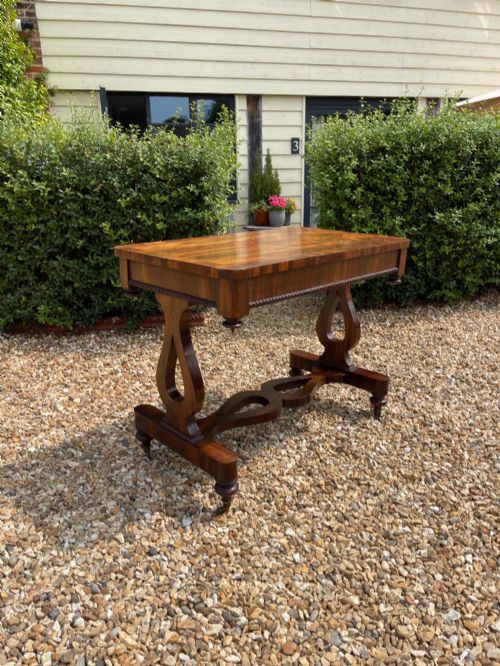
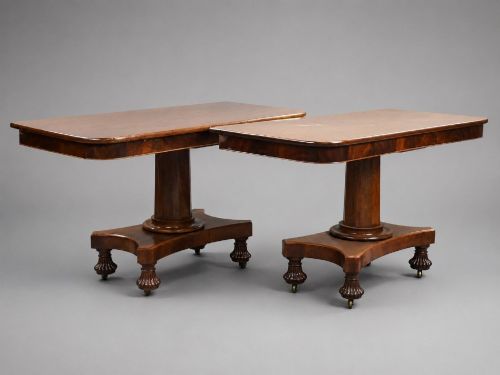
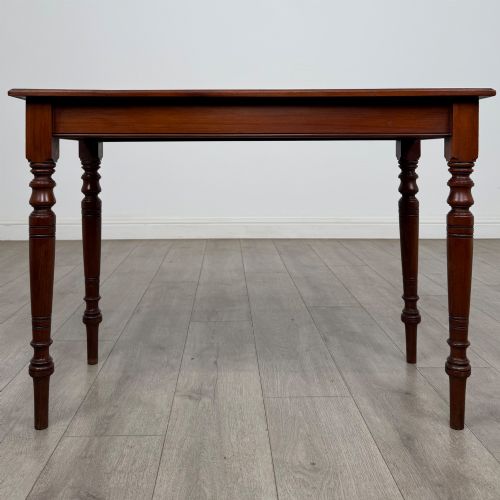
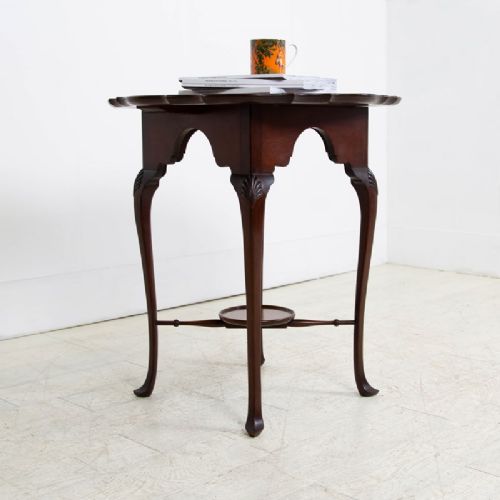


Carved Wooden Foyer Table
A carved wooden foyer table anchors an entrance hall with solid timber presence and useful surface space.
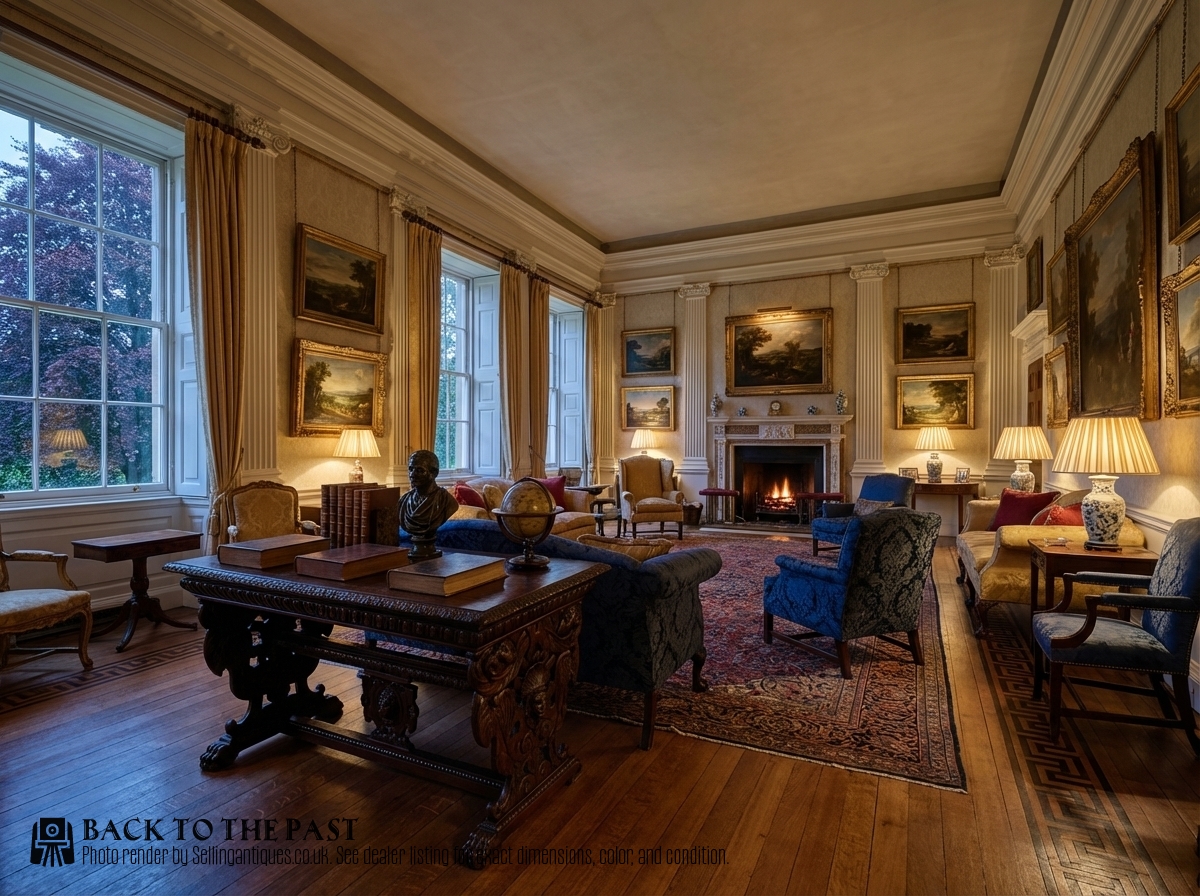
Carved Wooden Foyer Table
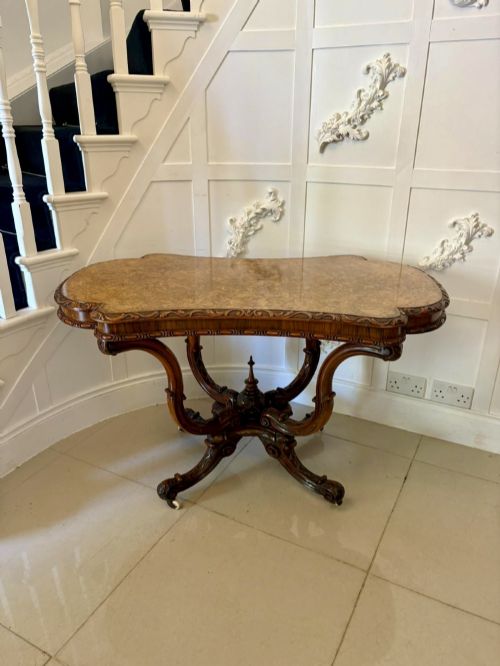
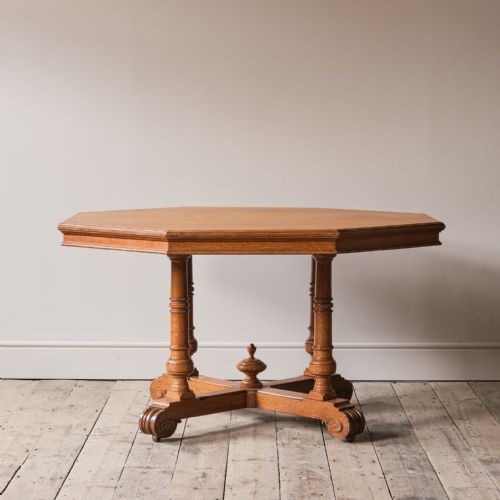
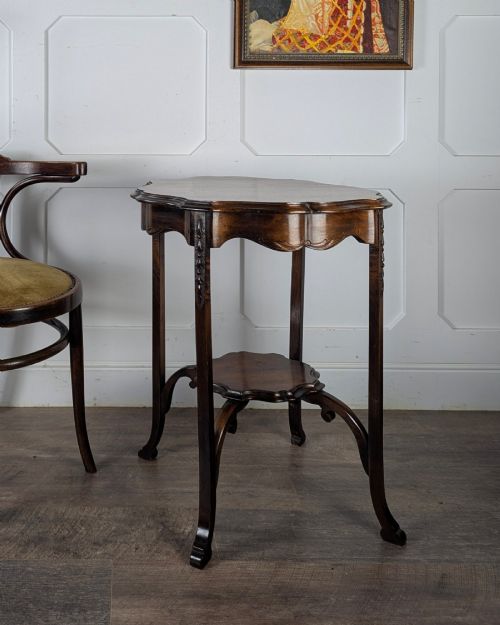
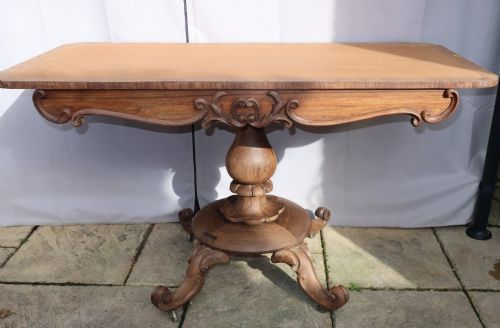
A carved wooden foyer table appears in various configurations designed for placement in hallways, reception rooms, and entrance spaces. The selection includes centre tables, console tables, side tables, and occasional tables that serve different spatial requirements within a home.
Most examples originate from the nineteenth and early twentieth centuries, spanning Victorian, Edwardian, and earlier periods. These pieces demonstrate regional diversity through English, French, German, Italian, Swedish, and Indian craftsmanship.
Makers such as Shapland and Petter, James Winter, and Hicks of Dublin appear alongside numerous unattributed pieces. Buyers encounter forms ranging from octagonal and oval centre tables to narrow wall-mounted console tables.
Materials and Technique
Cabinetmakers utilised hardwoods including mahogany, walnut, burr walnut, oak, and rosewood. These timbers were selected for their grain patterns, figure, and structural stability.
Construction techniques combined traditional joinery with decorative carving, turning, and occasional painted finishes. Some examples incorporate marble tops, leather inserts, and bronze ornaments to enhance the surface.
Listings feature woods including mahogany, walnut, oak, and rosewood across nineteenth and early twentieth-century periods.
Standards of Execution
The refinement of the carving distinguishes high-tier examples from simpler production. Crisp execution in details like acanthus leaves or moulded edges reflects greater workshop skill.
The choice of timber figure, such as highly figured burr walnut or flame mahogany veneers, marks the distinction between standard items and exceptional commissions.
Shapland and Petter·James Winter·Hicks of Dublin
The Carved Wooden Foyer Table Glossary
- Centre table
- A freestanding table designed to be viewed from all sides, frequently placed in the middle of a room or grand hall.
- Console table
- A table designed to stand against a wall, traditionally supported by brackets or console legs.
- Burr walnut
- Timber taken from a tree growth where the grain has deformed into swirling, intricate patterns, prized for veneering.
- Occasional table
- A small, movable table intended for intermittent use around a room.
- Serpentine
- A curved shape that undulates outward and inward, commonly seen on the front edges of eighteenth and nineteenth-century tables.
Carved Wooden Foyer Table: Frequently Asked Questions
What is a foyer table used for?
These tables provide a functional surface in entrance halls for holding everyday items upon arrival.
They also display decorative objects, lamps, or floral arrangements to set the tone of an interior space.
How do I style a console table?
Place a console table flat against an entryway wall to maintain clear pathways in high-traffic corridors.
Pair the piece with a mirror hung above to reflect light and create a sense of depth in smaller hallways.
How do I tell Victorian tables apart?
Victorian pieces frequently display heavier proportions, dark mahogany or walnut timbers, and robust carved ornamentation.
Examination of the underside and drawer construction often reveals nineteenth-century tool marks and assembly methods.
Are centre tables meant for hallways?
Centre tables are traditionally designed to stand freely in the middle of a room rather than against a wall.
Large entrance halls with ample open space can accommodate a freestanding table to allow 360-degree access.