

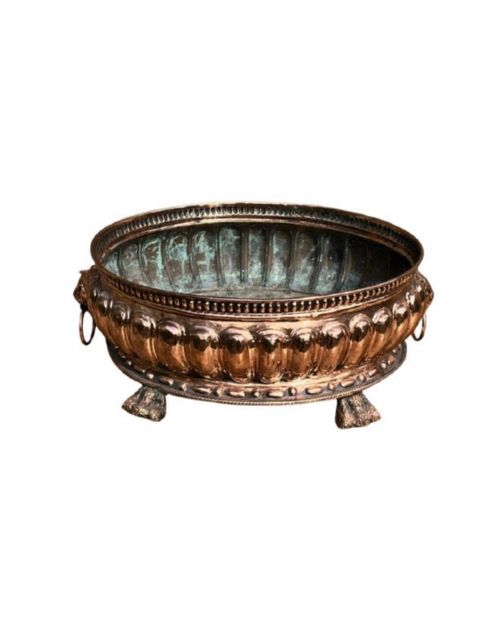


Vintage Copper Bowl
A vintage copper bowl brings warmth and utilitarian history to a room, ranging from heavy jam pans to decorative Arts and Crafts pedestals.
Vintage Copper Bowl
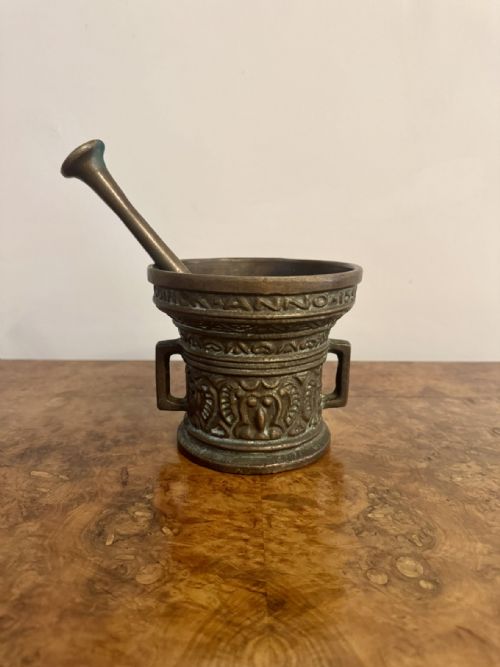
A vintage copper bowl encompasses domestic kitchenware, jardiniere planters, and decorative dishes originating from the eighteenth century through to the early twentieth century. When searching for a vintage copper bowl, buyers encounter utilitarian vessels like preserving pans alongside ornamental pieces from the Arts and Crafts and Victorian periods.
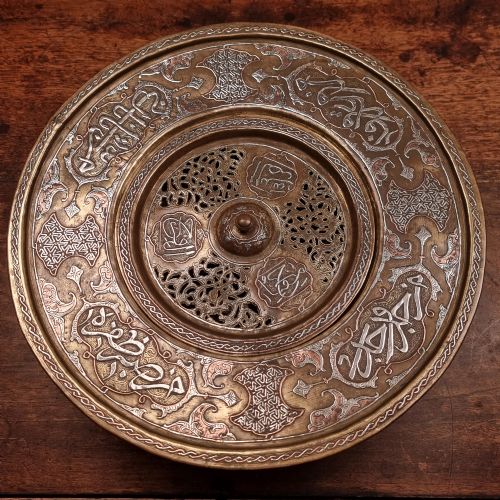
The selection includes regional domestic items such as English cream setting pans and grain measures, as well as imported brass and mixed metal wares like Cairo ware and Middle Eastern silver inlaid dishes. These objects reflect both hardworking rural utility and decorative craftsmanship across various historical styles.
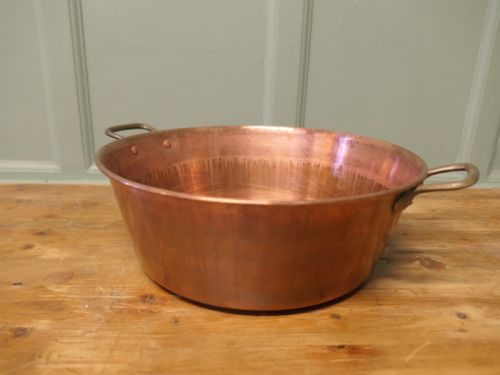
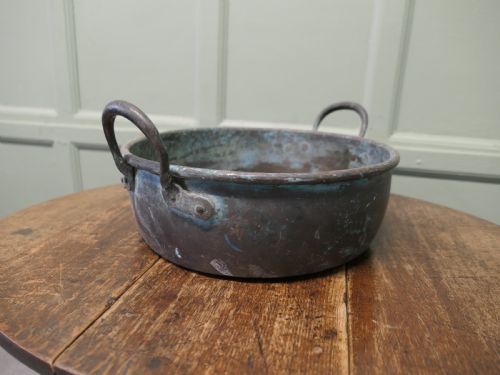
Common forms on this page range from heavy double-handled jam pans intended for boiling fruit to pedestal bowls set with Ruskin cabochons and specialised wine coolers. Each piece carries the physical markers of its original domestic or decorative function.
Materials and construction methods
Makers shaped these vessels primarily from sheet or cast copper, frequently combining the metal with brass handles, iron fittings, or timber components. Many utilitarian preserving and jam pans rely on heavy gauge hammered copper designed to conduct heat evenly across a hearth.
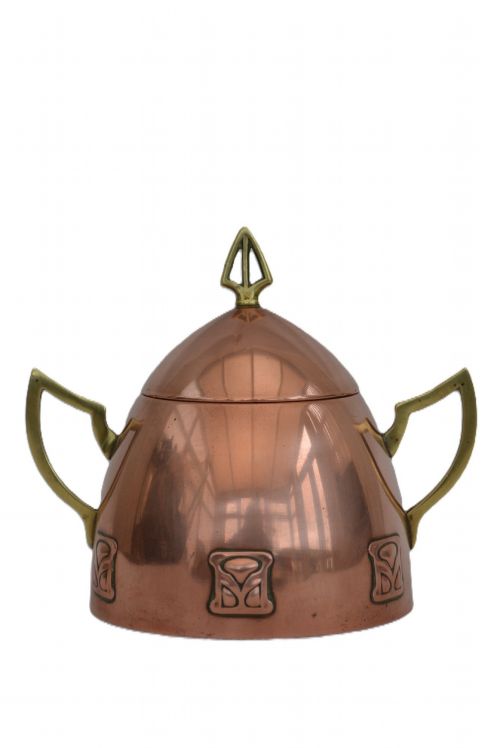
Decorative variations incorporate surface enrichment such as silver inlay, applied enamel, or silver plating on copper bases. Arts and Crafts examples often feature hand-beating marks alongside inset ceramic cabochons, while Middle Eastern and revival pieces display intricate engraved or inlaid patterns.
One recorded past archive piece depicts a still life painting featuring a copper bowl rather than the metal vessel itself.
Distinctions in craftsmanship and origin
Quality rests upon the weight of the metal gauge and the integrity of the construction, particularly where handles are joined to the body by hand-riveting. Heavier preserving pans and cast vessels demonstrate superior durability compared to thinner decorative stampings.
Artistic execution divides standard kitchen utility items from high-style workshop productions. Pieces featuring specialised ornamentation such as Ruskin pottery cabochons, fine silver inlay, or attributed maker marks exhibit a higher tier of design ambition and refined hand-finishing.
Hodges and Sons·Barker Ellis·Bodil Larsen Rohweder
The Vintage Copper Bowl Glossary
- Jam pan
- A large, round vessel with one or two handles used historically for boiling fruit and sugar. These pans possess heavy copper walls designed for consistent heat distribution.
- Jardiniere
- An ornamental pot or stand designed to hold plants or flowers. They appear in copper and brass across Victorian and continental styles.
- Arts and Crafts
- A design movement spanning the late nineteenth and early twentieth centuries emphasising hand-craftsmanship and honest materials. Objects from this period frequently display visible hand-beating and cabochon settings.
- Cairo ware
- Nineteenth-century European or Middle Eastern metalware featuring intricate silver and copper inlay on a brass or mixed metal ground. These pieces draw upon Islamic design traditions.
- Cabochon
- A polished, convex gem or ceramic piece lacking facets. In metalwork, they are often set centrally into decorative bowls as a focal point.
Vintage Copper Bowl: Frequently Asked Questions
What were old copper bowls used for?
Historic copper vessels served primarily practical purposes in domestic kitchens and dairies. Heavy pans boiled fruit preserves, milk set in cream pans, and grain measures portioned dry goods.
Other examples functioned as wine coolers, plant holders, or decorative centrepieces in both European and Middle Eastern households.
How do I date a vintage copper bowl?
Dating relies upon construction methods, stylistic markers, and material combinations. Hand-beating marks, dovetail seams, and cast iron or brass handles often indicate eighteenth or nineteenth-century origins.
Stylistic shifts, such as the distinct naturalism of Arts and Crafts pieces or the geometric patterns of Mamluk revival items, help narrow the period of manufacture.
Are these bowls safe for cooking food?
Many older vessels were manufactured before modern food safety standards and may lack the contemporary tin linings required for acidic foods. Utilitarian kitchen pans were often lined with tin to prevent copper toxicity during jam making.
Buyers intending to use vintage cookware for food preparation should inspect the interior lining condition carefully.
How should I clean copper?
Maintenance depends on whether a buyer prefers a bright polished shine or an aged, patinated surface. Traditional copper cleaner removes active tarnish and restores reflectivity without harming the metal.
Many collectors choose to preserve the dark oxidation and historic marks acquired over a century of service.
What is silver on copper?
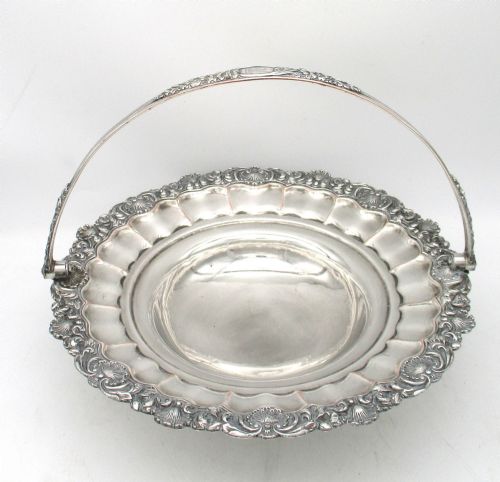
Silver on copper refers to items produced by fusing a thin layer of silver to a thicker copper base metal. This technique provided the appearance of solid silver at a lower cost.
Over decades of use, the underlying copper may show through the worn silver layer at points of friction.