


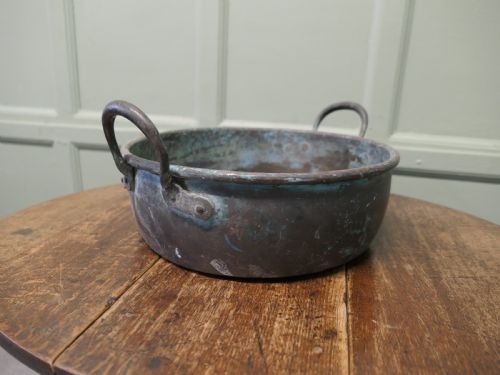


Traditional Jam Pan
These traditional jam pan examples bring tactile warmth to any interior through honest metalwork.
Traditional Jam Pan
A traditional jam pan serves as a functional kitchenware vessel designed for preserve making, encompassing preserving pans, saucepans, and cooking vessels. These forms appear predominantly from the nineteenth century alongside Georgian and Victorian examples.
Buyers encounter copper, brass, and bronze constructions shaped in rustic farmhouse and Victorian country styles. Many feature sturdy handles in iron or wrought iron, built for heavy domestic labour.
How they were made
Smiths hammered and joined heavy sheets of copper and brass, frequently employing riveted construction to secure swing handles and side fittings. These methods ensured the durability required for hearthside cooking and boiling.
Foundries cast bronze and brass into thick-walled vessels designed to distribute heat evenly across open fires. Wrought iron additions provided robust support for heavy daily use.
Traditional Jam Pan Retail Price Guide 2026
Typical asking prices for traditional jam pan among the pieces listed under this phrase on Sellingantiques today, from the lower quarter to the upper quarter. They describe what is for sale here now, not the wider market.
Some pans doubled as fireside warmers, proving that even a jam pan appreciated a comfortable spot by the hearth.
What varies in quality
Thickness of metal and overall weight separate ordinary kitchen utensils from superior examples. Heavy gauge construction indicates substantial material use intended for intensive culinary output.
The precision of riveting and the finish on handles reveal the competence of the maker. Superior pieces maintain clean structural lines despite utilitarian origins.
Hodges & Sons
The Traditional Jam Pan Glossary
- Preserving Pan
- A wide, open vessel designed for boiling fruit and sugar mixtures. These pans allow steam to evaporate rapidly during jam production.
- Jam Pale
- A deep container utilised for gathering or holding fruit before or after boiling. They often feature strong vertical sides.
- Cream Setting Pan
- A shallow vessel designed for separating cream from milk in a dairy setting. These items share construction traits with standard kitchenware.
- Preserve Warmer
- A specialised heating apparatus intended to keep preserves warm by the fireside. They often incorporate bronze elements for heat retention.
Traditional Jam Pan: Frequently Asked Questions
What were traditional jam pans used for?
These vessels were employed primarily for boiling fruit and sugar to create preserves over open fires or kitchen ranges. Their wide rims facilitated rapid evaporation during the setting process.
Secondary uses included general kitchen boiling and dairy work, depending on the specific depth and form of the vessel.
How do I date a copper pan?
Dating relies on observing construction methods such as hand-beaming and the style of riveting. Nineteenth-century examples often display heavy gauge copper with distinct handmade joins.
Georgian and Victorian pieces exhibit specific handle attachments and foundry marks that indicate their period of origin.
Can I use these pans for cooking today?
Many of these vessels retain their structural integrity and can be utilised with appropriate care. Historic cookware requires proper cleaning and maintenance of the metal surfaces.
Collectors often prefer to display them as decorative kitchenware rather than subjecting them to modern culinary heat.
How should I clean antique brass and copper?
Maintenance involves gentle cleaning to preserve the natural patina accumulated over centuries. Harsh abrasives should be avoided to protect the historic surface texture.
Periodic light polishing maintains the lustre without removing the evidence of age and use.