


Vintage Clear Stemware
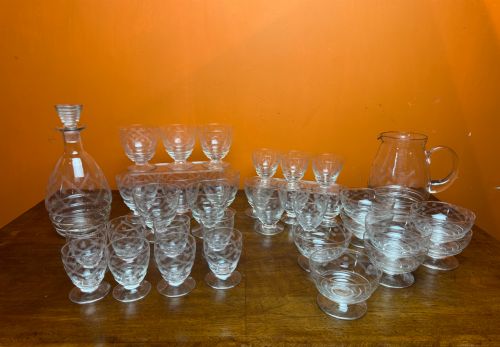
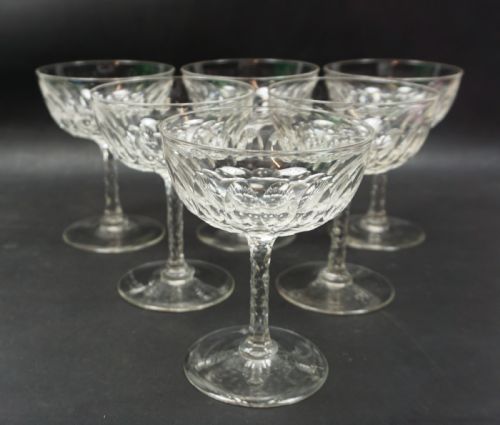
Vintage clear stemware brings functional elegance to the table, spanning delicate eighteenth-century drinking vessels and heavy nineteenth-century champagne coupes.
Vintage Clear Stemware
Vintage clear stemware encompasses drinking glasses, champagne coupes, ale glasses, and rummers produced across multiple centuries. Buyers searching this phrase encounter drinking vessels designed for wine, beer, gin, and champagne.
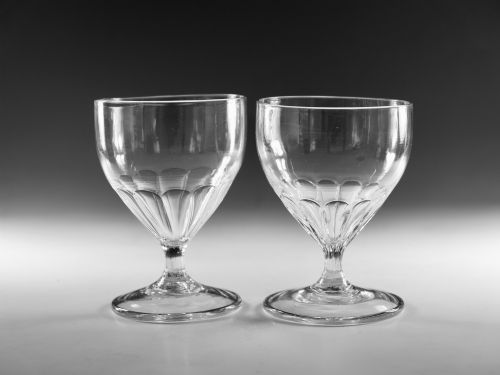
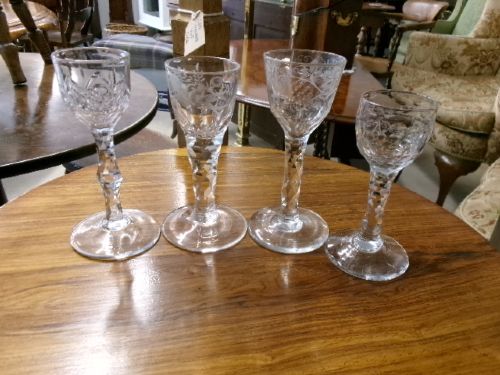
Earlier examples include balustroid and faceted stems from the seventeen-eighties, while later options extend into Art Deco suites and Jugendstil designs. Form follows function closely, distinguishing deep rummers from shallow champagne coupes.
Materials and Techniques
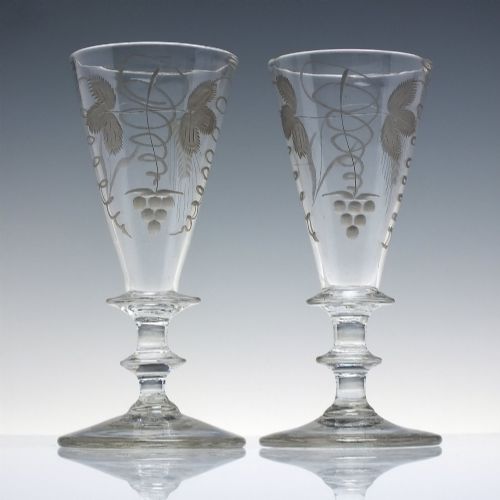
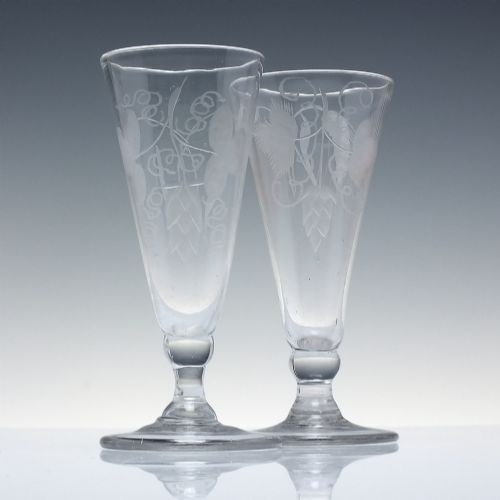
Makers utilised lead crystal, lead glass, and clear glass, shaping molten material through hand-blowing and mould-blowing techniques. Many vessels incorporate decorative elements such as enamel, gold leaf, and surface engraving.
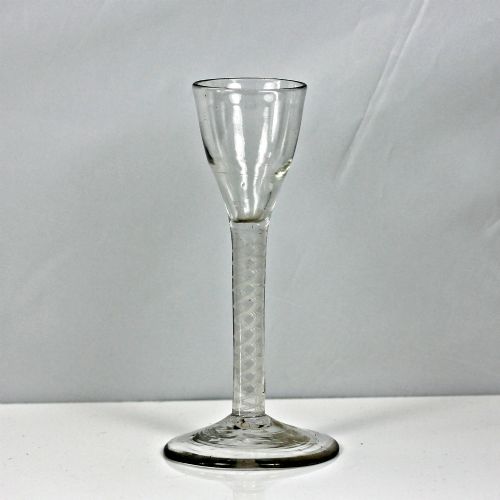
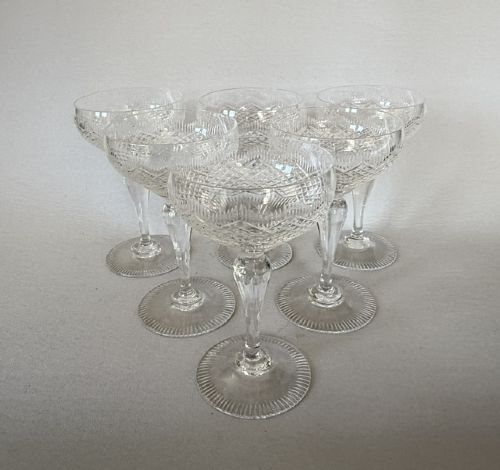
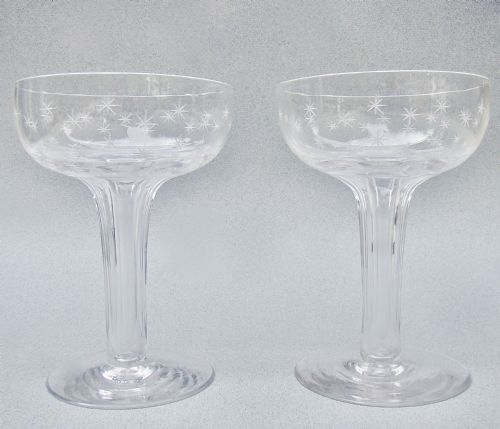
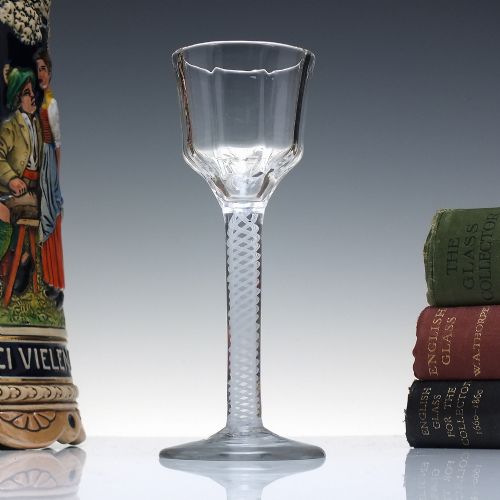
Complex stem formations involve air twists, opaque twists, mercury twists, and mixed twists trapped inside the glass column. Facet cutting, star-etching, and intaglio work create light-reflecting surfaces on bowls and stems alike.
Cranberry and amethyst coloured glass sometimes overlay clear crystal backgrounds, and acid-cutting techniques yield textured cameo patterns.
Listings feature lead crystal, clear glass, and coloured overlays from the eighteenth, nineteenth, and early twentieth centuries.
Distinctions in Execution
Quality rests upon the precision of the optical twist within the stem, the crispness of facet cutting, and the symmetry of the bowl. Master glassmakers achieved remarkable clarity and thinness in eighteenth-century lead glass without surface distortion.
Decoration depth and execution separate standard production from superior output, particularly in wheel-engraved motifs and intaglio services. The balance of the foot, stem, and bowl indicates the maker's control over the molten material.
Webb Corbett·Stevens and Williams·Theresienthal
The Vintage Clear Stemware Glossary
- Air twist
- A decorative stem formation containing elongated spiral air bubbles inside the glass column. This technique was prevalent during the eighteenth century.
- Opaque twist
- A stem design featuring fine white or coloured enamel glass threads twisted within clear metal. These threads form intricate single or double series patterns.
- Ogee bowl
- An S-curve profile moulding that curves inward at the rim and flares outward below. This shape appeared frequently on Georgian wine glasses.
- Rummer
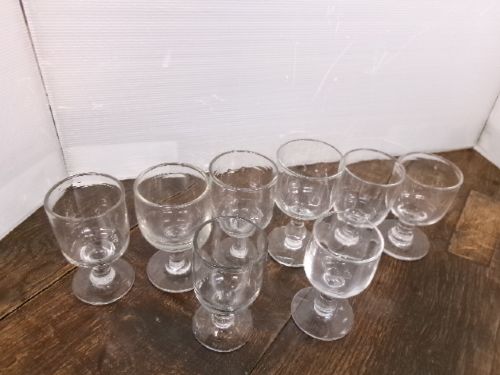
- A heavy, short-stemmed drinking vessel used for rum, ale, or wine during the Georgian and Victorian periods. They typically feature large faceted or round bowls.
- Intaglio
- A design carved into the glass surface by abrasive wheel grinding, creating a sunken relief pattern. It requires exceptional control to avoid piercing thin vessel walls.
Vintage Clear Stemware: Frequently Asked Questions
How do I identify a Georgian wine glass?
Georgian wine glasses display distinct characteristics such as balustroid, air twist, or opaque twist stems supporting thick-walled lead glass bowls. Pontil marks underneath the foot confirm hand-blown manufacture.
Foot diameters on eighteenth-century pieces often match or exceed bowl widths, providing stability to the tall, slender forms.
What is the difference between a champagne coupe and a wine glass?
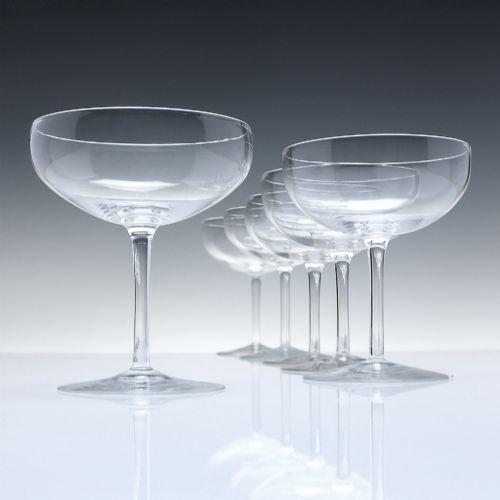
Champagne coupes feature wide, shallow bowls designed to showcase sparkling wine and release carbonation quickly. Wine glasses have narrower, tulip or ogee shaped bowls intended to concentrate aromas.
Coupes from the Victorian and Edwardian eras frequently display heavy facet cutting or star-etching across the broad bowl base.
Can I use vintage crystal every day?
Hand-blown vintage crystal requires careful handling and washing by hand rather than mechanical dishwashing to preserve the glass surface and prevent thermal shock. Storing pieces with adequate space between stems prevents rim chipping.
Older lead glass is softer than modern commercial glass and benefits from gentle treatment during use.
How are air twist stems made?
Makers trapped small air bubbles inside a hot gather of glass before drawing and twisting the molten metal into a spiral stem. The glass was then encased in clear metal and shaped into the finished column.
This method produced continuous internal threads that catch light differently than surface-cut facets.