




Mid 18th Century Stemware
Mid 18th century stemware brings Georgian dining tables to life through blown crystal vessels designed for toast and celebration.
Mid 18th Century Stemware
Mid 18th century stemware comprises drinking vessels shaped for wine, ale, champagne, ratafia, and cordials during the Georgian period. These pieces originate primarily from the mid-eighteenth century, particularly around seventeen fifty.
The most common forms on this page include wine glasses and ale glasses alongside specialised champagne flutes and cordial glasses. Each type served a specific beverage at the formal tables of the era.
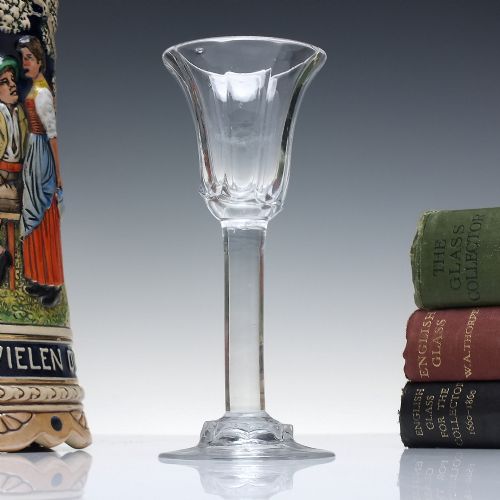
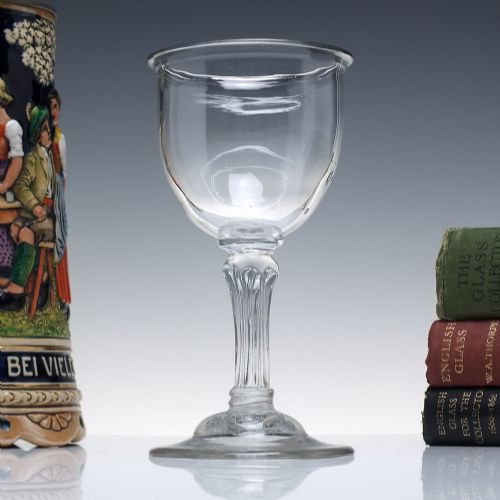
Moulded stems, plain stems, and intricate twist variations define the visual character of these drinking glasses. Collectors encounter both tall flute forms and robust pedestal stem designs.
Materials and construction
Glassmakers utilised lead glass, clear lead glass, and flint glass to achieve high optical clarity and substantial weight in each vessel. Hand-blown techniques allowed artisans to shape bowls and pull stems while the material remained pliable.
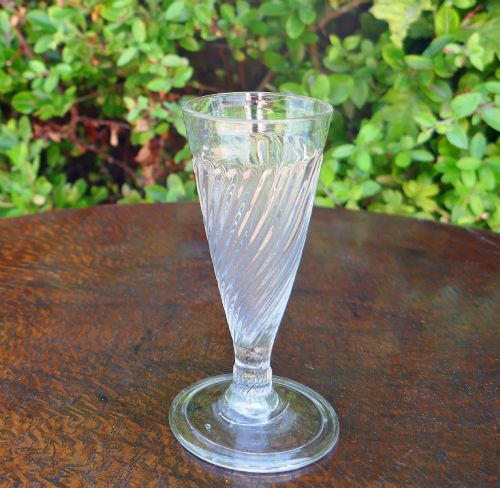
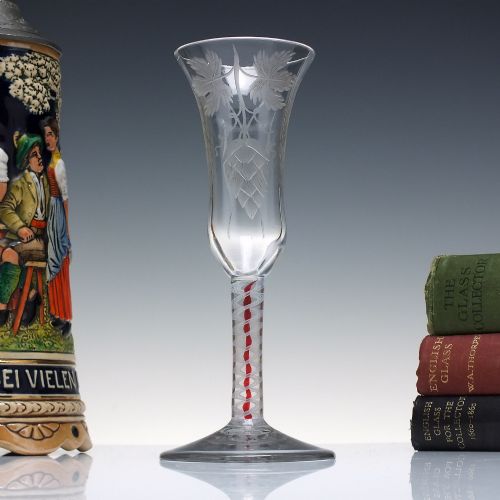
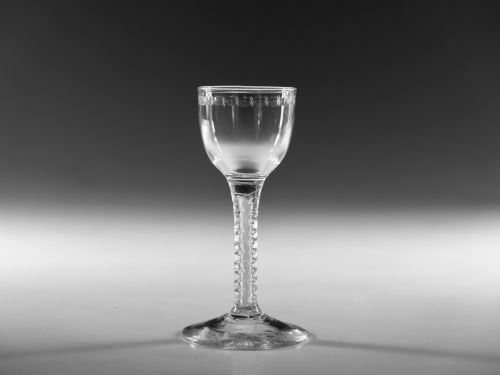
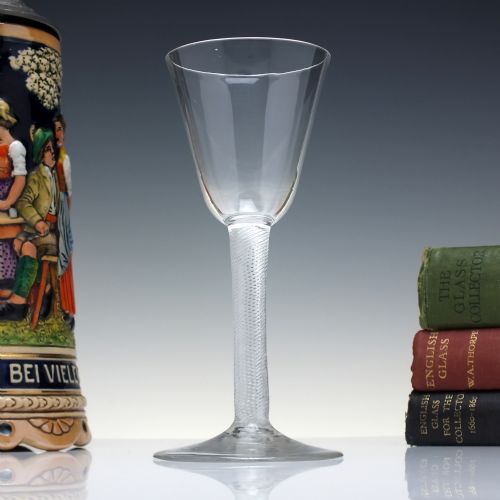
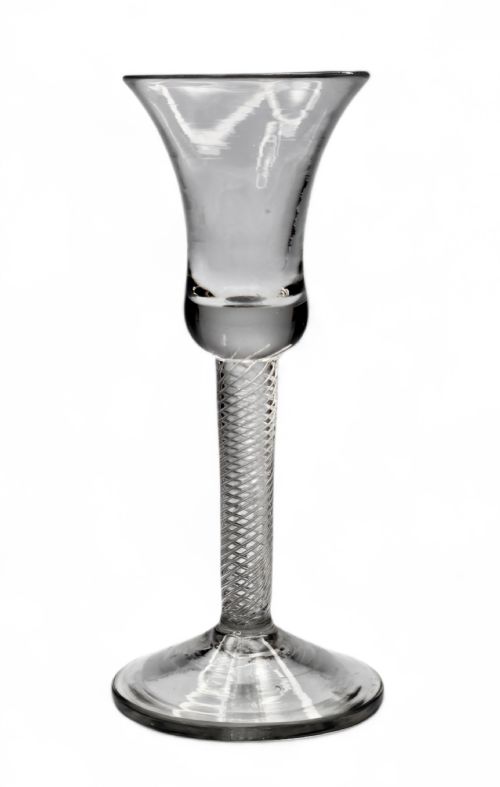
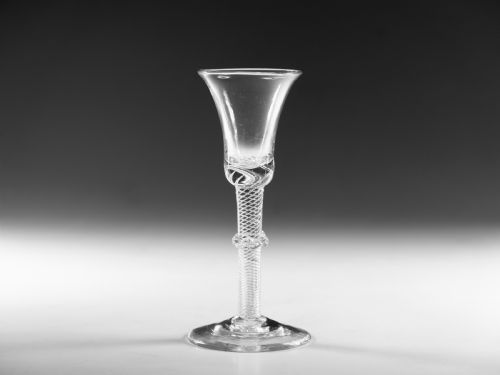
Twist stems incorporate air bubbles or opaque enamel strands drawn through the molten metal during the pulling process. Moulding methods produced textured patterns such as petal moulding, nut moulding, and wrythen ribs on the bowls and feet.
Some ale glasses feature a corkscrew twist that practically begs you to trace the spiral with your thumb while contemplating another toast.
Assessing quality and form
Clarity of the lead crystal and precision in the twist formations distinguish finer examples from standard specimens. Multiple spiral air twists and complex triple knop configurations demand greater technical skill from the glasshouse.
Engraved decoration on the bowl adds a layer of refinement, particularly when executed with crisp detail. The stability and proportion of the folded foot or pedestal base complete the structural balance of the piece.
The Mid 18th Century Stemware Glossary
- Air twist
- A stem containing elongated air bubbles drawn into spiral threads. This optical effect results from manipulating trapped air within the molten glass.
- Folded foot
- A base edge turned underneath to create a thickened rim for extra strength. This technique protects the vulnerable perimeter of the glass from chipping during use.
- Ratafia glass
- A narrow flute designed for sweet fruit liqueurs. The slender bowl accommodated modest servings of potent after-dinner cordials.
- Wrythen
- A spiral ribbed pattern moulded into the body of the glass. Artisans achieved this effect by twisting the vessel while the hot metal was expanded in a dip mould.
Mid 18th Century Stemware: Frequently Asked Questions
What drinks were served in mid 18th century stemware?
These vessels accommodated the varied beverages consumed during Georgian dining, from strong ales and imported wines to sweet liqueurs.
Specific forms like ratafia glasses and champagne flutes ensured that hosts matched the correct vessel to each course.
What is a folded foot on old glass?
A folded foot has its outer rim doubled back underneath to form a smooth, rounded edge of extra thickness.
This construction method added weight to the base and reinforced the area most susceptible to knocks.
Can you use antique wine glasses today?
These drinking glasses remain robust enough for careful handling, though many collectors prefer to display them rather than use them at table.
Hand washing in warm water without harsh detergents protects the historic glass from thermal shock and surface wear.