


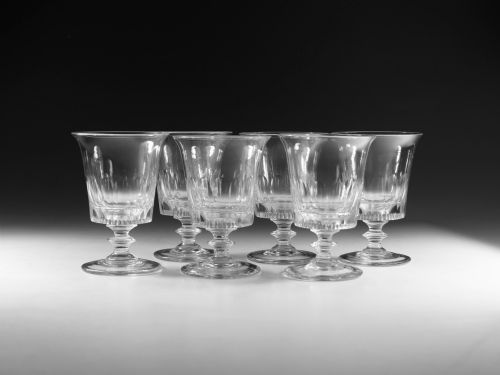

Vintage Clear Glassware Stems
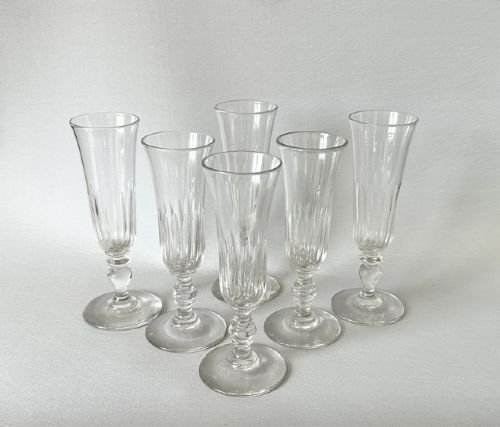
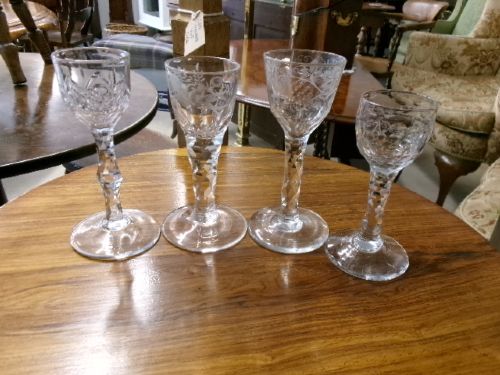
These vintage clear glassware stems span Georgian wine glasses and Victorian champagnes, bringing period craftsmanship straight to the table.
Vintage Clear Glassware Stems
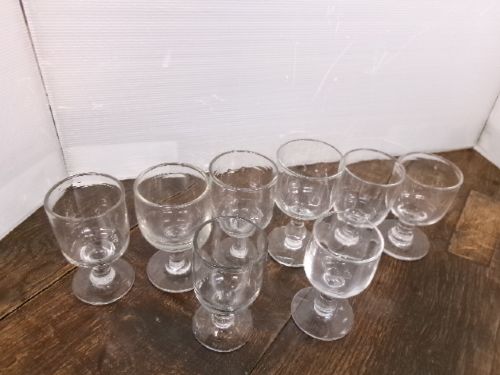
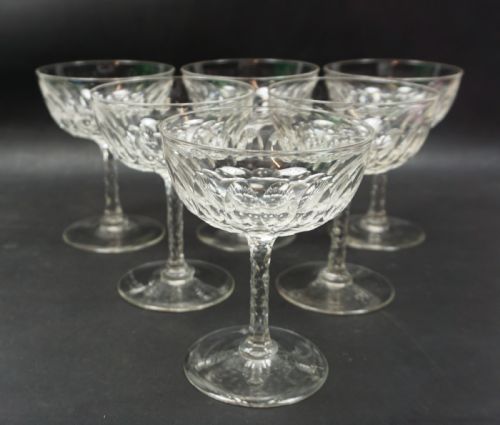
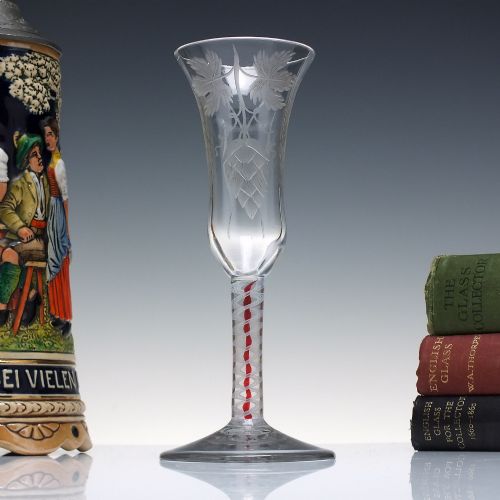
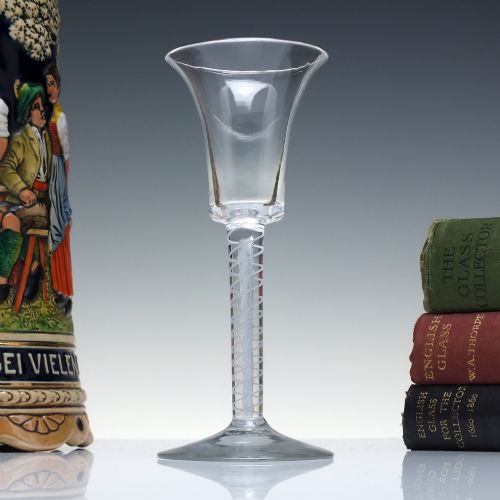
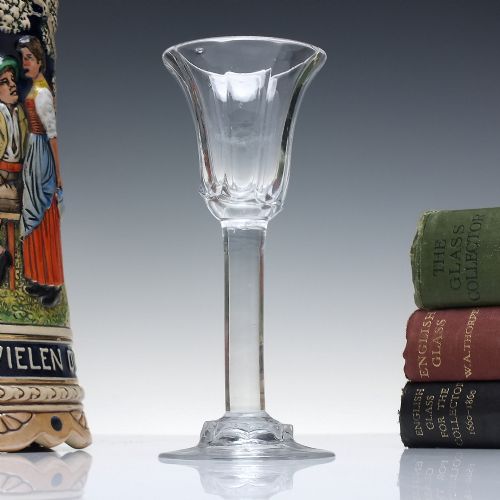
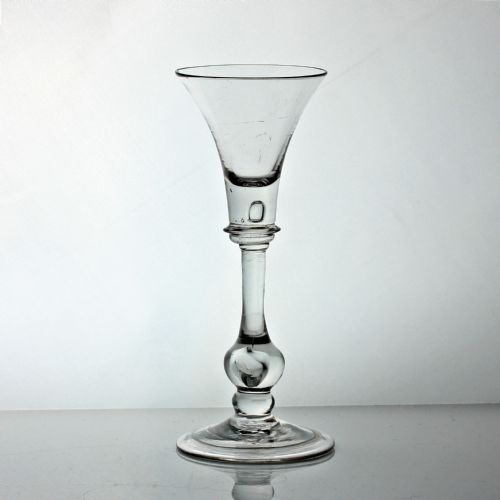
Vintage clear glassware stems bring together drinking vessels and display pieces shaped across the eighteenth and nineteenth centuries, including wine glasses, rummers, champagne flutes, and celery vases. Buyers exploring this category encounter sturdy tavern rummers from the Georgian era alongside delicate Victorian champagne coupes and tall hock glasses.
The assortment relies heavily on forms intended for dining and social drinking, transitioning from heavy baluster and twist stems of the seventeen-fifties to the faceted and etched stems popular toward the end of the Victorian period. Enamelled decoration and coloured accents appear occasionally alongside standard clear lead crystal.
Origin points span English production alongside continental European workshops, notably German and Bohemian makers who contributed enamelled roemers and hock glasses during the late nineteenth and early twentieth centuries.
Materials and Techniques
Makers shaped these stems using lead glass and clear crystal, working molten material by hand to form baluster, plain, and twist stems beneath various bowl shapes. Many pieces utilise lead glass for its clarity and weight, allowing craftsmen to draw out slender stems or press them into facet-cut profiles.
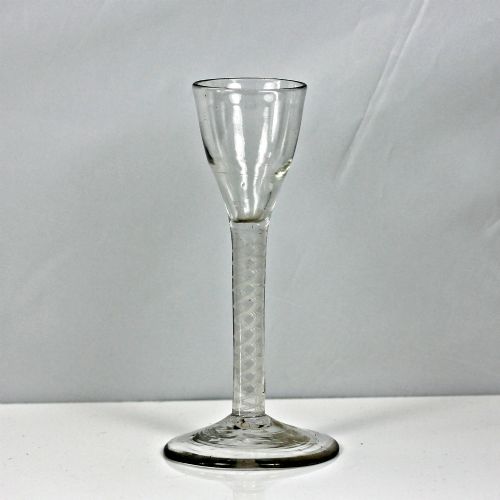
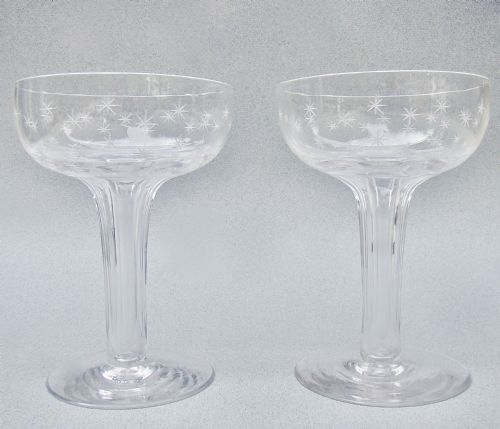
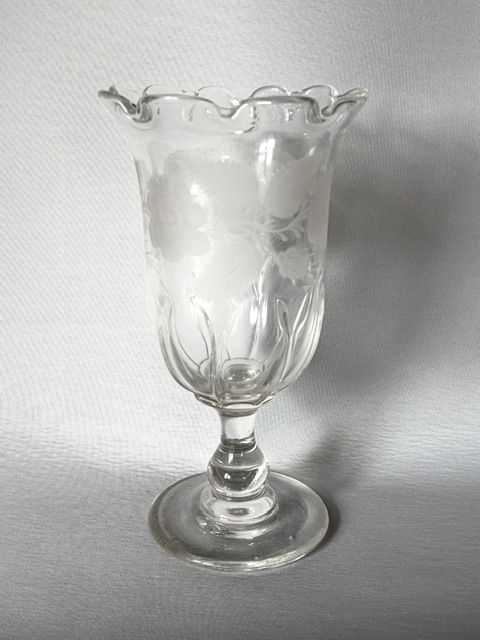
Decoration relied on engraving, star-etching, and enamel work applied directly to the surface of the glass while hot or during cold-working stages. Petal moulding, flute-moulding, and air or opaque twist formations inside the stem structure demanded precise thermal control from the glassblower.
Listings feature lead glass, enamel, gold leaf, and cut glass across periods ranging from the early eighteenth century to the early twentieth century.
Assessing Quality
Quality rests upon the proportion and balance of the stem relative to the bowl and foot, alongside the clarity and weight of the metal itself. Heavy lead crystal provides a ringing tone and solid feel that lighter, simpler soda glass lacks.
The crispness of the cutting, engraving, or enamel work dictates the finer tier of pieces, where lines remain sharp and deliberate rather than soft or shallow. Matched sets display uniform wall thickness and consistent bubble distribution throughout the metal.
Theresienthal
The Vintage Clear Glassware Stems Glossary
- Baluster stem
- A thick, swelling stem form resembling an architectural baluster, common in mid-eighteenth-century English wine glasses. It gives the piece a weighty, grounded profile in the hand.
- Opaque twist
- A stem containing fine white or coloured glass threads twisted inside a clear column. This technique dates predominantly to the Georgian period.
- Roemer
- A traditional German or continental wine goblet with a large bowl resting on a cylindrical stem decorated with applied prunts. These often carry enamel heraldic motifs.
- Hock glass
- A tall wine glass traditionally used for German white wine, often featuring an enamelled or coloured bowl supported by a long stem.
Vintage Clear Glassware Stems: Frequently Asked Questions
How do I date an old wine glass?
Dating relies on examining the formation of the stem, the shape of the bowl, and the finish of the pontil mark on the underside of the foot. Earlier pieces from the eighteenth century often show heavier metal and distinct twist formations.
Later Victorian examples introduce mechanical cutting, star-etching, and lighter crystal bodies. Comparing the proportions against documented period styles helps confirm the decade of production.
Can I use these antique glasses daily?
These pieces can certainly be used for dining and special occasions provided they receive careful hand-washing. Glass from the eighteenth and nineteenth centuries is surprisingly durable, though the metal is often softer than modern equivalents.
Sudden temperature changes should be avoided to prevent thermal shock. Hand-washing in lukewarm water preserves the clarity and any delicate surface engraving.
What is a rummer used for?
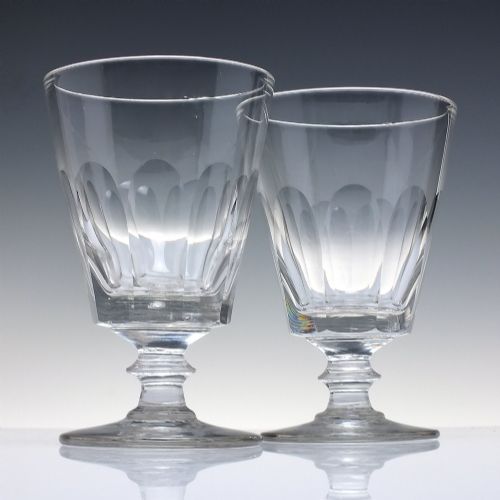
Rummers served as everyday drinking vessels for hearty ales, wines, and spirits in Georgian and Victorian households. Their thick walls and short, stable stems made them practical for tavern and domestic use.
Today, collectors frequently repurpose them as water goblets or small vases for short-stemmed floral arrangements.