




Vintage Chiming Shelf Clock
A vintage chiming shelf clock brings a rich acoustic presence to a room, marking the hours with traditional gong or bell strikes.
Vintage Chiming Shelf Clock
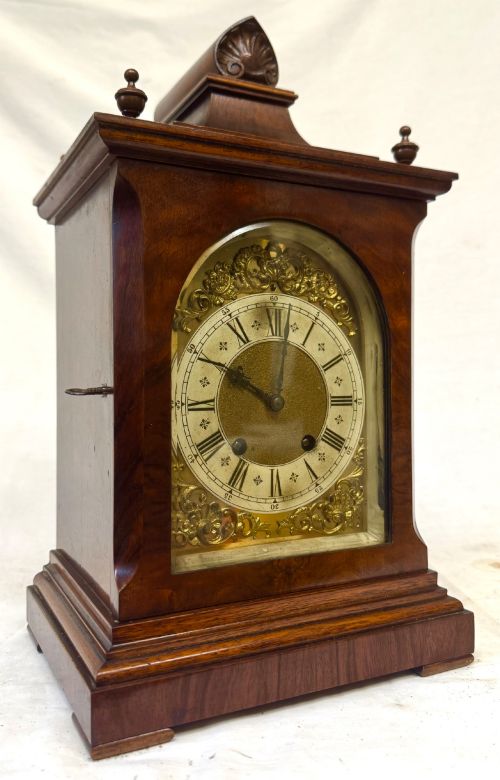
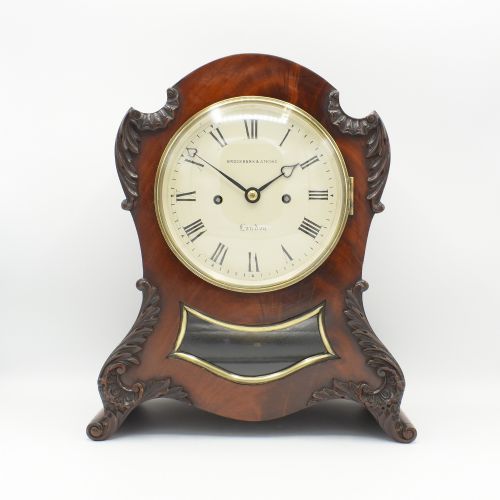
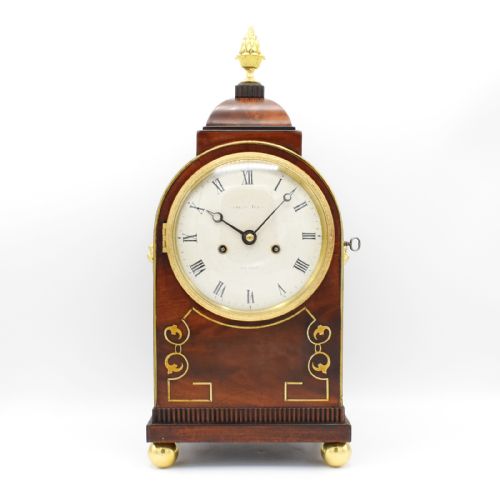
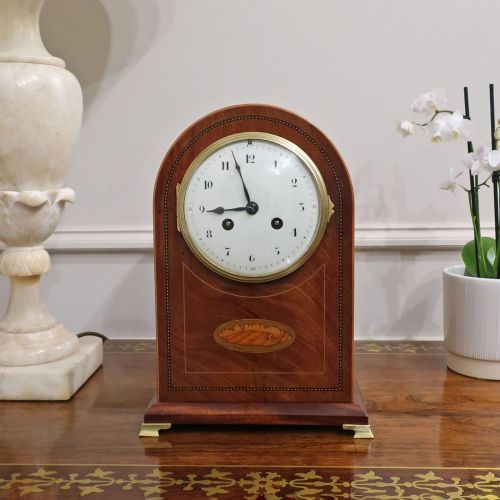
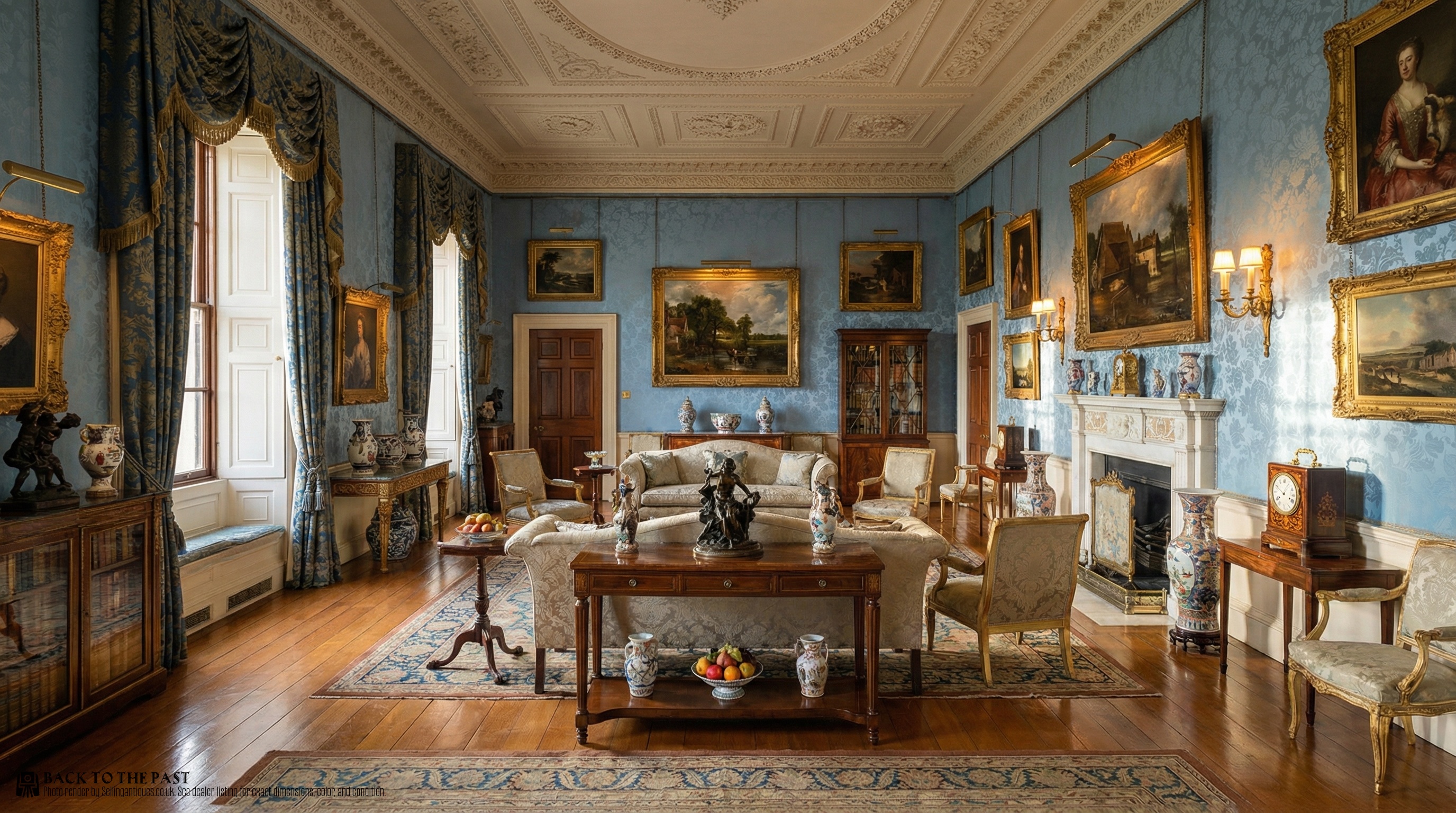
When you search for a vintage chiming shelf clock, you encounter timepieces designed to sit on mantelpieces, brackets, and tabletops. These objects combine timekeeping mechanics with cabinetry, serving both a functional and a decorative role in domestic spaces.
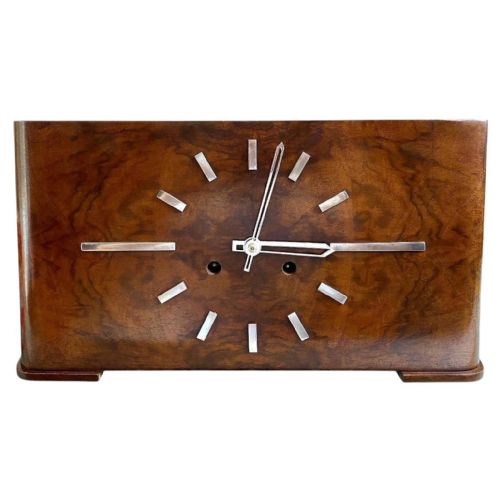
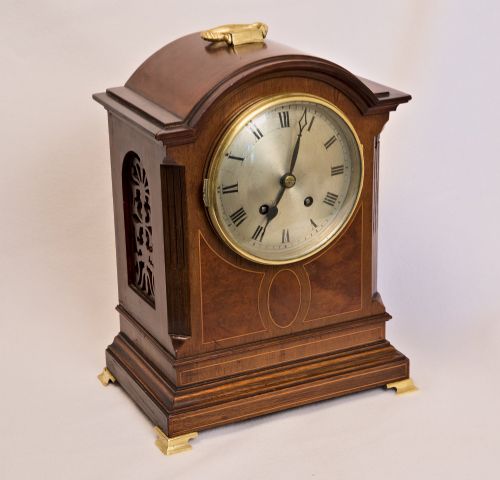
The pieces on this page span from the nineteenth century through the Art Deco era, encompassing various regional styles. You will find German and French movements alongside English and American makers, housed in cases sized for domestic furniture rather than grand halls.
Mantel clocks and bracket clocks dominate the selection, appearing in forms from simple dome-top wooden boxes to elaborate architectural cases. These variations reflect the changing interior tastes of the Victorian, Edwardian, and interwar periods.
Materials and Construction
Movements were engineered by specialised horologists to drive striking and chiming mechanisms on bells or gongs. These mechanical assemblies required precise brass gear-trains and escapements, housed within substantial wooden or ebonised housings.
Some mantel clocks included built-in thermometers, proving that nineteenth-century owners liked to know the temperature while waiting for the hour to strike.
Distinctions in Quality
The refinement of the cabinetwork separates standard production from superior pieces, with fine timber selection, crisp carving, and precise inlay marking the better examples. Maker attribution also plays a role, as signed movements from established houses command greater consideration.
The complexity and finish of the dial - such as engraved brass, clear enamel, or combined thermometer functions - indicate the original grade of the clock. Harmony between the case style and the mechanical movement reflects the overall integrity of the piece.
Lenzkirch·Junghans·Haller·Wm. Gilbert·Savory and Fils
The Vintage Chiming Shelf Clock Glossary
- Bracket clock
- A portable clock historically designed to sit on a wall bracket or shelf. These pieces typically feature sturdy carrying handles and refined wooden cases.
- Westminster chime
- A four-note melody played on bells or gongs to mark the quarters of the hour. This acoustic feature became popular in mantel clocks during the late nineteenth and early twentieth centuries.
- Marquetry
- The art of applying pieces of veneer to a structure to form decorative patterns. Craftsmen utilised various coloured woods to create pictorial or geometric designs on clock cases.
- Enamel dial
- A clock face made by fusing powdered glass to a metal base at high temperatures. This technique produced a durable, glossy white surface with painted numerals.
- Gong striking
- A mechanism that sounds the hours by hitting a coiled or straight steel rod rather than a bell. This arrangement produced a deeper, resonant tone suited to enclosed wooden cases.
Vintage Chiming Shelf Clock: Frequently Asked Questions
How do I wind a mechanical shelf clock?
Winding requires a dedicated key inserted into the winding holes on the dial face, turning gently until resistance is felt. Care must be taken not to overwind the mainspring.
Different movements require weekly or bi-weekly attention depending on whether they are eight-day or fourteen-day mechanisms.
Why does my clock chime incorrectly?
Striking mechanisms can fall out of sequence if the minute hand is moved backwards past the hour. Allowing the clock to finish its strike sequence usually corrects the count.
If the chime train falls permanently out of beat, adjustment by a horologist may be necessary to realign the internal rack and snail.
Where should I place a mantel clock?
These clocks require a stable, level surface such as a firm shelf or mantelpiece to keep the pendulum swinging evenly. Avoid areas subject to excessive vibrations or dramatic temperature fluctuations.
Placing the clock against an interior wall helps project the acoustic chime clearly into the room.
How do I distinguish Victorian from Art Deco styles?
Victorian clocks often exhibit dark carved wood, classical architectural motifs, and ornate brass details in the manner of revival styles. They lean towards historicism and heavy ornamentation.
Art Deco pieces favour geometric lines, contrasting materials like chrome and walnut, and streamlined forms that reflect twentieth-century modernity.