





Vintage Ceramic Figurine Group
These vintage ceramic figurine group pieces bring character to a room, offering sculptural narratives captured in clay and porcelain across centuries.
Vintage Ceramic Figurine Group
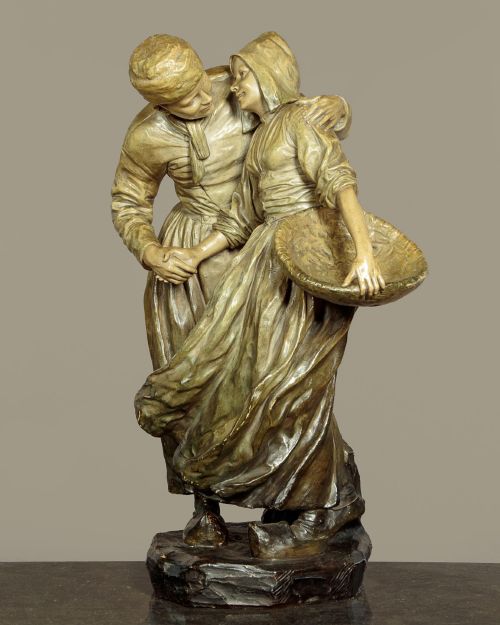
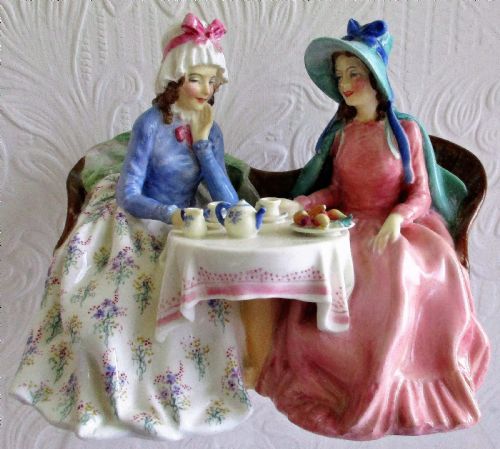
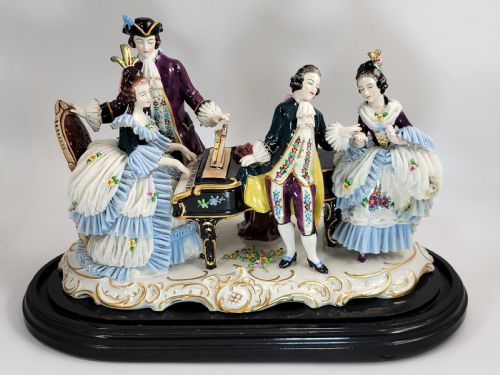
When you search for a vintage ceramic figurine group, you are looking at multi-figure sculptures moulded from earthenware, porcelain, and terracotta that portray pairs, families, musicians, and literary characters in narrative scenes.
The pieces on this page span from the eighteenth century through to the Art Deco era, encompassing Georgian soft-paste porcelain, Victorian Staffordshire pottery, and twentieth-century continental works.
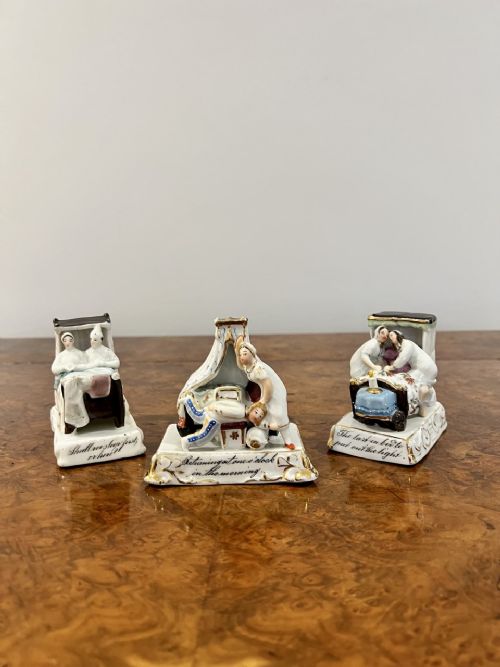
You will frequently encounter Victorian Staffordshire pottery groups depicting literary characters, alongside continental porcelain and terracotta pieces from makers active around nineteen hundred.
How they were made
Makers shaped these sculptures using soft-paste porcelain, hard-paste porcelain, earthenware, and terracotta, often applying a glossy glaze or leaving the ceramic as unglazed biscuit porcelain.
Detailed modeling was enhanced with hand-painted enamel colours and occasional touches of gold leaf, while lace figural groups incorporated real fabric dipped in slip before firing.
Some nineteenth-century makers dipped actual lace into liquid slip before firing it away in the kiln to leave delicate porcelain fabric.
What varies in quality
Quality rests upon the crispness of the moulding and the sensitivity of the hand-painted enamels, which separate mass-produced wares from finer sculptural outputs.
The sophistication of the composition and the preservation of delicate details, such as facial expressions and applied elements, determine the standing of each piece.
Meissen·Goldscheider·Royal Doulton·Ernst Bohne Sohne·Wedgwood and Co Ltd·Royal Dux·Karl Tutter
The Vintage Ceramic Figurine Group Glossary
- Biscuits
- Unglazed porcelain fired once before any subsequent decoration is applied. It has a matte texture resembling marble.
- Staffordshire flatback
- A type of nineteenth-century earthenware figure designed to stand against a mantelpiece, leaving the reverse unpainted and flat.
- Soft-paste porcelain
- An artificial porcelain composition fired at lower temperatures than hard-paste, producing a warm translucent body.
- Pearlware
- A fine earthenware developed in Staffordshire featuring a bluish glaze that pools in crevices to mimic Chinese porcelain.
Vintage Ceramic Figurine Group: Frequently Asked Questions
What is a figurine group?
A figurine group is a ceramic sculpture depicting two or more figures interacting within a narrative, domestic, or pastoral scene.
These pieces range from eighteenth-century porcelain courting couples to nineteenth-century earthenware portrayals of literary characters.
How were Staffordshire figures displayed?
Staffordshire figures with flat backs were traditionally placed on mantelpieces or shelves where only the front of the sculpture would be visible to viewers.
This method of display directed the makers to concentrate their decorative efforts on the primary side of the pottery group.
What is bisque porcelain?
Bisque porcelain is unglazed ceramic ware that has undergone its initial firing to create a matte, porous finish.
This technique highlights the fine details of the sculptural modeling without the distraction of a glossy glaze.
How do I identify periods?
Periods are identified through a combination of the ceramic body, the painting style, and the manufacturing marks found on the base.
Earthenware pieces with pearlware glazes point to the early nineteenth century, while biscuit figures often align with later Victorian and Art Deco eras.