

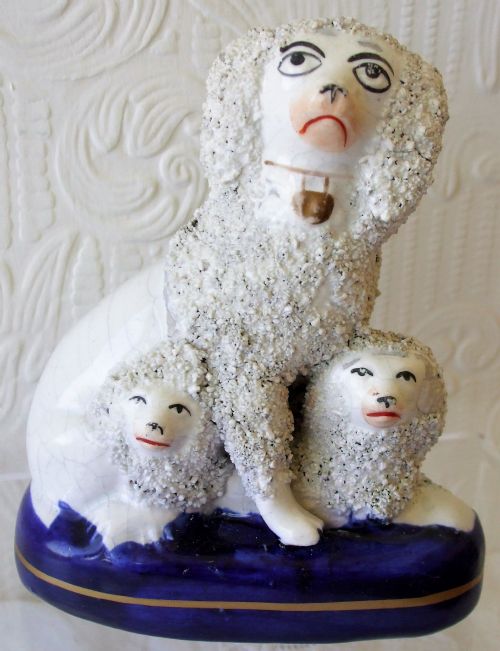


Antique Pottery Figure Group
An antique pottery figure group brings the human and animal stories of the nineteenth century straight onto your mantelpiece.
Antique Pottery Figure Group
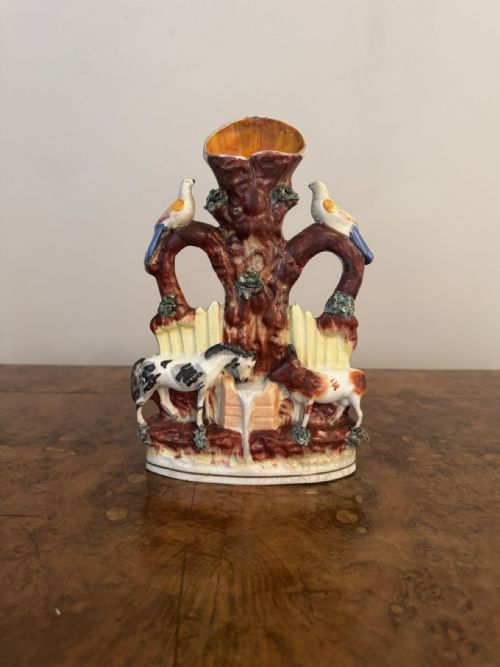
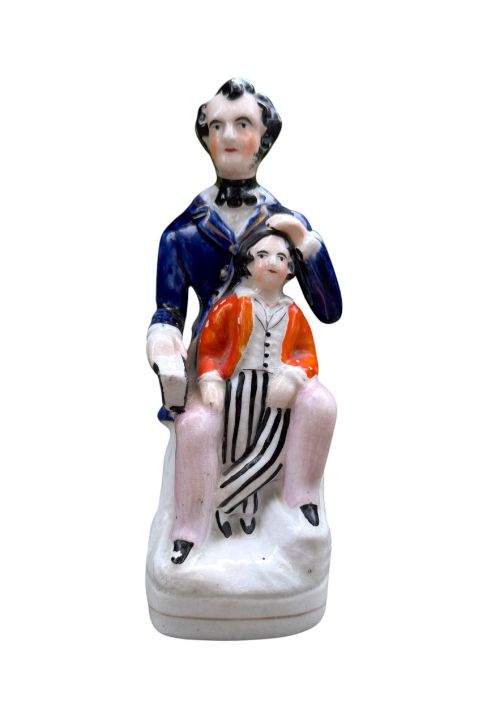
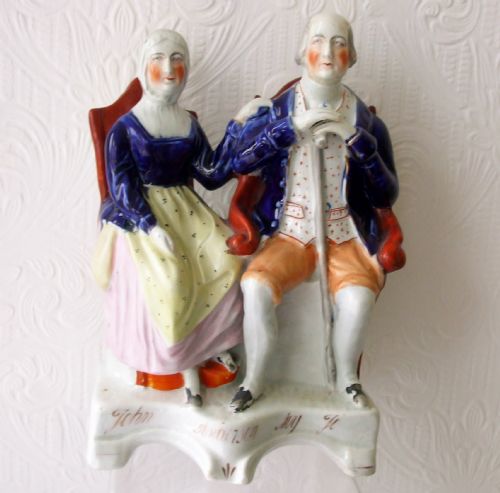
An antique pottery figure group represents multiple characters, animals, or narrative scenes captured in earthenware and ceramic. You will most frequently meet nineteenth century Victorian Staffordshire figures here, depicting literary characters, historical portraits, and domestic animals.
The subjects range from Scottish lairds and royal families to pastoral scenes like the Vicar and Moses or poodles and deer. Many function as spill vases or clock groups, combining practical use with decorative display.
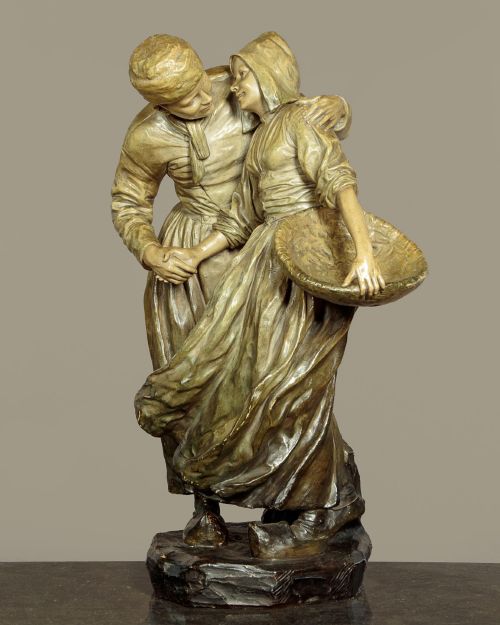
The origin spans eighteenth century pearlware up to early twentieth century art deco and art nouveau pieces. These groups document the popular culture, politics, and folklore of past eras through domestic ceramic art.
How they were made
Makers shaped these pieces from earthenware and ceramic, utilising lead glaze and enamel paint for surface decoration. The materials combine to create the characteristic glossy finish seen on Victorian and Georgian figures.
Potters formed the groups using moulds, then hand-painted details with enamel colours before firing. Terracotta and china also appear in later twentieth century pieces on this page.
Dogs featured prominently in Victorian homes, captured here in glazed ceramic as loyal poodles and clock-holding companions.
What varies in quality
The artistic merit rests in the crispness of the moulding and the delicacy of the hand-painted enamel work. Figures with clear facial expressions and detailed costumes stand apart from simpler, heavily mass-produced items.
The complexity of the subject matter also defines the tier of the piece, with multi-figure groups and architectural spill vases requiring greater technical skill than single figures.
Goldscheider·Ralph Wood·Wedgwood and Co Ltd·Royal Dux Bohemia·Guido Cacciapuoti
The Antique Pottery Figure Group Glossary
- Pearlware
- A fine earthenware developed in the eighteenth century with a bluish-white glaze that pooled in crevices. This material provided a smooth surface for bright enamel painting.
- Spill vase
- A hollow ceramic tube incorporated into a figure group designed to hold wooden spills for lighting pipes and fires. These combine practical household utility with decorative sculpture.
- Flatback
- A Staffordshire figure modelled with a finished front and a plain, unpainted flat back intended to stand against a wall. This technique saved time and material during manufacture.
- Lead glaze
- A shiny coating applied to pottery before firing that produced a glossy, protective surface. It enhanced the vibrant colours of the enamel paint beneath.
Antique Pottery Figure Group: Frequently Asked Questions
What is a Staffordshire figure group?
These are ceramic sculptures depicting two or more people, animals, or allegorical figures made primarily in the Staffordshire potteries during the nineteenth century. They often illustrated current news, theatrical events, or popular literature.
Victorian households displayed them proudly on mantelpieces as affordable decorations that reflected the owner's literary tastes or political sympathies.
How do I date a ceramic group?
Dating relies on stylistic clues, the type of ceramic body such as pearlware or earthenware, and the historical subjects depicted. Subjects like the Crimean War or specific monarchs provide firm historical markers for the era of manufacture.
Examining the base and glaze characteristics also helps distinguish eighteenth century examples from later Victorian pieces.
Were these figures meant to be toys?
They were strictly decorative ornaments for the home rather than playthings for children. Their fragile ceramic construction and painted enamel surfaces made them unsuitable for handling.
Placed high on mantelpieces or in glass cabinets, they served as conversation pieces for visiting guests.
What subjects are most common?
Literary characters, royalty, and domestic animals appear most frequently across these listings. Poodles, deers, and characters from Scottish folklore are especially well represented in Victorian examples.
Historical events and military alliances also inspired many of the multi-figure portrait groups.