


Vintage Ceramic Dogs
These vintage ceramic dogs range from Staffordshire pairs to Chinese porcelain Foo dogs, bringing character and history to any mantelpiece.
Vintage Ceramic Dogs
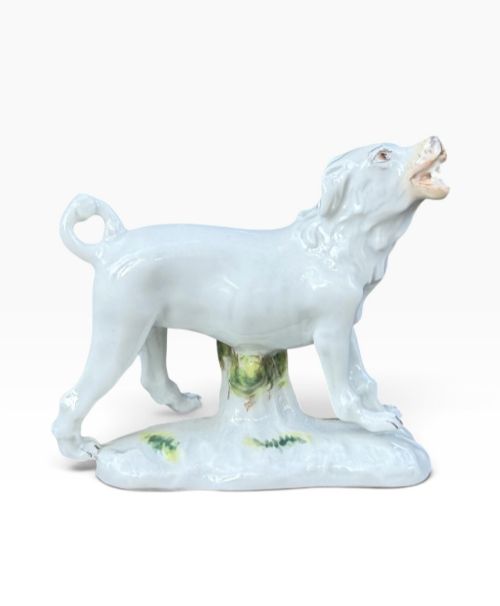
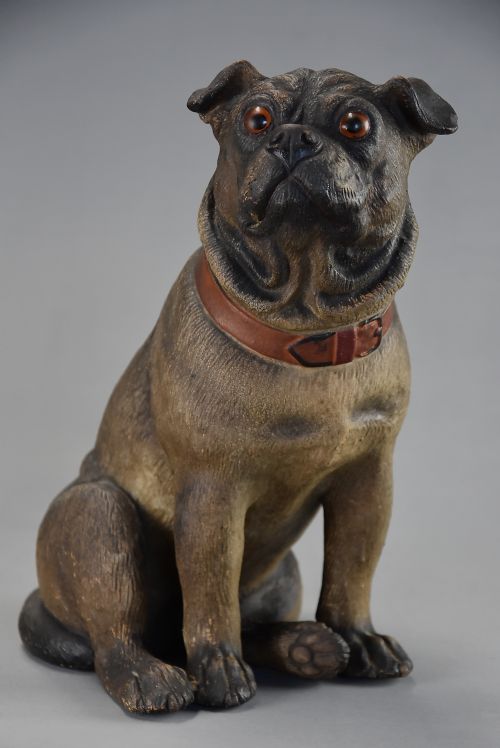
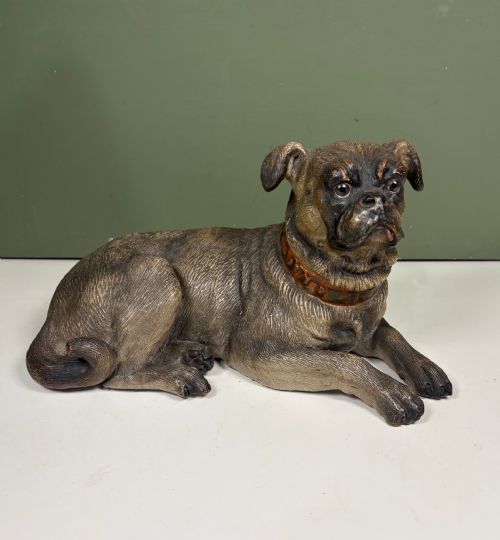
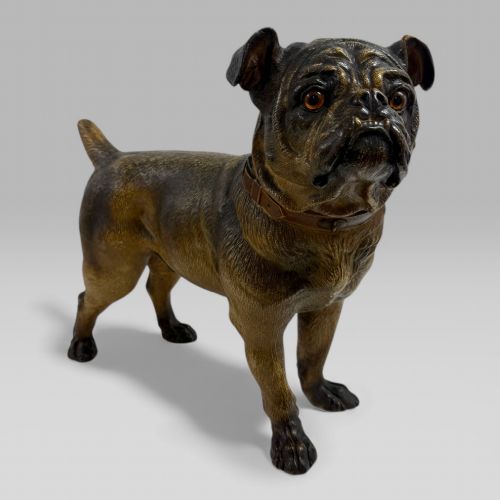
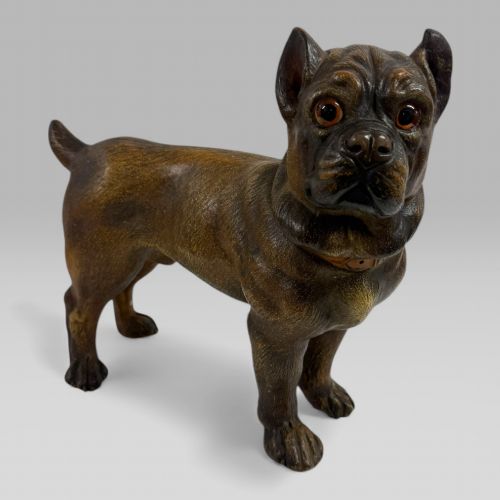
Vintage ceramic dogs encompass a wide array of decorative figures, lamps, and sculptures created across the nineteenth and early twentieth centuries. When exploring vintage ceramic dogs, buyers frequently encounter Staffordshire earthenware spaniels, pugs, and greyhounds designed as mantel ornaments.
The selection extends to continental porcelain figures, German porcelain lamps, and Chinese porcelain Foo dogs from the Qing period. Makers from various European and Asian traditions utilised distinct regional styles to shape these canine sculptures.
Materials and production
Larger life-size sculptures utilise robust terracotta or pottery bodies, while smaller decorative figurines and trinket boxes employ delicate porcelain or parian ceramic compositions.
Listings span from the nineteenth-century Victorian period through the Edwardian era and into Art Deco styles.
Factors of quality
The fineness of the painting and the crispness of the moulded details distinguish standard production pieces from superior examples. Hand-painted facial expressions and carefully applied enamel glazes contribute significantly to the visual appeal of individual figures.
The integrity of the glaze, the depth of colour, and the preservation of original gilding indicate the level of craftsmanship invested during manufacture.
Meissen·Derby·Wedgwood and Co·Royal Dux·Royal Capodimonte Factory
The Vintage Ceramic Dogs Glossary
- Staffordshire pottery
- Earthenware figures produced in the Staffordshire potteries, particularly known for mantel spaniels and pugs.
- Foo dog
- Chinese guardian lion figures traditionally rendered in porcelain or glazed ceramic, symbolising protection.
- Terracotta
- Unglazed or glazed fired clay of a brownish-red colour, utilised for larger sculptures and life-size models.
- Parian
- A fine white porcelain resembling marble, used during the nineteenth century for detailed sculptural groups.
Vintage Ceramic Dogs: Frequently Asked Questions
How do I style Staffordshire dogs?
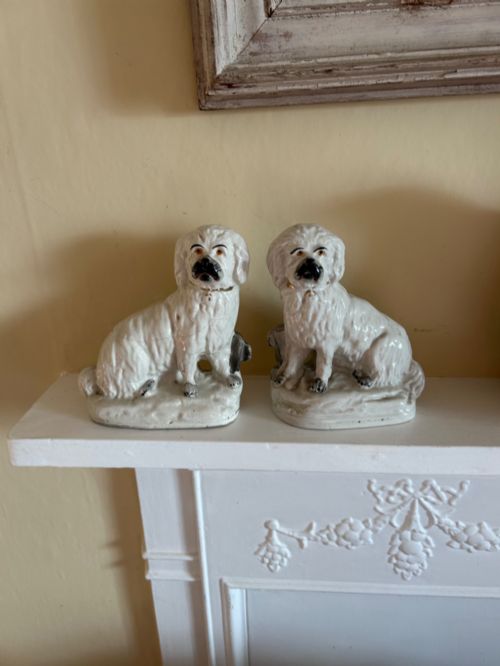
Staffordshire dogs look traditional placed facing each other on a mantelpiece or bookshelf. They add character when paired with vernacular pine furniture or layered among modern objects.
Positioning them in pairs maintains their historical display convention, mirroring how owners arranged them in nineteenth-century parlours.
What is a comforter spaniel?
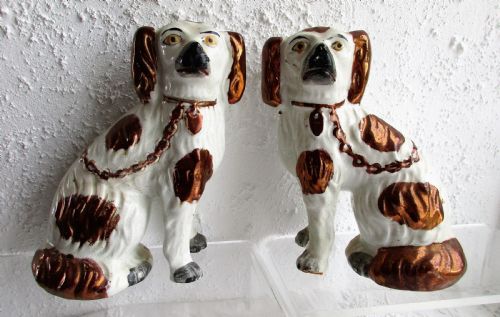
Comforter spaniels are pottery dog figures modelled after the pet spaniels kept by Queen Victoria. Manufacturers produced these in pairs to sit on either side of a fireplace.
They typically feature copper lustre, black and white markings, or white and gilt decoration characteristic of the Victorian era.
Are Chinese Foo dogs ceramic?
Foo dogs appear in various ceramic forms, including Qing period porcelain and Blanc de Chine glazes. These guardian figures serve a symbolic protective function.
Collectors find them glazed in pale green or enamelled polychrome colours reflecting traditional Asian ceramic arts.
How do I identify Victorian pieces?
Victorian ceramic dogs often show characteristic crazing in the glaze and hand-painted touches over a moulded earthenware body. Formats include money boxes, quill holders, and decorative figurines.
Examining the underside and the weight of the ceramic helps determine whether a piece originates from the nineteenth century.