


Painted Pottery Spaniels
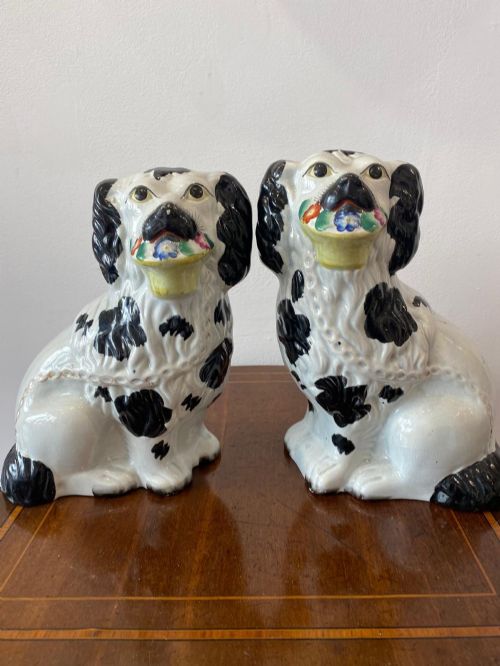
These painted pottery spaniels are Victorian Staffordshire mantel dogs, made to watch over hearths in pairs.
Painted Pottery Spaniels
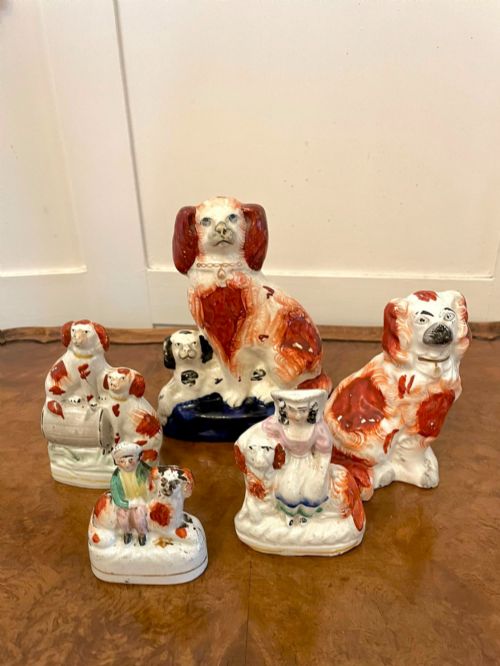
When you search for painted pottery spaniels, you encounter Victorian ceramic figures made in pairs to sit upon fireplace mantels. These decorative objects depict seated spaniels and related dogs originating from nineteenth century England.
The pieces on this page include pairs and groups dating from the mid to late nineteenth century, spanning decades such as eighteen-sixty and eighteen-eighty. Most examples take the form of Staffordshire pottery dogs decorated with coloured enamel paint.
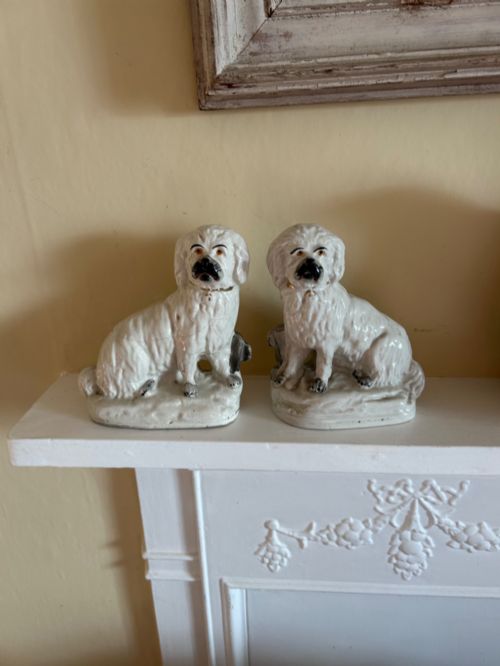
Maltese terriers and comforter spaniels appear alongside standard spaniel figures in these collections. Such decorative figurines served as standard domestic ornaments in Victorian parlours.
How they were made
Potters shaped these earthenware figures using ceramic moulds before applying a glaze to the surface. Artisans then added details by hand using enamel paint over the fired body.
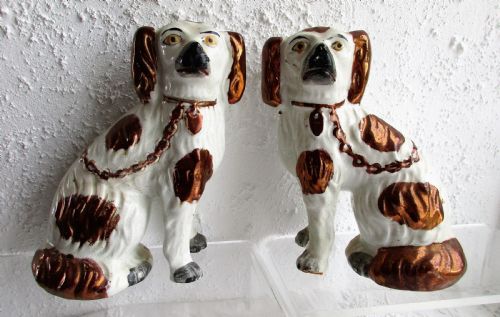
Some examples incorporate copper lustre highlights to provide metallic sheen across the ceramic surface. The combination of earthenware, glaze and enamel paint defines the manufacturing technique seen across the period.
Victorian mantel dogs were known as comforter spaniels because they supposedly warded off the loneliness of empty hearths.
What varies in quality
The clarity of the glaze and the crispness of the earthenware modelling determine the visual appeal of each figure. Pairs with well-matched proportions and steady firing display higher craftsmanship.
The Painted Pottery Spaniels Glossary
- Earthenware
- Porous pottery fired at lower temperatures than stoneware or porcelain. It forms the standard ceramic body for these Victorian figures.
- Copper lustre
- Metallic glaze finish producing a reflective copper sheen. Potters applied this technique to accent collars and markings.
- Comforter spaniel
- Popular Victorian ceramic dog breed representation. These figures were traditionally placed on either side of the fireplace.
Painted Pottery Spaniels: Frequently Asked Questions
What are Staffordshire dogs?
Staffordshire dogs are ceramic mantel figures made in the English pottery districts during the nineteenth century. They typically depict seated spaniels and were produced in facing pairs.
Households displayed these ornaments on mantelpieces across Victorian parlours. They often featured painted red and white markings to mimic real pets.
How do I date these figures?
Dating relies on stylistic clues, ceramic bodies, and painting techniques typical of the nineteenth century. Victorian examples often show characteristic earthenware weight and hand-applied enamel details.
Examining the base and the type of glaze helps determine whether a piece belongs to the mid or late nineteenth century. Certain listings specify exact decades such as eighteen-sixty or eighteen-eighty.
Were they always sold in pairs?
Potters manufactured these spaniels in left and right-facing pairs designed to sit symmetrically on a fireplace. Collectors still seek them in matched pairs for mantel display.
Some surviving groups include collections of four or six figures. Single dogs occasionally appear due to separation over the decades.
How should I clean them?
Dust these ceramic figures gently with a soft, dry brush to protect the enamel paintwork. Avoid using water or chemical cleaners that might damage the antique glaze.
Keeping them away from direct moisture preserves the earthenware body and the hand-painted surface. Careful handling prevents chipping on the glazed edges.