
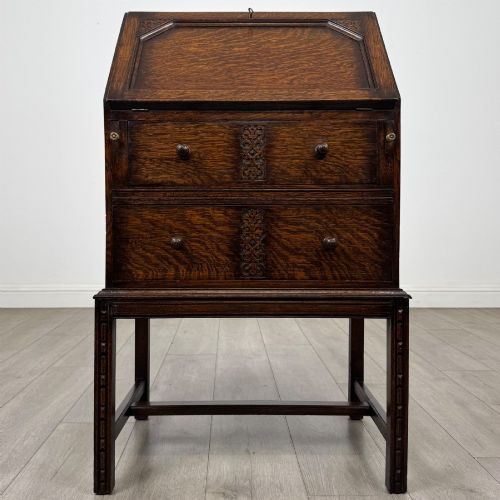
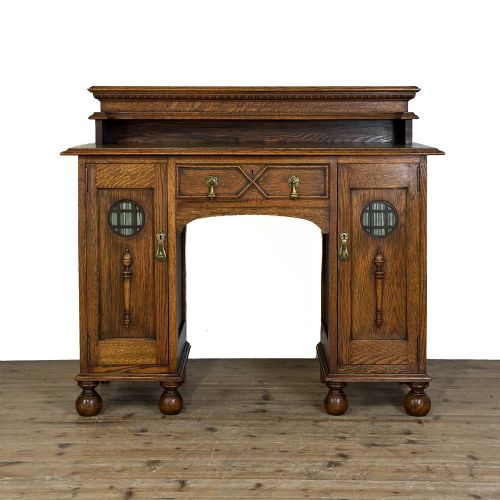
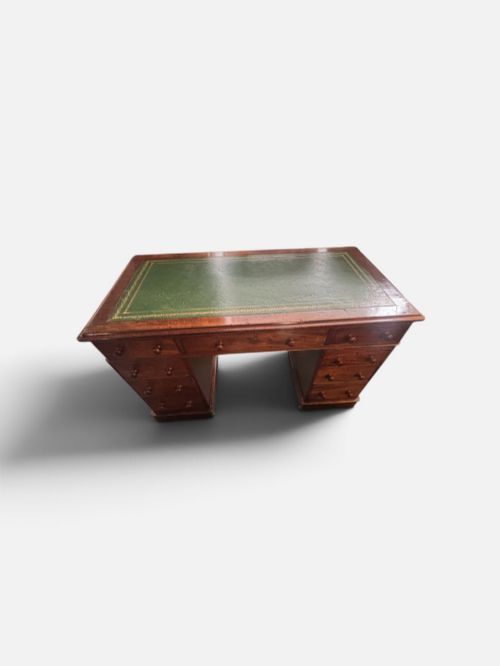
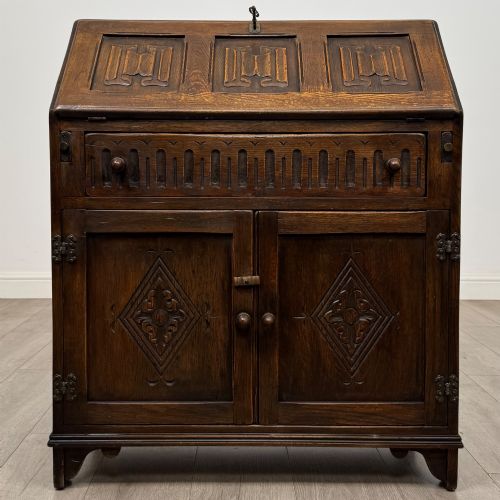
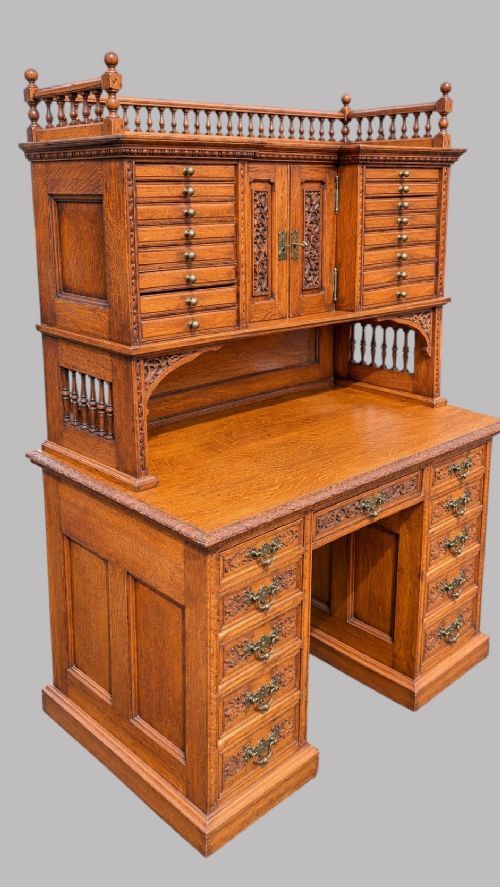
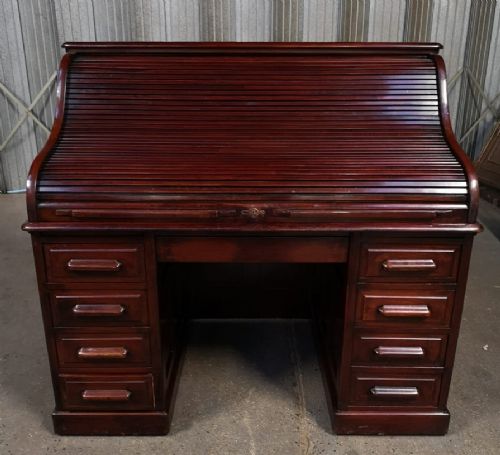

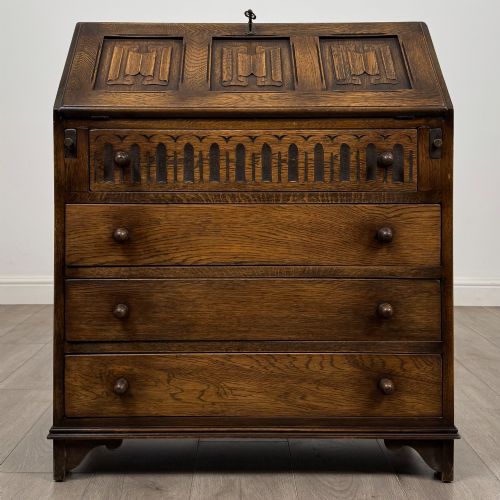
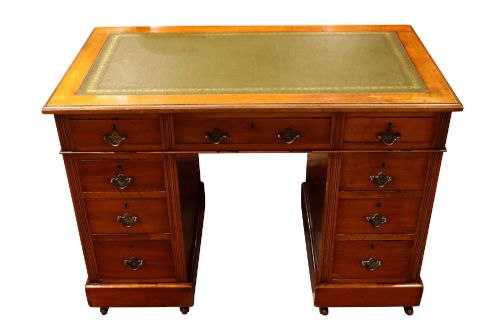
Vintage Carved Writing Bureau
A vintage carved writing bureau brings a drop-down writing surface and fitted interior to a room, offering practical storage alongside traditional craft.
Vintage Carved Writing Bureau
A vintage carved writing bureau functions primarily as a compact workspace that conceals letters and stationery behind a hinged writing flap. The selection centres on oak and mahogany forms produced across the Victorian, Edwardian, and early twentieth-century periods.
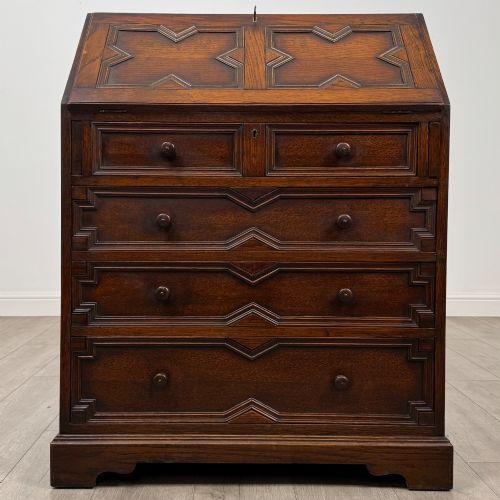
Most examples encountered here date from the Edwardian era or the 1920s, frequently displaying revivalist motifs such as Jacobean linenfold panels or geometric mouldings. These pieces combine a drop-front desk compartment with sets of drawers positioned beneath the writing surface.
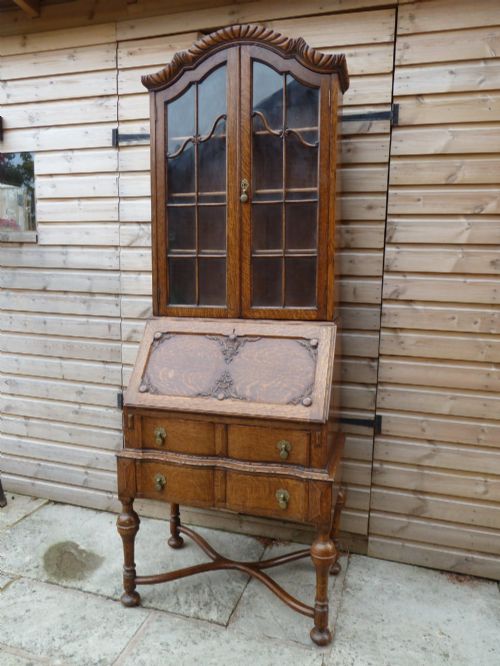
The category extends from modest domestic oak bureaux to taller bureau bookcases fitted with upper glass-fronted shelving. Buyers encounter variations ranging from plain sloping lids to heavily carved surfaces reflecting historical revival styles.
How they were made
Makers constructed these writing desks using solid timbers like oak and mahogany, often applying burr walnut or flame mahogany veneers to primary visual surfaces. Brass handles, key escutcheons, and hinges provide functional hardware, while leather inserts frequently line the writing surfaces.
Woodcarving techniques define the decorative vocabulary of these pieces, utilising chip carving, linenfold panels, and applied mouldings to create texture. Joinery methods involve traditional dovetail joints for drawer construction and sturdy framing to support the drop-down writing flaps.
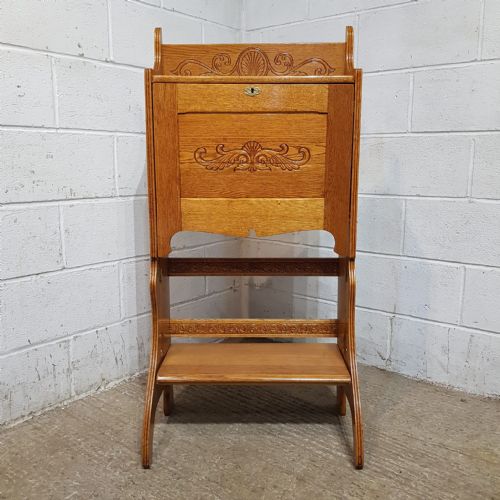
The object forms range from compact writing desks and Davenport bureaux to large bureau bookcases.
What varies in quality
The standard of timber selection and veneer matching dictates the visual depth of the exterior, particularly where burr walnut or flame mahogany is utilised. Finer examples display continuous grain patterns across drawer fronts and carefully selected solid timber framing.
The crispness and depth of the hand-carved ornamentation separate standard production items from superior workshops. Interior fittings, including secret compartments, small pigeonholes, and subsidiary drawers, reveal the maker's attention to detail and structural integrity.
Maple and Co·Gillows·Edwards and Roberts·Rumney and Love
The Vintage Carved Writing Bureau Glossary
- Bureau
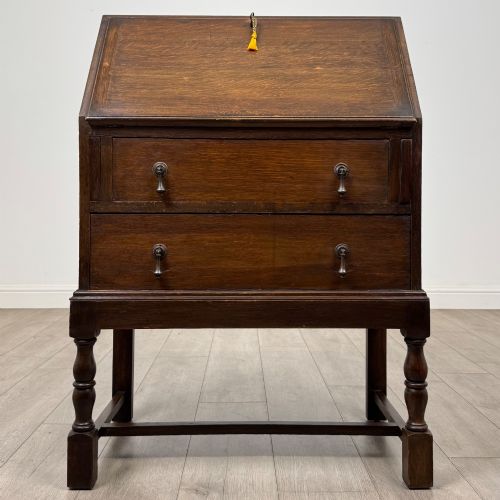
- A writing desk featuring a sloping hinged lid that opens to reveal small drawers and pigeonholes. This form provides a concealed workspace that folds away when not in use.
- Linenfold
- A style of wood carving that imitates folded parchment or linen cloth. It appears frequently on the panels of Edwardian oak furniture.
- Kneehole desk
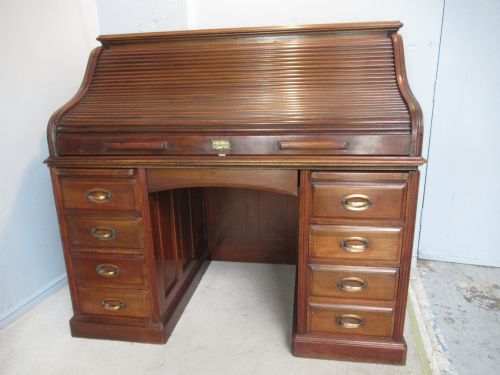
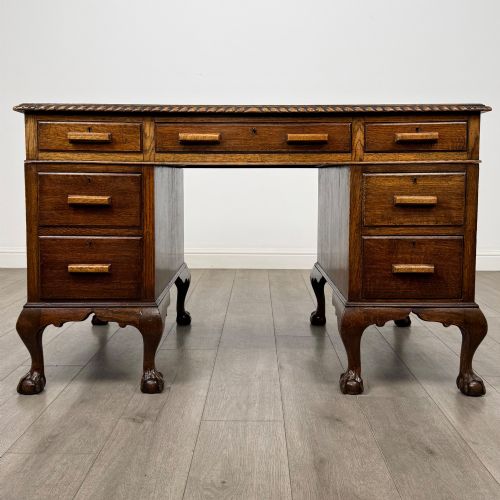
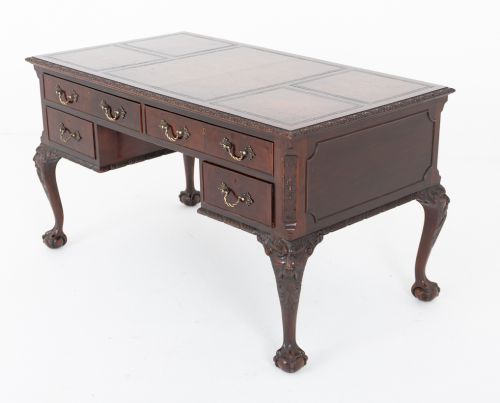
- A freestanding desk with a central recess for the user's legs, flanked by pedestals of drawers. This configuration offers substantial storage while maintaining a compact footprint.
- Escutcheon
- A protective plate surrounding a keyhole, usually cast in brass. It prevents the wood around the lock from sustaining damage over repeated use.
- Pigeonhole
- A small compartment within a desk interior used for sorting letters and papers. These spaces are often framed by decorative archways or miniature drawers.
Vintage Carved Writing Bureau: Frequently Asked Questions
How do I use a bureau desk?
Lower the hinged writing flap until it rests in a horizontal position supported by integrated wooden lopers. This reveals an internal arrangement of small drawers and pigeonholes designed for correspondence.
When writing is complete, return stationery to the interior compartments and lift the flap back into place to secure the contents behind a locked lid.
What is a bureau bookcase?
A bureau bookcase combines a drop-front writing desk at the base with a tall glazed shelving unit mounted on top. This double-function form provides display space for books alongside a private writing surface.
These combination pieces were built to maximise vertical storage in domestic libraries and living spaces during the nineteenth and early twentieth centuries.
Where should I place a writing bureau?
Position a writing bureau against a stable wall where adequate clearance allows the drop-down flap to open fully without obstruction. Avoid placing the timber directly next to active heat sources or in prolonged direct sunlight.
These pieces function well in studies, living rooms, or bedrooms, providing a dedicated writing station that conceals clutter when closed.