
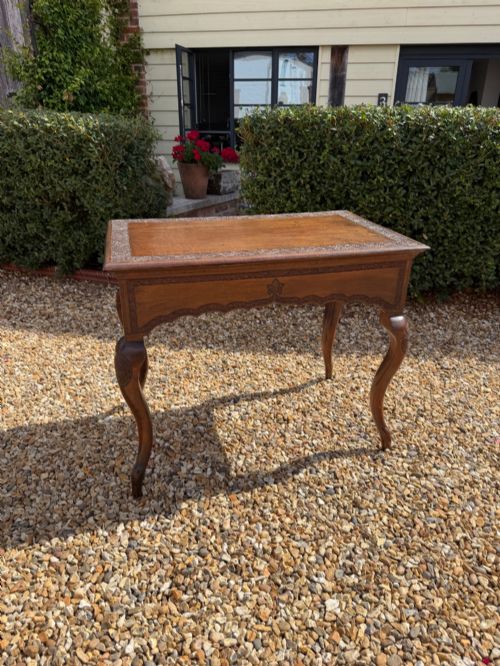
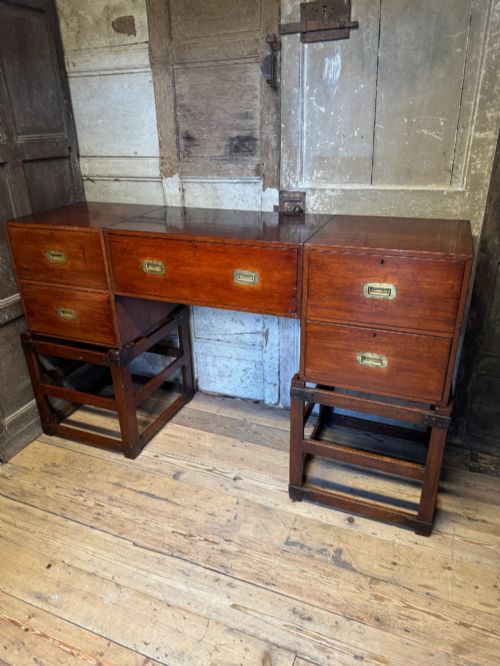
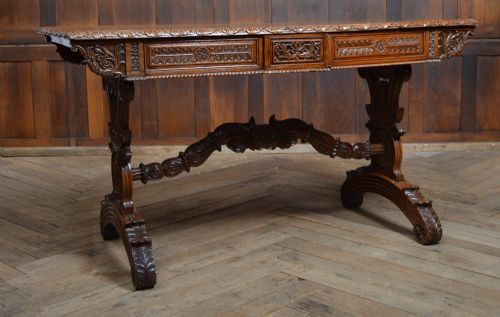


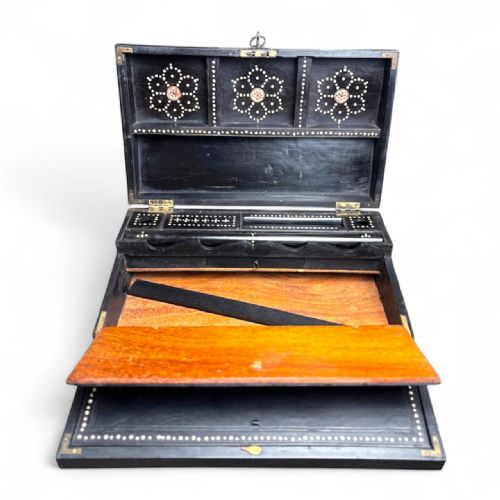


Anglo Indian Writing Desk
These robust pieces of furniture, known as an anglo indian writing desk, bring distinctive colonial craftsmanship and rich imported timbers into the home.
Anglo Indian Writing Desk
An anglo indian writing desk encompasses various portable and static forms created during the nineteenth century, including campaign slopes, pedestal desks, and bureau boxes. Buyers encounter numerous solid wood writing boxes and larger library tables originating from this colonial period.
The selection ranges from compact ebony writing slopes designed for travel to substantial padauk partners desks meant for permanent studies. Many examples combine traditional British furniture shapes with intricate local carving traditions.
Regional variations span from Ceylonese ebony boxes to Kashmiri papier-mache items and Vizagapatam pieces. This variety reflects the diverse workshops operating across the subcontinent during the Victorian era.
Materials and construction
Cabinet makers utilised dense tropical hardwoods such as teak, padauk, rosewood, and ebony to withstand humid climates and rigorous travel. These timbers were often enriched with contrasting bone, ivory, or antler inlay and delicate carved ornamentation.
Campaign pieces incorporate brass binding, flush handles, and corner mounts to protect the edges during transport by land and sea. Internal compartments frequently feature secret drawers and fitted sections for inkwells and stationery.
Some nineteenth-century writing slopes hide secret drawers triggered by secret wooden pins.
Assessing quality
The standard of carving and the crispness of detail separate exceptional pieces from simpler utilitarian boxes. Deeply undercut foliage and crisp geometric bone inlay require advanced skill compared to shallow surface scoring.
Original brass hardware, intact fitted interiors, and the survival of secret locking mechanisms elevate a piece. The choice of timber also dictates the tier, with finely grained amboyna and solid ebony commanding greater appreciation than standard hardwoods.
Currie and Co
The Anglo Indian Writing Desk Glossary
- Campaign desk
- A modular or folding desk designed for easy transport by military officers and colonial administrators. These items typically feature recessed brass handles and corner brackets.
- Writing slope
- A portable box with a slanted lid that opens to reveal a lined writing surface and storage compartments. They were essential for correspondence while travelling.
- Partners desk
- A large double-sided desk configured with drawers and cupboards on both long sides, allowing two people to work opposite one another.
- Sadeli mosaic
- A complex micro-mosaic technique utilising tiny geometric pieces of horn, bone, and metal to create intricate decorative banding on boxes.
- Padauk
- A heavy, durable reddish-brown tropical hardwood frequently used in the construction of colonial campaign furniture and library tables.
Anglo Indian Writing Desk: Frequently Asked Questions
How were campaign desks used?
Campaign desks were built for travel, allowing officers and administrators to pack up their paperwork quickly when moving across regions.
They often feature brass mounts and folding mechanisms to survive rugged journeys.
Which woods are most common?
Makers frequently utilised dense tropical hardwoods such as padauk, ebony, rosewood, and teak to prevent warping in humid climates.
These dark timbers often contrast with lighter bone or ivory inlay work.
How to date these pieces?
Dating relies on stylistic clues, construction methods, and prevailing cabinet-making trends of the nineteenth century.
Victorian examples often display heavier carving, while earlier Regency pieces tend toward brass binding and cleaner campaign lines.