
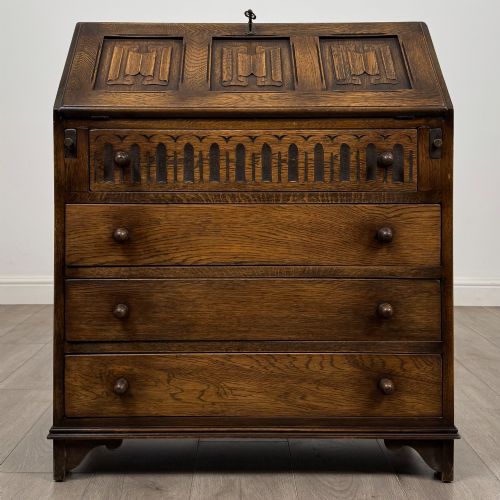
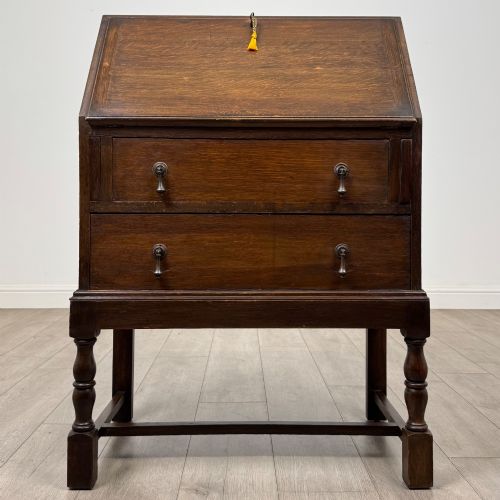


Carved Wood Secretary Desk
A carved wood secretary desk brings centuries of cabinet-making skill into a study, offering concealed drawers and a drop-front writing surface.
Carved Wood Secretary Desk
A carved wood secretary desk combines a writing slope with enclosed storage, taking forms such as the bureau, bureau bookcase, and escritoire. These pieces range from compact oak writing desks to monumental mahogany bookcases fitted with glass doors and internal compartments.
The pieces appearing on this page span several centuries and regions, encompassing Georgian and Victorian items alongside Edwardian reproductions and Continental examples. Oak and mahogany dominate the selection, accompanied by walnut, burr walnut, elm, camphor wood, and exotic hardwoods.
Buyers will most frequently encounter oak and mahogany writing bureaus from the eighteenth, nineteenth, and early twentieth centuries. Many incorporate decorative carving, ranging from linenfold panels to floral marquetry and elaborate regional motifs.
How they were made
Cabinet-makers constructed these secretary desks using solid timbers like oak, mahogany, and walnut, frequently applying fine veneers such as burr walnut or incorporating exotic woods like camphor and Anglo-Indian hardwoods. Structural frames relied on traditional joinery techniques, while secondary timbers were selected for drawer linings and internal divisions.
Surface decoration involved meticulous hand-carving, floral marquetry inlay, and turning, alongside brass hardware for handles, escutcheons, and hinges. Glass was incorporated into upper bookcase doors, and writing surfaces often featured fitted inserts of leather.
Several desks manage to hide secret compartments behind dummy drawer fronts, designed for stashing love letters or spare change.
What varies in quality
The calibre of a carved wood secretary desk rests on the selection of timber and the precision of its construction. Superior pieces display carefully figured grain patterns, harmonious veneer matching, and crisp, deep hand-carving rather than shallow mechanical stamping.
Internal arrangement and secondary detailing separate standard items from exceptional ones. Finer examples feature intricate pigeonholes, secret compartments, original brasses, and well-executed secondary woods that indicate a workshop of high standing.
The Carved Wood Secretary Desk Glossary
- Bureau
- A writing desk with a sloping hinged lid that covers a compartment of pigeonholes and small drawers. This form evolved significantly through the eighteenth and nineteenth centuries.
- Secretaire
- A piece of furniture containing a writing drawer or fold-down front that conceals a fitted desk interior. It often appears integrated into the upper section of a tall bookcase cabinet.
- Escritoire
- A small writing cabinet or desk, typically featuring a fall-front writing surface. The term often denotes Continental European origins.
- Marquetry
- Decorative patterns formed by the insertion of pieces of wood, shell, or ivory into a veneered surface. Floral motifs are especially common on eighteenth-century examples.
- Linenfold
- A style of relief carving used on panels to imitate folded linen cloth. It appears frequently on early oak pieces.
Carved Wood Secretary Desk: Frequently Asked Questions
What is a secretary desk?
A secretary desk is a form of furniture that combines a traditional writing surface with enclosed storage space. The design typically incorporates a fold-down or sliding front panel that reveals small drawers and pigeonholes for correspondence.
Beneath this writing slope, these pieces usually provide additional drawer storage or cabinet space. They range from modest, standalone writing tables to tall bookcase combinations designed to house libraries.
How do I date an oak bureau?
Dating an oak bureau involves examining the construction methods, timber selection, and hardware used throughout the piece. Hand-cut dovetails, pegged joints, and regional carving styles offer key clues to the era of manufacture.
Earlier pieces often display wider boards and simpler internal configurations, while later revival pieces from the Edwardian period adopt mechanised cuts and specific historical motifs like linenfold panels.
Where were these desks made?
These secretary desks originate from workshops across Britain, continental Europe, and international trade centres. British examples frequently utilise local oak and imported mahogany, reflecting prevailing stylistic shifts from Georgian restraint to Victorian elaboration.
Continental pieces often showcase distinct regional characteristics, such as Dutch floral marquetry, Norwegian structural carving, or Italian walnut craftsmanship. Other pieces reflect colonial trade through the use of camphor wood and Anglo-Indian hardwoods.
How do I care for a wood desk?
Maintaining a historic wood desk requires protecting the timber from sudden temperature fluctuations and direct sunlight. Consistent indoor humidity prevents the natural wood and any applied veneers from drying out or splitting.
Periodic application of appropriate wax polish helps preserve the finish and nourish the grain. Harsh chemical cleaners and excessive moisture should be strictly avoided to protect the antique surface.